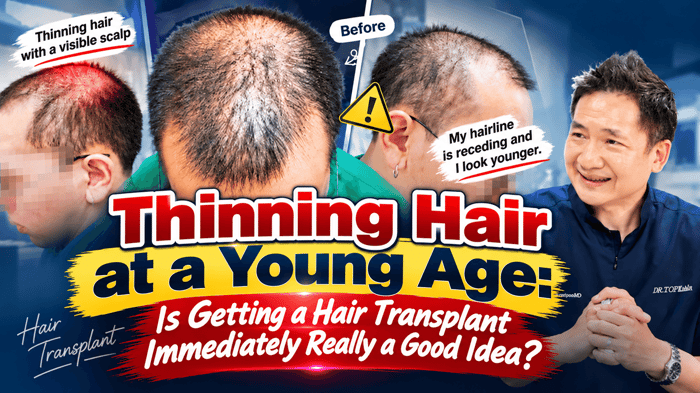
Most people think that hair problems usually occur only in older adults. However, the truth is that these problems are not determined by age alone. Many people experience thinning hair from a young age, which can affect their appearance and cause them to lose confidence in their daily lives. Nevertheless, deciding to undergo a hair transplant immediately from the very beginning may not always be the right solution for everyone. In this article, Dr. Nuttorn Narupaves, also known as Dr. Top, will help provide answers and explore the right solution for dealing with premature hair thinning before making a decision.
Table of contents
- Can younger people undergo a hair transplant?
- Why is it necessary to plan the number of hair grafts for the long term?
- What should be examined and assessed before undergoing a hair transplant?
- Interesting Case: A Gen Z Teenager Under Severe Stress Develops Hereditary Hair Loss
- ALMI Nano Fat: An Alternative Treatment for Thinning Hair Without the Need for a Hair Transplant
Can younger people undergo a hair transplant?
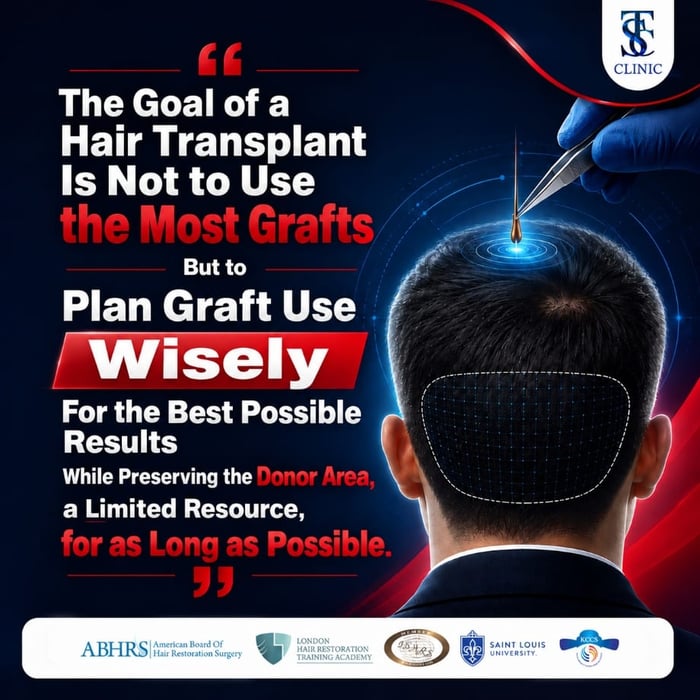
Hair transplantation for younger people, particularly those around 20–25 years of age, requires careful consideration on an individual basis. This is especially true for hereditary hair thinning, which requires long-term treatment planning and continuous care. One important consideration for hair transplantation in younger people is that, in the future, the hair that has not been transplanted may continue to fall out as they grow older. The key is to preserve the existing hair for as long as possible.
Why is it necessary to plan the number of hair grafts for the long term?
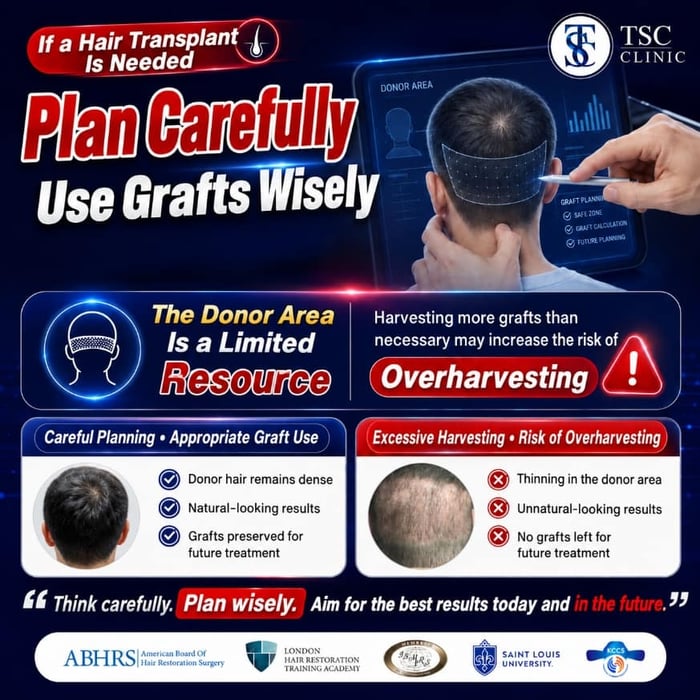
Hair transplantation involves moving hair follicle cells from the back of the head, known as the Donor Area, where the hair is strong and is not affected by the hormone DHT (Dihydrotestosterone), which causes hereditary hair loss and thinning. Once the hair follicle cells are removed, new hair will no longer grow from the original position. The number of hair grafts available for transplantation is limited—once they are used up, they are gone. Therefore, it is important to plan the use of hair grafts appropriately, because hair transplantation cannot be reversed. The decision must be made carefully, especially for younger people whose hair may be more likely to continue falling out as they age, so that enough hair grafts remain available should additional transplantation be necessary in the future.
What should be examined and assessed before undergoing a hair transplant?
Before undergoing a hair transplant, the doctor will examine the condition of the scalp and hair to determine the cause of hair loss and thinning. The doctor will also ask about the patient's needs and expectations in order to develop an individualized treatment approach. The assessment includes:
- The hair thinning is caused by genetics, hormones, stress, an illness, or other factors
- The hair loss is still ongoing or has begun to stabilize
- The Donor Area has a sufficient number and adequate quality of hair follicles
- How the hairline should be designed to suit the patient's age and facial features in the long term
- The hair loss needs to be treated or controlled before undergoing a hair transplant
- If the existing hair becomes thinner in the future, how additional hair transplantation should be planned
Interesting Case: A Gen Z Teenager Under Severe Stress Develops Hereditary Hair Loss
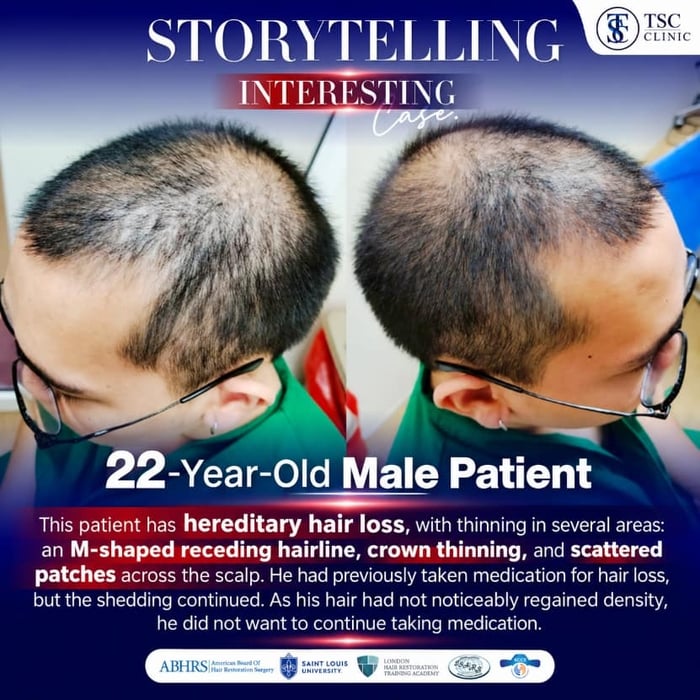
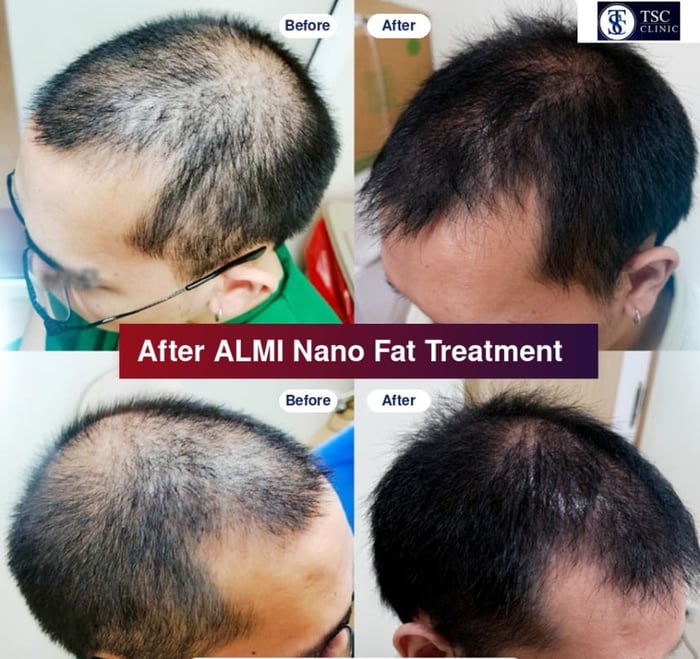
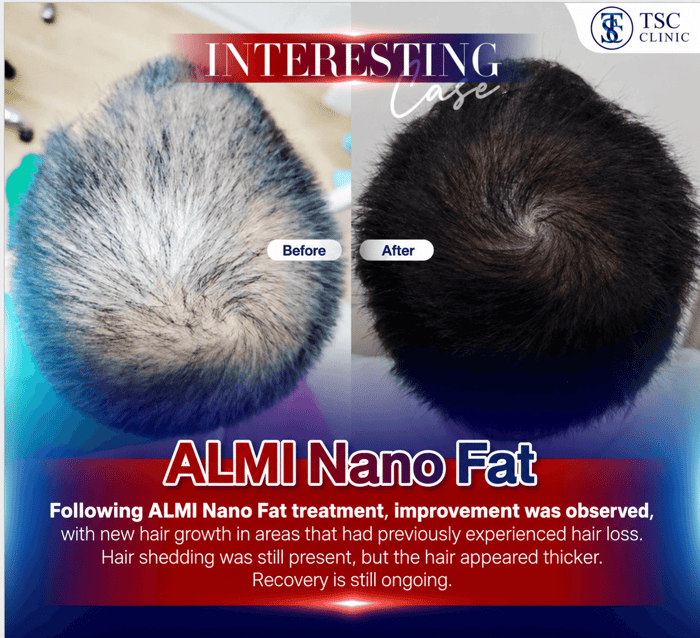
The patient is a 22-year-old male with hereditary hair loss. He experienced thinning hair in several areas at the same time, including hair loss around the forehead that had receded deeply into an M-shaped hairline, thinning in the middle of the scalp, and patchy, diffuse hair loss throughout the scalp. Although he had previously taken medication to treat hair loss, the hair loss continued. Meanwhile, the hair on his body had become noticeably thicker.
In this case, the patient did not want to continue taking medication and did not want to undergo a hair transplant. Based on Dr. Top's assessment, there was still no need for a hair transplant at that time. Therefore, a treatment plan was developed focusing on the restoration and nourishment of the hair follicles throughout the scalp using the ALMI Nano Fat technique. The goal was to strengthen the existing hair, increase hair thickness, and help slow down hair loss caused by hereditary factors. The result was hair regrowth throughout the scalp.
ALMI Nano Fat: An Alternative Treatment for Thinning Hair Without the Need for a Hair Transplant
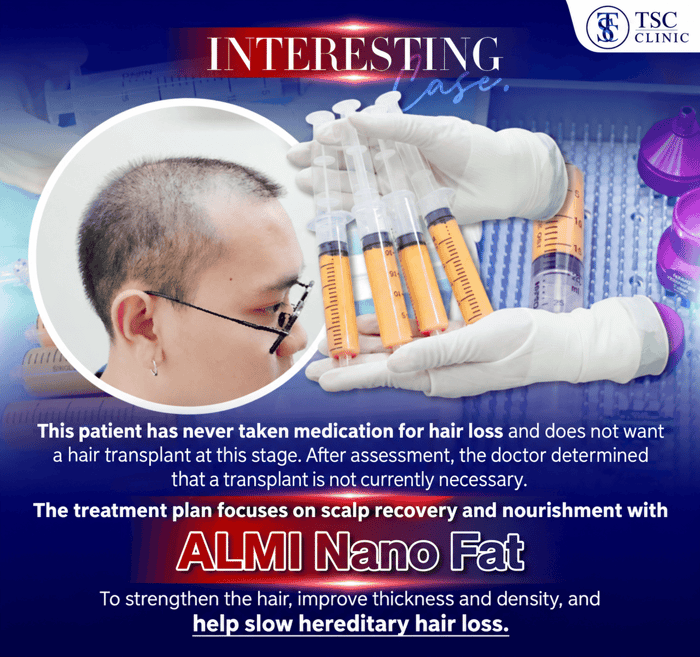
A hair transplant is not the only solution for thinning hair. Another approach is known as Regenerative Medicine, which relies on the body's self-repair mechanisms to restore deteriorated cells or tissues and help them return to normal function. The ALMI Nano Fat technique stimulates the hair follicles using the patient's own fat cells, eliminating concerns about allergic reactions and avoiding the need to rely on chemicals.
Nano Fat is a rich source of Growth Factors and adipose-derived stem cells, which play a role in tissue regeneration and the formation of new tissue. In addition, fat cells play a role in increasing the thickness of the fatty layer beneath the scalp, resulting in increased blood supply to the scalp. This helps strengthen the hair follicles, slow down hair loss, and improve the strength and durability of newly growing hair so that it can remain healthy for longer. Therefore, ALMI Nano Fat addresses the underlying cause of the problem. This technique is suitable for:
- People experiencing hair loss in its early stages
- People experiencing mild patchy hair loss
- People who have thinning hair but still have hair follicles present
- People who want to restore and nourish their hair follicles to make them stronger
- People who do not have a sufficient number of hair grafts
Don’t rush into a hair transplant before knowing the true cause before deciding whether a hair transplant is appropriate, several factors need to be carefully assessed together. These include the underlying cause of hair loss, the pattern of hair thinning, the severity of the condition, the number and strength of the hair follicles in the area where the hair will be harvested for transplantation, as well as the possibility that the existing hair may become thinner over time in the future. For anyone experiencing unusually severe hair loss or thinning hair at a young age, you can consult our doctors at THE SKIN CLINIC for an initial assessment and to develop a treatment plan that is appropriate for you.