Table of contents
- Why is the hair thinning only in the middle of the scalp while the hair on the sides is still thick?
- Is it true that the longer you leave a “Crown baldness” untreated, the more difficult it becomes to fix?
- How should thinning hair in the middle of the scalp be treated? Hair Transplant vs. Hair Follicle Stimulation: A Case Study from Dr. Top’s Patient
- An In-Depth Look at the FRM Anti-Hair Loss Hair Follicle Stimulation Technique: Restoring Thicker Hair Without a Hair Transplant
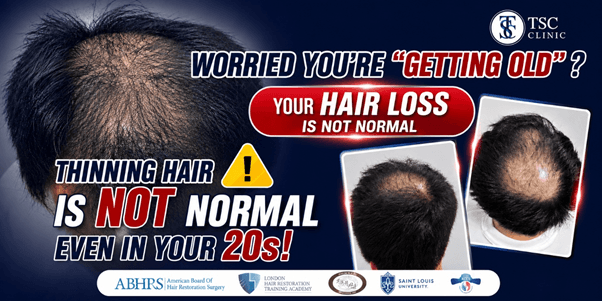
“I’m still young, so I thought my hair was probably just falling out naturally.” Many people tend to overlook small warning signs. By the time they realize what is happening, the thinning area may have already spread, causing them to lose confidence. But did you know that a “Crown baldness,” or noticeable thinning in the middle of the scalp, can begin as early as the teenage years? This article will take an in-depth look at the real causes of this condition, along with solutions for restoring your hair so that it looks naturally thick and full again.
Why is the hair thinning only in the middle of the scalp while the hair on the sides is still thick?
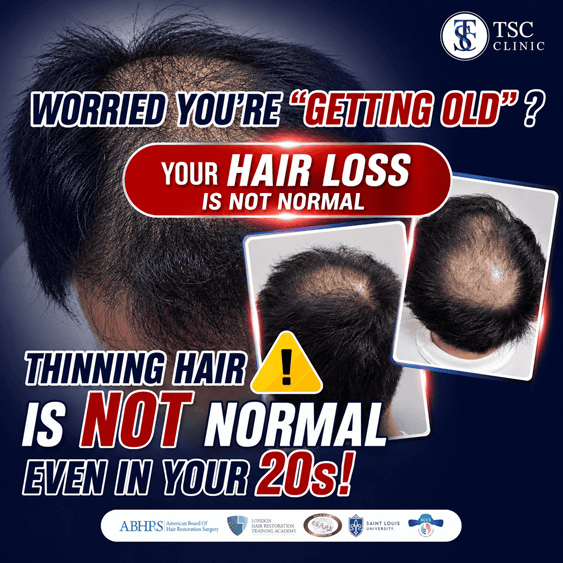
A “Crown baldness” in teenagers is often caused by genetics and the hormone DHT (Dihydrotestosterone), which causes the hair follicles to shrink more quickly than normal. Although this problem can be worrying and significantly affect self-confidence, one advantage for teenagers is that most of their hair follicles have not yet completely died. This means they have a greater chance of restoring their hair thickness compared with adults, provided that they receive the correct treatment.
Is it true that the longer you leave a “Crown baldness” untreated, the more difficult it becomes to fix?
As mentioned earlier, thinning hair in the middle of the scalp, or a “Crown baldness,” is caused by genetics and hormones. If the hair follicle cells continue to be damaged and the condition is left untreated for a long time, the follicles in that area will gradually shrink. Eventually, the hair follicles may completely close or die, making them unable to produce new hair. Starting treatment early, while the hair follicles are still alive, may provide an opportunity to restore hair thickness without undergoing a hair transplant. However, if the condition is left untreated until the scalp becomes smooth and shiny and the follicles have permanently shrunk, the only remaining solution may be a hair transplant.
How should thinning hair in the middle of the scalp be treated? Hair Transplant vs. Hair Follicle Stimulation: A Case Study from Dr. Top’s Patient
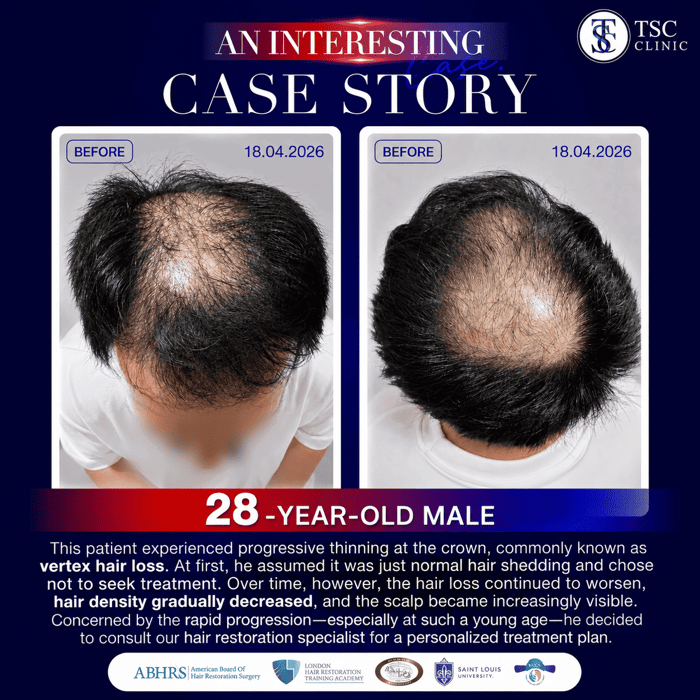 A 28-Year-Old Male Patient:
The patient had thinning hair in the middle of his scalp, a condition that many people refer to as a “Crown baldness.” At first, he believed that it was simply normal hair shedding, so he did not seek treatment. Over time, however, his hair continued to fall out more heavily, the overall hair density decreased, and his scalp became increasingly visible. The patient eventually decided to consult a doctor because he had never expected to experience baldness at such a young age. In this case, the patient did not want to take medication because he was concerned about possible side effects, and he was not yet ready to undergo a hair transplant. So, how did Dr. Top treat his condition?
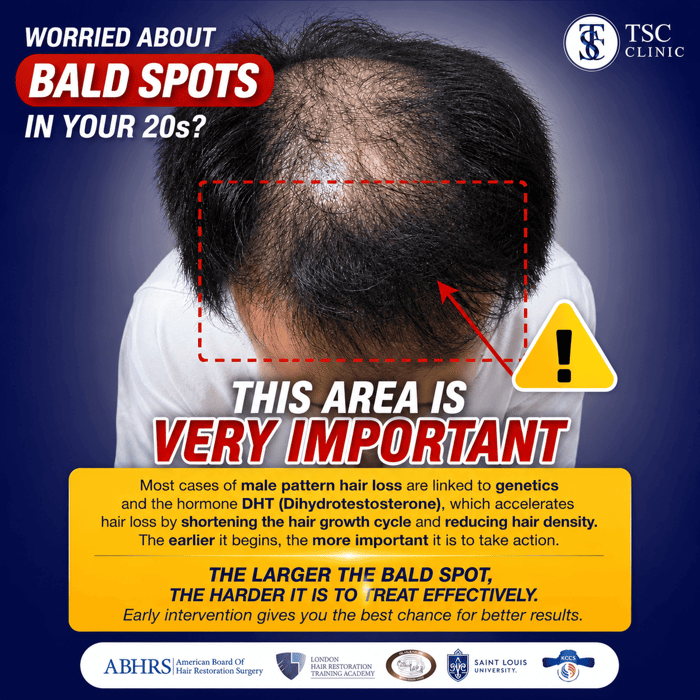
A microscopic examination of the patient’s hair and scalp showed that small, fine hairs were still present. Dr. Top therefore stimulated the hair follicles using the FRM Anti-Hair Loss technique to slow down hair loss and restore thinning hair. This is a safe treatment that provides natural-looking results. It not only helps strengthen the hair follicles and increase hair density without requiring a hair transplant at this stage, but it also helps preserve the patient’s available hair grafts for a time when they may be truly necessary in the future.
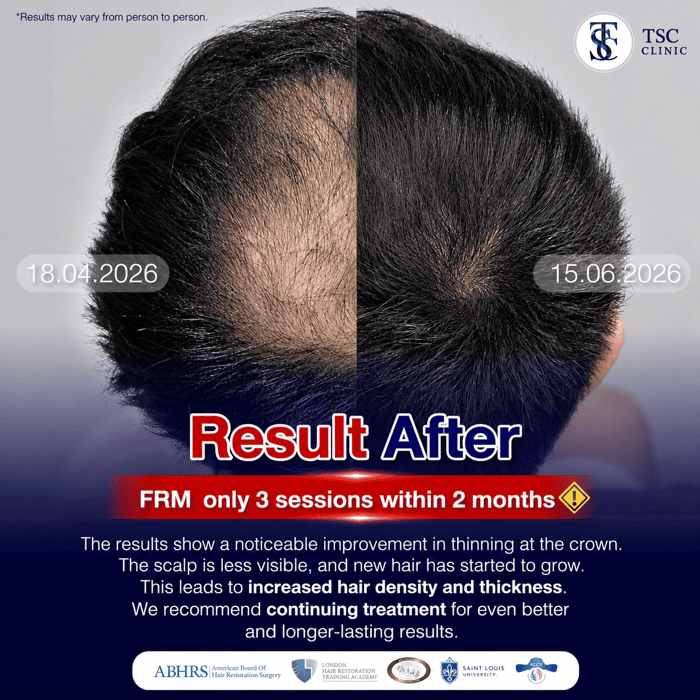
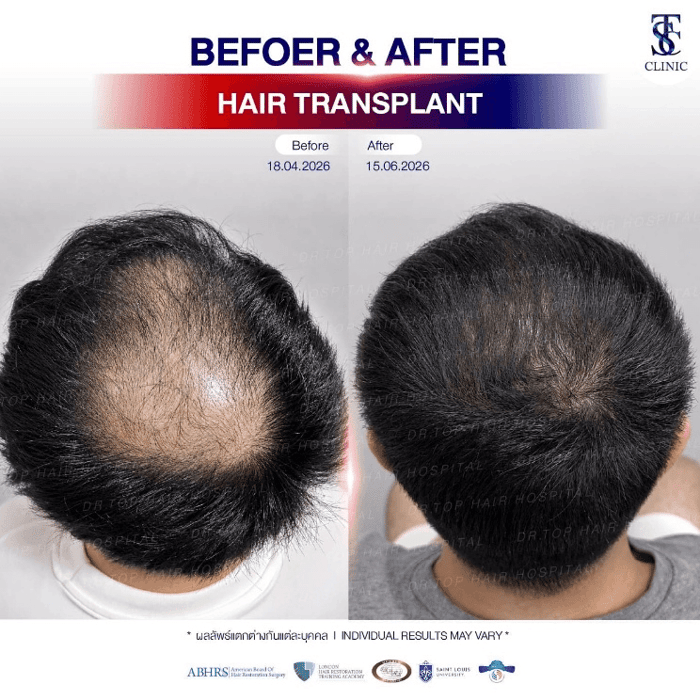
After only three FRM Anti-Hair Loss sessions over a period of two months, a clear improvement could be seen. The middle of the scalp, which had previously become so thin that the scalp was clearly visible, gradually began to show new hair growth covering the area, and the hair appeared denser. For this patient, Dr. Top recommended continuing the treatment regularly to strengthen the hair and achieve the best possible results. However, every person responds differently to hair follicle stimulation, regardless of the technique used. Results may therefore vary from person to person.
An In-Depth Look at the FRM Anti-Hair Loss Hair Follicle Stimulation Technique: Restoring Thicker Hair Without a Hair Transplant
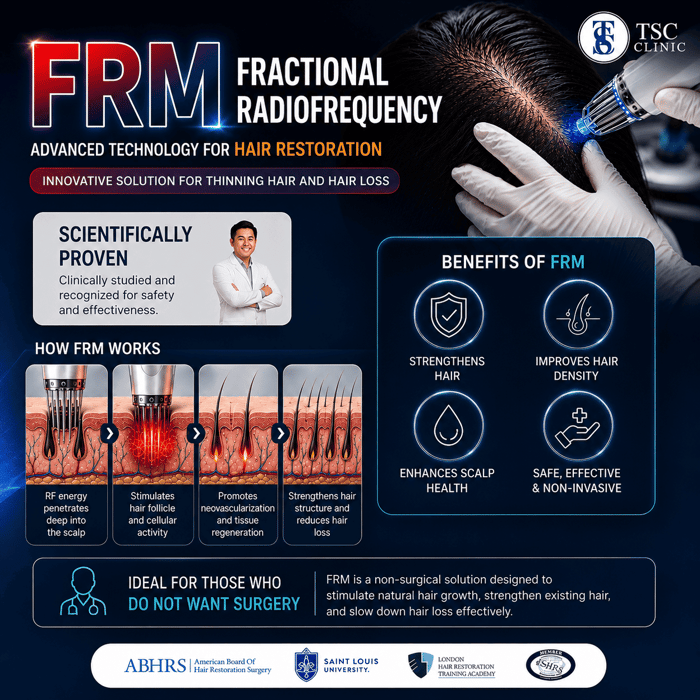
FRM (Fractional Radiofrequency Microneedling), is a technology that deeply stimulates the hair follicles at the cellular level. It can effectively help treat thinning hair and baldness. Research has shown that it can provide better results than conventional Growth Factor injections. It can also be combined with other treatments, such as hair-thickening treatments and hair transplantation.
How the FRM Technique Works
- Delivers RF energy through tiny needles into the layers of the skin
- Stimulates blood circulation and the function of hair follicle cells
- Stimulates the production of collagen and elastin
- Strengthens the hair follicles, reduces hair loss, and encourages new hair growth
“Do not wait until your thinning hair develops into baldness before starting treatment.” This is particularly important when the condition is caused by genetics, as it requires correct and consistent care from the beginning. Should you begin to notice warning signs such as excessive hair loss or thinning in the middle of the scalp, do not leave the condition untreated for too long. You can consult our medical specialists at THE SKIN CLINIC to develop a treatment plan that is suitable for you.
Don't wait any longer! Schedule your free consultation with our experts today!