Table of contents
- Understanding Hair Graft Resources: What Many People Misunderstand About Hair Transplantation
- An In-Depth Look at the Pricing Structure: Why Do Hair Transplant Prices Vary from Clinic to Clinic?
- Why Should “Price” Not Be the Only Factor When Deciding on a Hair Transplant Clinic?
- Case Study: Lessons Learned from a Corrective Case of a Hair Transplant Where the Hair Did Not Grow
- Checklist of Important Questions to Ask Before Deciding to Get a Hair Transplant
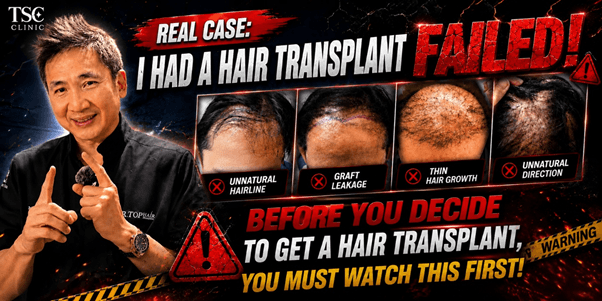
Many people may think, “Hair transplantation is the same everywhere; the only difference is the price.” But in reality, everything from hair transplant planning, hairline design, punching, and graft allocation, to the tools and equipment used, consists of important details that can affect the final results. In this article, Dr. Top takes you through the lessons learned from a real patient case involving someone who previously underwent a hair transplant elsewhere but experienced problems and eventually came in for a consultation to have the results corrected. The case will also be analyzed to identify the causes that led to the post-transplant results not turning out as expected.
Understanding Hair Graft Resources: What Many People Misunderstand About Hair Transplantation
One of the biggest misconceptions many people have about hair transplantation is the belief that once hair grafts are extracted, the hair in that area will continue to grow back and can be used again without limitation. In reality, “hair grafts are a limited resource, once they are gone, they are gone.” Once a graft has been extracted, hair will not grow back in that exact location. Therefore, hair transplantation requires careful planning to ensure that the available grafts are used as efficiently as possible. A successful hair transplant result is not only about making sure the newly transplanted hair grows well, but also about preserving the existing hair (Existing Hair) and slowing down its loss as much as possible.
An In-Depth Look at the Pricing Structure: Why Do Hair Transplant Prices Vary from Clinic to Clinic?
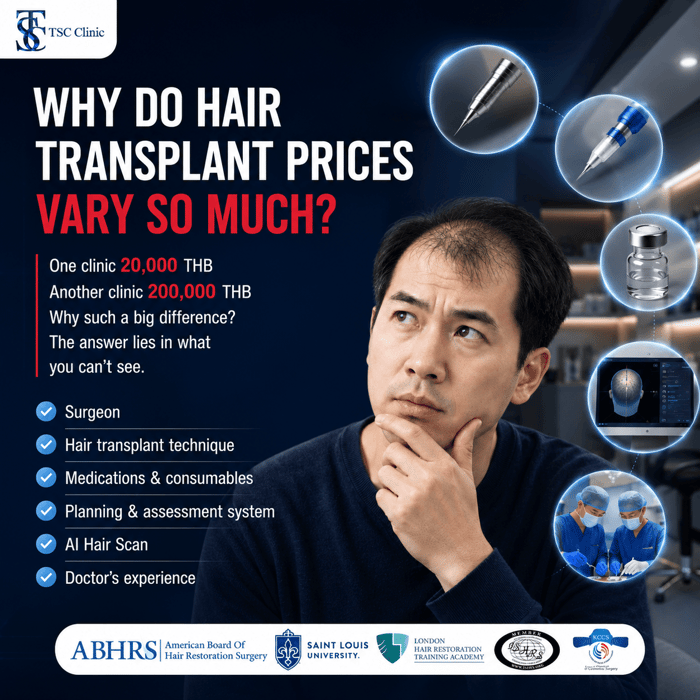
Hair transplant prices can range from tens of thousands to hundreds of thousands of baht. The main important costs include:
1. Medical Tools and Equipment
- Hair graft punch: This is a single-use disposable device used to ensure cleanliness and sharpness. The price is approximately 1,000–10,000 baht.
- Hair implantation pens: In general, approximately 4–5 pens are required for one case, with prices ranging from 2,000–10,000 baht.
2. Professional Fees, Experience, and Expertise of the Physician
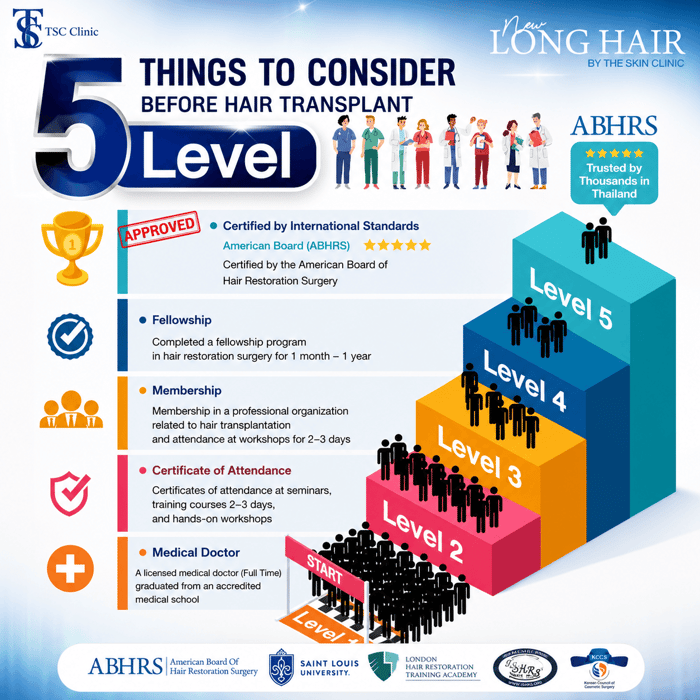
Each physician has a different level of skill. Many physicians have completed several training programs and spent many years developing their skills and accumulating real surgical experience. This is especially true for the ABHRS (American Board of Hair Restoration Surgery) qualification, which is internationally recognized specifically in the field of hair restoration surgery. To become an American Board-certified hair restoration physician, a doctor must accumulate experience from more than 500 actual hair transplant surgery cases, giving patients confidence that they are certainly not being used as a practice case.
Why Should “Price” Not Be the Only Factor When Deciding on a Hair Transplant Clinic?
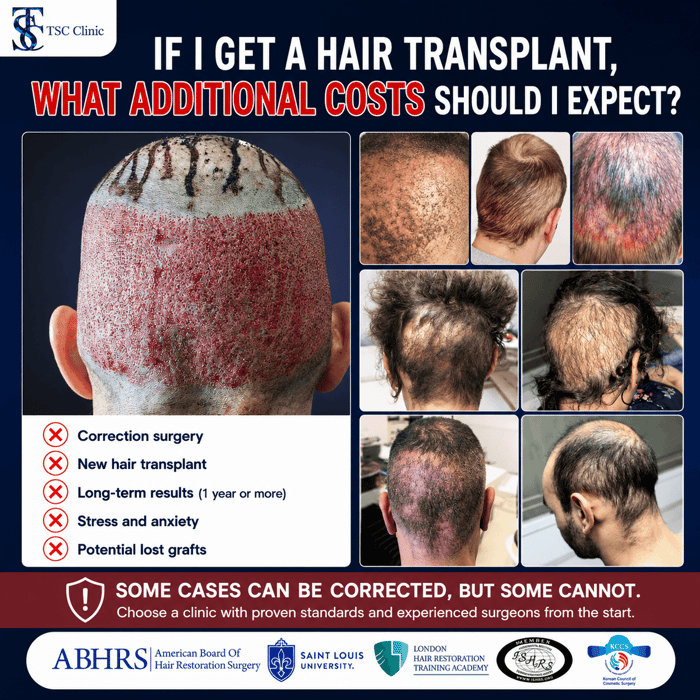
One of the most concerning issues in the hair transplant industry that many people are still unaware of is the existence of the Black Market, where hair transplant procedures are performed by individuals who are not physicians. This carries a very high risk of infection, may lead to results that do not meet expectations, and can cause permanent damage to the hair. One example is Over Harvest, a condition in which too many hair grafts are extracted, causing the hair at the back of the scalp to become visibly thin and patchy, while leaving insufficient grafts available for future hair transplantation. Cases like this are considered extremely difficult to correct.
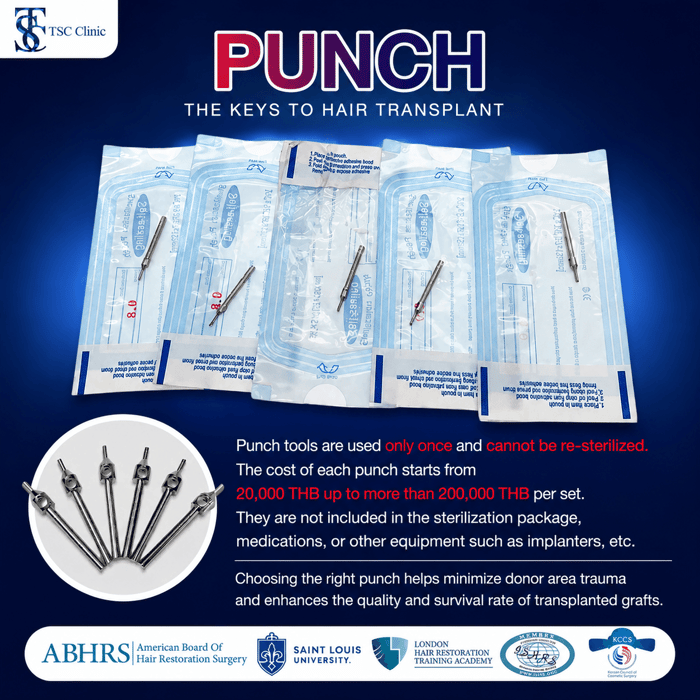
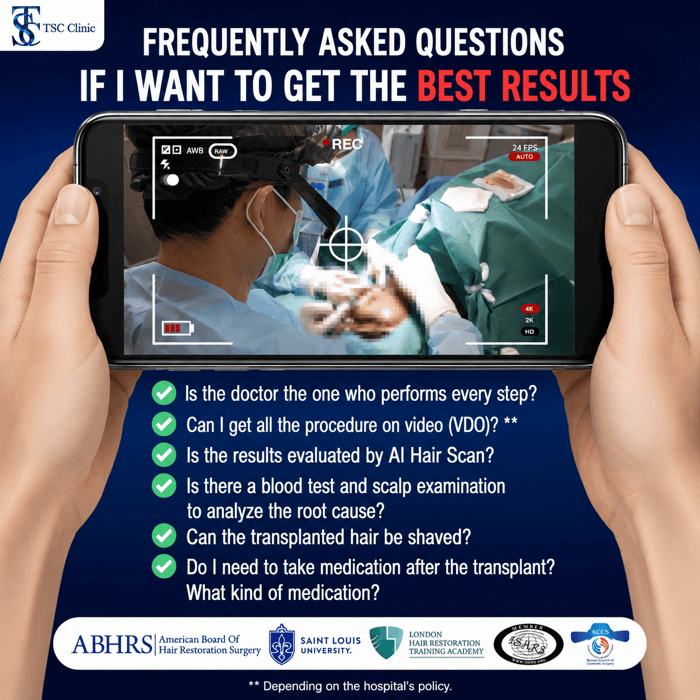
For transparency in treatment, it is recommended that patients request to see or keep the hair graft punch and implantation pens, as well as request a VDO recording of every step of the hair transplant procedure, to confirm that the physician actually performed the treatment and that the number of grafts used corresponds to the number stated. Before undergoing a hair transplant, the scalp and hair must also be evaluated so that the treatment can be planned correctly. An assessment using an AI Hair Scan, for example, can help determine how many hair grafts are available and how many grafts should be used for transplantation. Treatment should involve both transparency and the proper setting of expectations.
Case Study: Lessons Learned from a Corrective Case of a Hair Transplant Where the Hair Did Not Grow
This case involved a 53-year-old male patient who had previously undergone a hair transplant at another clinic using 3,000 grafts, but developed Poor Growth, meaning the transplanted hair did not grow.
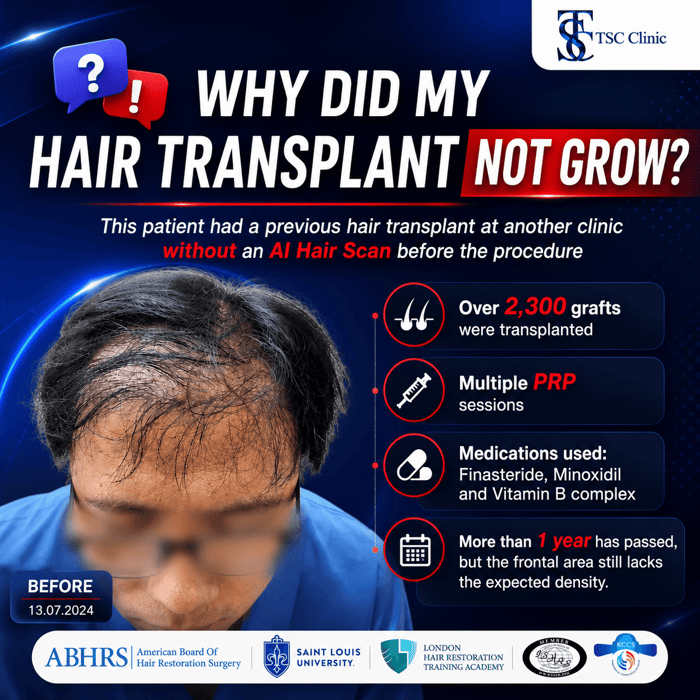
Analysis of the Causes of Hair Not Growing After a Hair Transplant
- Duration of the hair transplant procedure: It should take approximately 6–8 hours.
- Transplanting incomplete or damaged grafts: No matter how many times they are transplanted, the hair will not grow. Examples include grafts without roots, grafts that have been transected or broken, and bare grafts without surrounding tissue.
Corrective treatment can be performed for problematic hair transplant cases. However, in this particular case, the patient had developed fibrosis under the scalp (Fibrosis) as a result of the previous surgery. Dr. Top treated the patient with Nanofat to restore the condition of the scalp in combination with hair transplantation, resulting in a satisfactory outcome. The newly transplanted hair was able to grow normally.
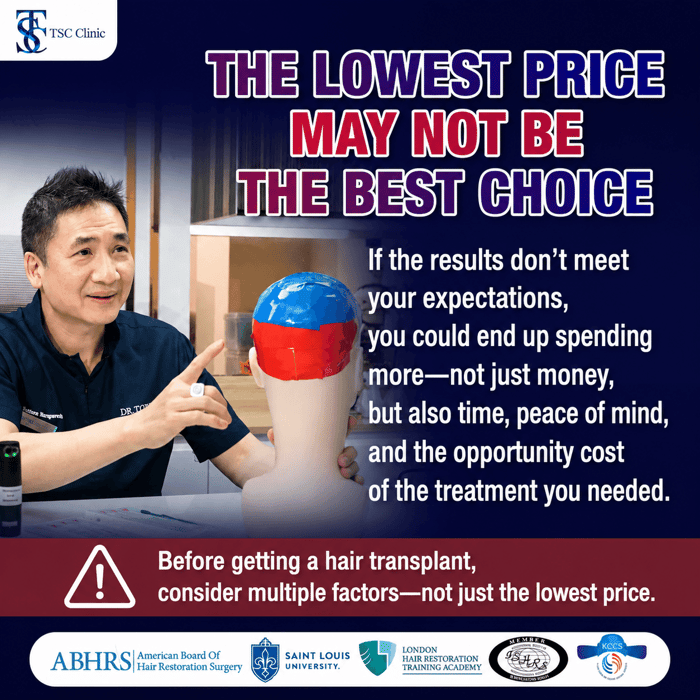
At THE SKIN CLINIC, hair transplantation is performed together with the ALMI Nano Fat technique. This technique uses the patient’s own fat to stimulate increased blood supply to the scalp, restore hair follicle function, and reduce the impact of transplantation on the patient’s existing hair (Existing Hair), helping it survives. It can also help reduce the amount of medication required after hair transplantation in order to minimize medication-related side effects for patients who are concerned about them.
Checklist of Important Questions to Ask Before Deciding to Get a Hair Transplant
No matter where you choose to undergo a hair transplant, Dr. Top recommends that these are the questions you should always ask the physician clearly beforehand:
- Will the physician personally perform every step of the hair transplant procedure?
- Where did the physician receive training, and which institutions issued their certifications?
- Can I request a VDO recording of the hair transplant surgery procedure?
This is because hair transplantation is a form of microsurgery that requires an extremely high level of precision, and mistakes can occur at any stage. If an extraction punch accidentally damages a hair root, the root may be transected and can no longer be used for transplantation. In addition, hair transplantation is a procedure that must be performed against the clock in order to maintain the highest possible graft survival rate. At THE SKIN CLINIC, we have a team of physicians with expertise in hair transplantation. If the procedure is carried out by only one physician, fatigue may occur and potentially affect the efficiency and precision of the hair transplant procedure.
For those who are currently researching hair transplantation, these are all important points that you should understand and ask about thoroughly before making a decision. A good hair transplant is not simply about completing the procedure; it requires careful planning to achieve good, natural-looking results in the long term.