Table of Contents
- What causes thinning hair at the crown?
- Characteristics of crown thinning in men versus women
- Can bald spots at the crown be treated with hair transplantation?
- Hair transplant techniques: What are they, and how do they differ?
- Don't wait any longer! Schedule your free consultation with our experts today!
Baldness at the crown of the head, often referred to as the "bald spot," can be difficult to notice until most of the hair is already gone. The more severe the condition, the harder it becomes to treat. This article will delve into thinning hair at the crown, its causes, and whether hair transplantation is a viable solution. Knowing the signs early on will help you seek treatment before it’s too late.
What causes thinning hair at the crown?
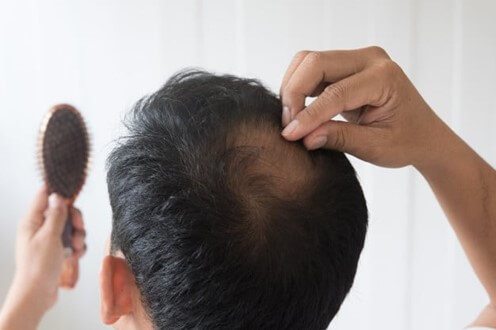
Thinning hair at the crown is more commonly found in men than women. In the early stages, the thinning is localized at the crown, but if left untreated, it may worsen and spread across the scalp. This condition can arise from various causes and manifests differently in each individual. The primary causes of crown hair thinning are genetics and the hormone DHT (Dihydrotestosterone). Additionally, other contributing factors include stress, illnesses that affect hair health, hormonal disorders, or issues with the immune system. While these factors may not directly cause hair loss, they can exacerbate it. Without proper treatment, your hair loss may continue and worsen over time.
Characteristics of crown thinning in men versus women
- Thinning Hair at the Crown in Men (Male Pattern Baldness) :
The first sign often appears as thinning hair at the front or a bald spot on the crown. If left untreated, the balding areas will gradually expand, merging from the front and the crown until only hair at the nape and sides of the head remains. - Thinning Hair at the Crown in Women (Female Pattern Baldness) :
The initial sign is usually thinning hair along the center part. Without prompt treatment, the hair loss will worsen, thinning to the point where the scalp becomes visible. The parting line will continue to widen, eventually leading to diffuse thinning across the entire scalp.
Can bald spots at the crown be treated with hair transplantation?
Hair transplant techniques: What are they, and how do they differ?
Permanent hair transplantation can be performed using several techniques, each with its own advantages and disadvantages. The choice of technique to address crown baldness depends on the individual's condition, hair characteristics, and specific limitations.
1. FUT Technique
The FUT Technique (Follicular Unit Transplant) involves removing a strip of scalp along with hair follicles. The incision is then sutured closed, and the strip is divided into smaller sections to isolate grafts for implantation in the desired area.
Advantages: Allows for the transplantation of a large number of grafts in one session.
Disadvantages: Leaves a noticeable scar at the donor site, making this technique less popular.
2. FUE Technique
The FUE Technique (Follicular Unit Extraction) involves extracting individual hair follicles using a specialized tool from the back of the head, where the hair is strongest, and transplanting them to the problem area.
Advantages: Smaller wounds compared to FUT, minimal scarring, faster recovery, and no need for downtime.
Limitations: The success of hair growth depends on the skill of the doctor. Inexperienced handling can damage hair follicles, leading to poor growth or no growth at all.
3. Long Hair FUE Technique
Long Hair FUE is highly popular, especially among female patients. It is similar to the FUE technique, where the doctor uses a small tool to extract hair grafts, pulling out the follicles along with the long hair strands to transplant them onto the scalp without shaving the back of the head. This technique requires a high level of expertise, as the doctor must carefully extract each long hair graft individually to ensure the grafts are in optimal condition for transplantation.
Advantages: Hair density and the hairline can be seen immediately after the procedure, making it nearly undetectable that a transplant was performed.
4. FUI Technique
FUI Technique (Follicular Unit Implantation) is a hybrid technique combining Long Hair FUE and DHI (Direct Hair Implanter). Hair follicles are extracted without shaving the scalp and implanted using a DHI Implanter. This tool enhances the efficiency of graft placement and reduces transplant time, which could result in a higher graft failure rate and unsuccessful hair growth.
Advantages: Provides immediate visibility of the hairline and density, with hair strands arranged in the desired direction.
Disadvantages: Takes longer than FUE due to the detailed nature of the process.
The more you understand the issue of crown hair thinning and seek treatment early, the better the results will be. Early intervention can also help prevent long-term hair problems. If you notice excessive hair loss or thinning hair at the crown, it is advisable to consult a specialist in hair and scalp health. Timely treatment and restoration can prevent permanent baldness at the crown.