Table of Contents
- Limitations of Hair Transplantation You Should Know
- What Kind of Case is not Recommended Immediately for Hair Transplant?
- What Is ALMI Nano Fat, and How Does It Treat Hair Loss and Thinning?
- Don't wait any longer! Schedule your free consultation with our experts today!
Hair transplantation is an effective solution for addressing hair thinning and baldness, offering permanent results. Many people are interested in undergoing the procedure; however, in some cases, doctors may not be able to proceed with a hair transplant immediately. This is because the causes and patterns of hair loss vary from person to person, and certain conditions might prevent transplantation. Let’s explore the types of cases where immediate hair transplantation is not feasible and the available treatment options.
Limitations of Hair Transplantation You Should Know
Hair transplantation can increase the number of hair strands and density in areas affected by hair loss or thinning. This is achieved by transferring hair follicle cells from the back of the head, known as the donor area, to the desired area. The back of the head is typically chosen as the donor area because hair in this region is the strongest and most resistant to shedding caused by the hormone DHT (Dihydrotestosterone), a key factor in male-pattern hair loss. Although hair transplantation is a highly effective treatment method, it is not suitable for every case due to the following limitations:
- The hair at the back of the head must be strong and sufficient for transplantation.
- Once hair grafts are removed from the donor area, no new hair will grow in their place.
- Certain medical conditions or medications may not be compatible with hair transplantation.
In cases where the hair at the back of the head is thin, it indicates that the hair in that area is weak and unsuitable for transplantation. This increases the tendency of graft failure, resulting in poor or no hair growth. Moreover, insufficient donor hair can leave the back of the head looking even thinner. For person with certain medical conditions, attempting a hair transplant might not only result in unsuccessful hair growth but also worsen the severity of the underlying condition.
What Kind of Case is not Recommended Immediately for Hair Transplant?
Hair loss and thinning can vary in presentation, and treatment options differ accordingly. Specialists play a crucial role in designing personalized solutions by evaluating the patient’s hair and scalp condition. Treatment options include various methods such as medication for hair loss and hair follicle stimulation injections. However, hair transplantation is typically considered a last resort for treating thinning hair or baldness. So, in which cases would doctors advise against immediate hair transplantation?
- Hair thinning occurs across the entire scalp, including the forehead, crown, and nape.
- The hair at the back of the head is thin, weak, and lacks strength.
- Hair loss is caused by scalp inflammation.
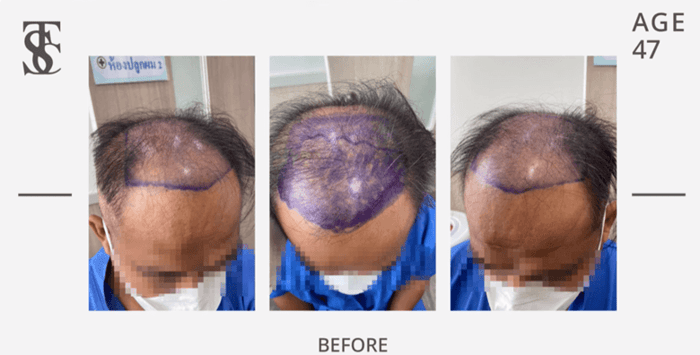
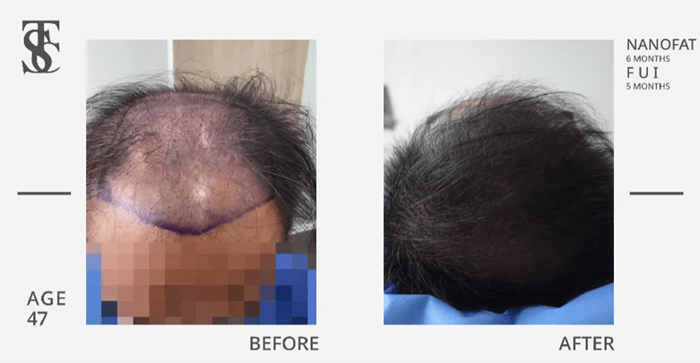
Example Case: At The Skin Clinic, a 47 years old male patient presented with stage 4 baldness. His hairline had receded significantly, and he exhibited widespread thinning across the scalp. The donor area at the back of his head had an insufficient number of grafts for a successful transplant. After evaluation, the doctor concluded that a hair transplant would not yield satisfactory results and would further thin the donor area. In this case, the patient’s scalp still contained some active hair follicles, the doctor recommended stimulating them first. The initial step involved revitalizing the hair follicles using a technique called ALMI Nano Fat, which utilizes the patient’s own fat to promote hair growth. Once the hair density improved, the patient could then proceed with a hair transplant in the desired area.
What Is ALMI Nano Fat, and How Does It Treat Hair Loss and Thinning?
For cases of hair thinning in the front area (Crown Area), as highlighted in the example case, doctors typically do not recommend an immediate hair transplant. This is because achieving optimal results requires addressing 2 key factors: strengthening and thickening the existing hair strands and slowing down hair loss. In cases where hair thinning occurs across the entire scalp but hair follicles are still present, if the patient wishes to undergo a transplant, doctors usually recommend starting with treatments to stimulate the hair follicles. This helps promote new hair growth and increases hair density across the scalp, not just in the thinning areas. One effective method is the ALMI Nano Fat technique, which involves using the patient’s own fat cells to stimulate hair follicles. The process involves extracting fat from hips, thighs, or abdomen, isolating high-quality fat cells, and injecting them into the areas affected by hair loss or thinning. The results include:
- No allergic reactions since the cells come from the patient’s own body.
- Revitalization and strengthening of hair follicles.
- Stimulated growth of thicker and healthier hair strands.
- Protection of hair follicles from DHT
- Delayed hair shedding.
- Applicability for both men and women.
- A single treatment session with noticeable results.
- An efficacy rate of 40–50%.
Combining ALMI Nano Fat treatment with a hair transplant enhances the overall effectiveness of the procedure. It also helps reduce Shock Loss, a condition where hair falls out after transplantation, leading to better long-term outcomes.
There is no one-size-fits-all solution for treating hair loss or thinning, as each case requires a tailored approach. However, there are various treatment options available to restore and strengthen hair, reducing hair loss effectively. Don’t wait until most of your hair is gone to address the issue take proactive steps to care for your hair early on, especially if you have a genetic predisposition to thinning hair. This will help ensure your hair remains healthy and lasts as long as possible.