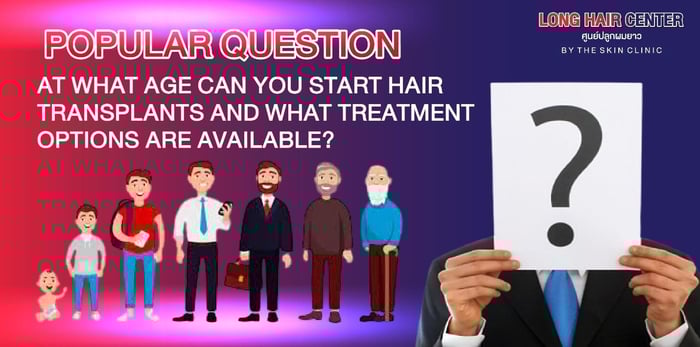
Hair loss and thinning are common issues that many people face, regardless of their age. Some may notice signs of balding as early as their early 20s. As we age, these problems tend to worsen, affecting confidence and overall appearance. One of the most frequently asked questions is, “At what age can I start a hair transplant?” and “What are the available treatment options?” In this article, we’ll delve into these questions and explore the answers in detail.
Table of contents
What Causes Early-Onset Baldness?
If parents have hair and scalp issues such as thin, weak, dry, or brittle hair, or even balding, their children may also be at risk of early-onset balding or receding hairlines. This condition is more commonly observed in men than in women, as genetics play a role in determining an increased number of androgen receptors in the body. This makes the scalp more sensitive to the hormone DHT (Dihydrotestosterone), leading to hair loss, thinning, and balding. In young male patients, a common issue is a receding hairline that forms an "M" shape.
At What Age Can You Start a Hair Transplant?
Hair Transplants: A Solution for Genetic Hair Thinning
It’s important to understand that hereditary baldness cannot be directly cured. But don’t lose hope! One of the most effective and noticeable solutions is hair transplantation, which involves relocating hair follicles from the nape area to the desired areas. Hair in this region has a unique property of being resistant to DHT (Dihydrotestosterone), making it less prone to shedding. For those in their 20s to 40s planning treatment, consulting a doctor is essential to assess the extent of hair loss and whether there’s enough hair in the donor area at the nape for transplantation. Additionally, having photos of one’s parents can help with accurate diagnosis and long-term treatment planning. Since younger patients may face the same issues as their parents in the future, this step is particularly crucial.
The concept of hair transplantation is that the transplanted hair should grow well, while the existing hair needs to be maintained for as long as possible. Otherwise, only the transplanted hair will remain in the future. While transplanted hair is unaffected by DHT, existing hair will continue to shed with age. Therefore, it’s vital to take measures to slow hair loss, which can involve various supplementary treatments. Doctors may recommend different approaches, such as medication, topical treatments for areas where hair is still intact, or hair follicle stimulation treatments. The choice of method depends on the current condition of the hair, such as thinning or increased shedding.
What Are the Treatment Options for Hair Loss and Thinning?
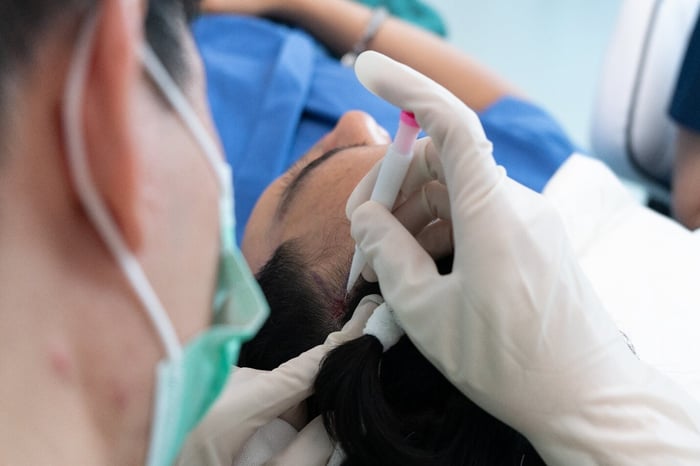
First, the doctor will use a high-magnification scope to analyze the hair follicles. For patients who still have small or fine hairs remaining, treatment options such as oral medication, injections, topical applications, or light therapy can be used to stimulate and nourish the hair follicles without requiring a hair transplant. However, if the scalp is entirely bald with no remaining follicles, hair transplantation becomes necessary. Here are some popular treatments for hair loss and thinning:
PRP (Platelet-Rich Plasma)
This involves injecting highly concentrated platelets into the scalp to nourish hair follicles, strengthen, and slow hair loss. It’s a safe treatment that doesn’t involve chemicals since it uses the patient’s own platelets.ALMI Nanofat
A method where the patient’s own fat cells are injected to rejuvenate and stimulate hair follicles or prepare for hair transplantation. This technique promotes thicker, healthier hair and is supported by research. It has been found that increasing the thickness of the scalp’s fat layer improves blood flow to the hair follicles.Rigenera Micrograft Hair
A non-surgical hair restoration technique that extracts hair follicle cells from the back of the scalp, processes them, and reinjects them into thinning areas. This triggers natural repair and nourishment processes in the affected area.
There are various treatment options for thinning hair and baldness, tailored to suit each individual. If you notice excessive hair shedding or signs of thinning, don’t let the problem escalate until treatment options become limited or it leads to permanent baldness that no method can resolve. We recommend a free consultation with the medical team at The Skin Clinic for diagnosis and personalized treatment planning to help your hair stay with you for as long as possible.