Table of contents
- Key Concepts of Hair Transplantation You Need to Know
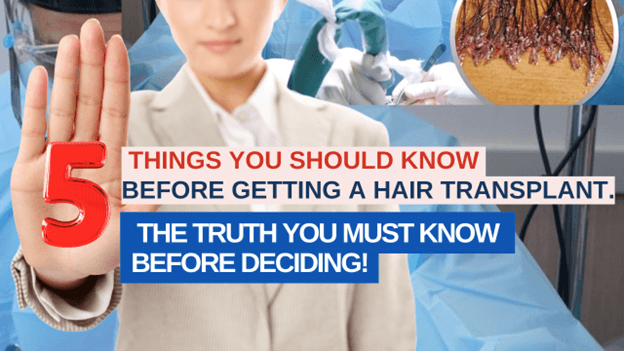
- 5 Things You Should Know Before Deciding on a Hair Transplant?
- 1. Do not proceed with a hair transplant without a Hair Scan examination.
- 2. Do not proceed with a hair transplant without a vitamin level assessment.
- 3. Do not proceed with a hair transplant without a comprehensive health check.
- 4. Do not proceed with a hair transplant without consulting with a hair transplant specialist.
- 5. Do not proceed with a hair transplant without requesting a video of every step of the procedure.
- Dr.Top Hair Hospital by The Skin Clinic, The Solution to Your Hair Problems
Hair transplantation is an effective treatment option for thinning hair and baldness. However, before making the decision to undergo the procedure, here are 5 important things you should know. Many people have misconceptions or fail to prepare properly, which can lead to results that do not meet their expectations. A hair transplant is not just about aesthetics, it’s a long-term investment in your confidence! So, what are the key things you need to know? Let’s find out!
Key Concepts of Hair Transplantation You Need to Know
Hair transplantation is the process of relocating hair follicle cells from the back of the scalp, an area where hair is naturally strong and resistant to DHT (Dihydrotestosterone), the primary cause of genetic hair loss and thinning. These follicles are then transplanted to the desired area. Once the grafts are extracted, no new hair will grow in their place. Since hair transplantation utilizes a limited hair resource, careful treatment planning is crucial to ensure the best results. The key to a successful outcome lies in healthy hair growth from transplanted follicles while also preserving existing hair for as long as possible.
5 Things You Should Know Before Deciding on a Hair Transplant?
1. Do not proceed with a hair transplant without a Hair Scan examination.
Before undergoing a hair transplant, a Hair Scan is essential to analyze the hair and follicles in different areas, top, sides, and back of the scalp. This assessment helps determine the density and availability of hair follicles to ensure there are enough for transplantation. The doctor will then carefully plan the allocation of these limited resources to achieve the best possible hair transplant results.
2. Do not proceed with a hair transplant without a vitamin level assessment.
Before undergoing a hair transplant, it is essential to check vitamin and nutrient levels, such as Zinc, Biotin, and Vitamin D, to ensure the body is not experiencing malnutrition. If underlying deficiencies are not addressed or a blood test is not conducted to determine the cause of hair loss, the transplant may not be successful, and the hair may not grow as expected.
3. Do not proceed with a hair transplant without a comprehensive health check.
Before undergoing a hair transplant, it is essential to assess overall health and blood cell levels, including an EKG (Electrocardiogram), to evaluate the body’s readiness for the procedure. Without a proper health check, there may be risks during or after the transplant. For instance, if a patient is not in good health and the procedure must be stopped unexpectedly, extracted grafts that remain outside the body for too long may deteriorate or die, leading to unnecessary graft loss with no benefit.
4. Do not proceed with a hair transplant without consulting with a hair transplant specialist.
Before undergoing a hair transplant, it is crucial to have a thorough evaluation and treatment plan designed exclusively by a doctor. Doctors are professionally trained, knowledgeable, and experienced in diagnosing and treating hair-related issues. They can provide accurate advice and select the most suitable treatment techniques for each individual. A doctor’s primary goal is to achieve the best possible results, unlike consultations with sales representatives or non-medical personnel, whose focus may be on sales rather than effective treatment.
5. Do not proceed with a hair transplant without requesting a video of every step of the procedure.
Before undergoing a hair transplant, it is essential to request a video recording of every step of the procedure. This serves as proof that the doctor personally performs the entire process from start to finish. Having a recorded video ensures confidence in the quality and medical standards of the treatment while also providing verifiable evidence in case of any concerns. Additionally, it allows you to confirm that the procedure was conducted correctly and safely, a right every patient should have when receiving treatment at a clinic or medical facility. At The Skin Clinic, we provide a video of every step of the hair transplant process to ensure confidence and integrity in our treatments.
Dr.Top Hair Hospital by The Skin Clinic, The Solution to Your Hair Problems

Comprehensive treatment techniques to address hair loss, thinning hair, and baldness.
We are a permanent hair transplant clinic providing comprehensive solutions for hair loss, thinning hair, and baldness. Our clinic offers a full range of hair transplant techniques, including Long Hair FUI, FUI, DHI, as well as non-surgical hair loss treatments such as FRM Anti Hair Loss, ALMI Nanofat, Rigenera, and SVF.
A leading hair transplant clinic in Thailand with world-class medical standards.
We are a highly popular and trusted hair transplant clinic, serving both domestic and international patients. Our clinic is led by a team of American Board-certified ABHRS hair transplant doctors with over 20 years of experience and more than 10,000 successful hair transplant cases.
Specialized hybrid hair transplant techniques backed by scientific research.
We are the only hair transplant clinic in Thailand offering a combined treatment of hair transplant techniques alongside fat injections to stimulate hair follicles, supported by research. Using the Long Hair x ALMI Nanofat technique, we prepare the scalp before transplantation, helping to reduce the risk of Shock Loss after the procedure, slow down the shedding of existing hair, and enhance the thickness and strength of hair follicles.
Treating hair loss, thinning hair, and baldness requires long-term planning, starting from identifying the underlying causes, preparing the body, and providing ongoing care to maintain existing hair for as long as possible. We hope that these 5 important things to know before getting a hair transplant will help you confidently choose a hair transplant clinic that best meets your needs.