Table of contents
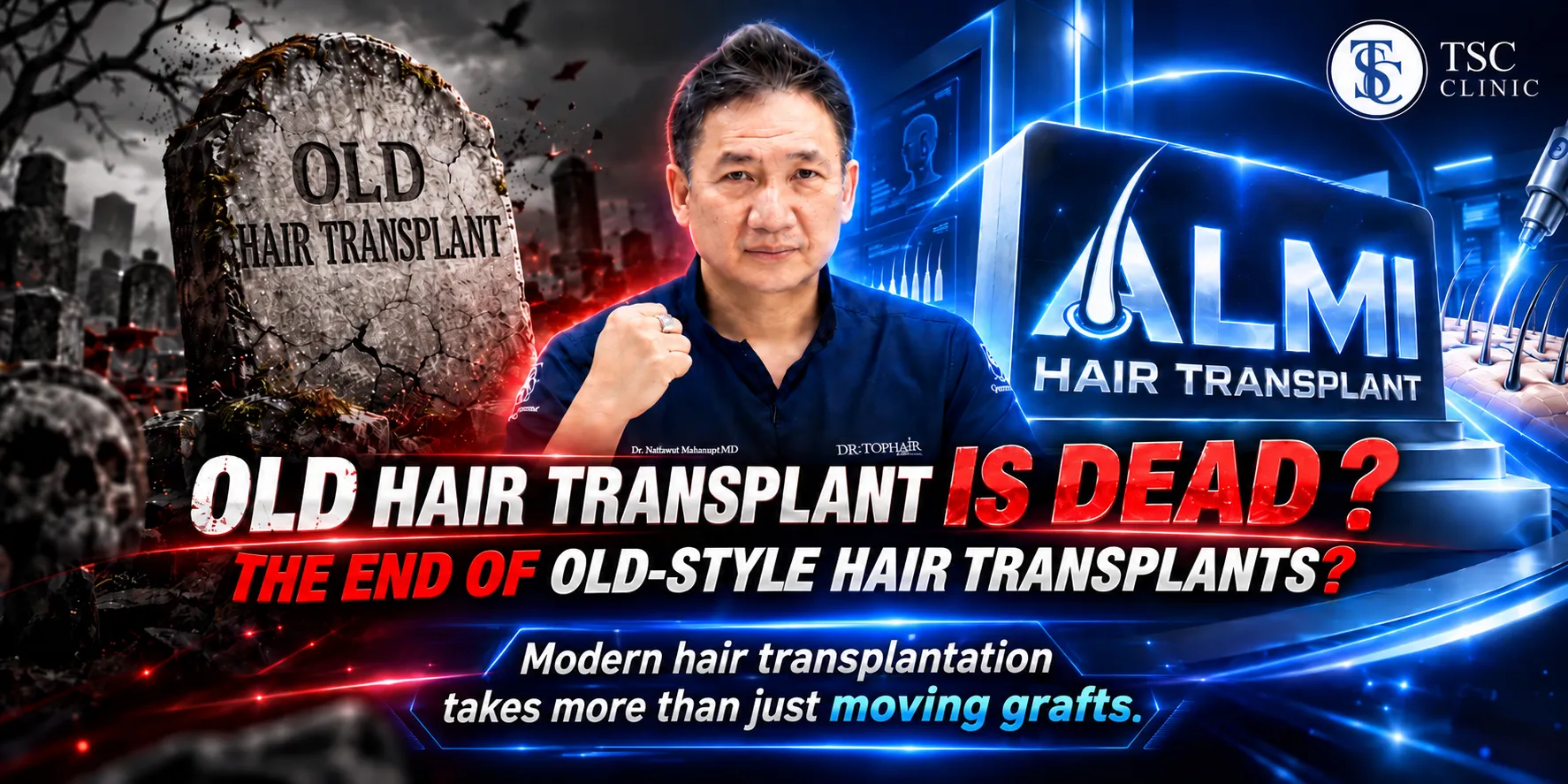
When a hair transplant goes wrong, it can leave lasting scars and an unnatural result. It may be time to rethink an approach that focuses only on moving grafts. Modern hair transplantation also asks a longer-term question: how can we help the results last as long as possible? Drawing on his experience treating patients and exchanging knowledge with colleagues on the international stage, Dr. Top explains an approach that considers both safety and long-term results.
Why the approach to hair transplantation needs to change
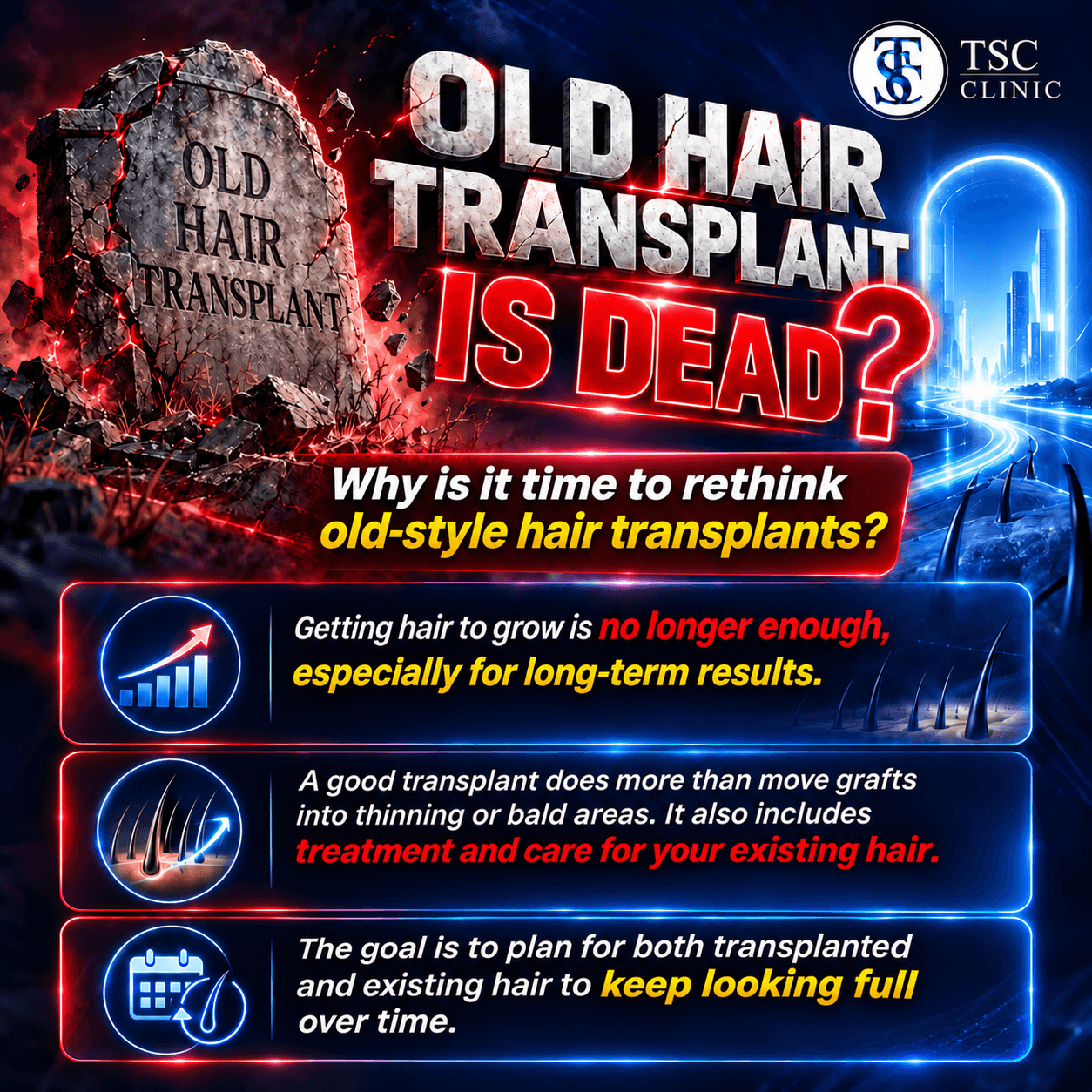
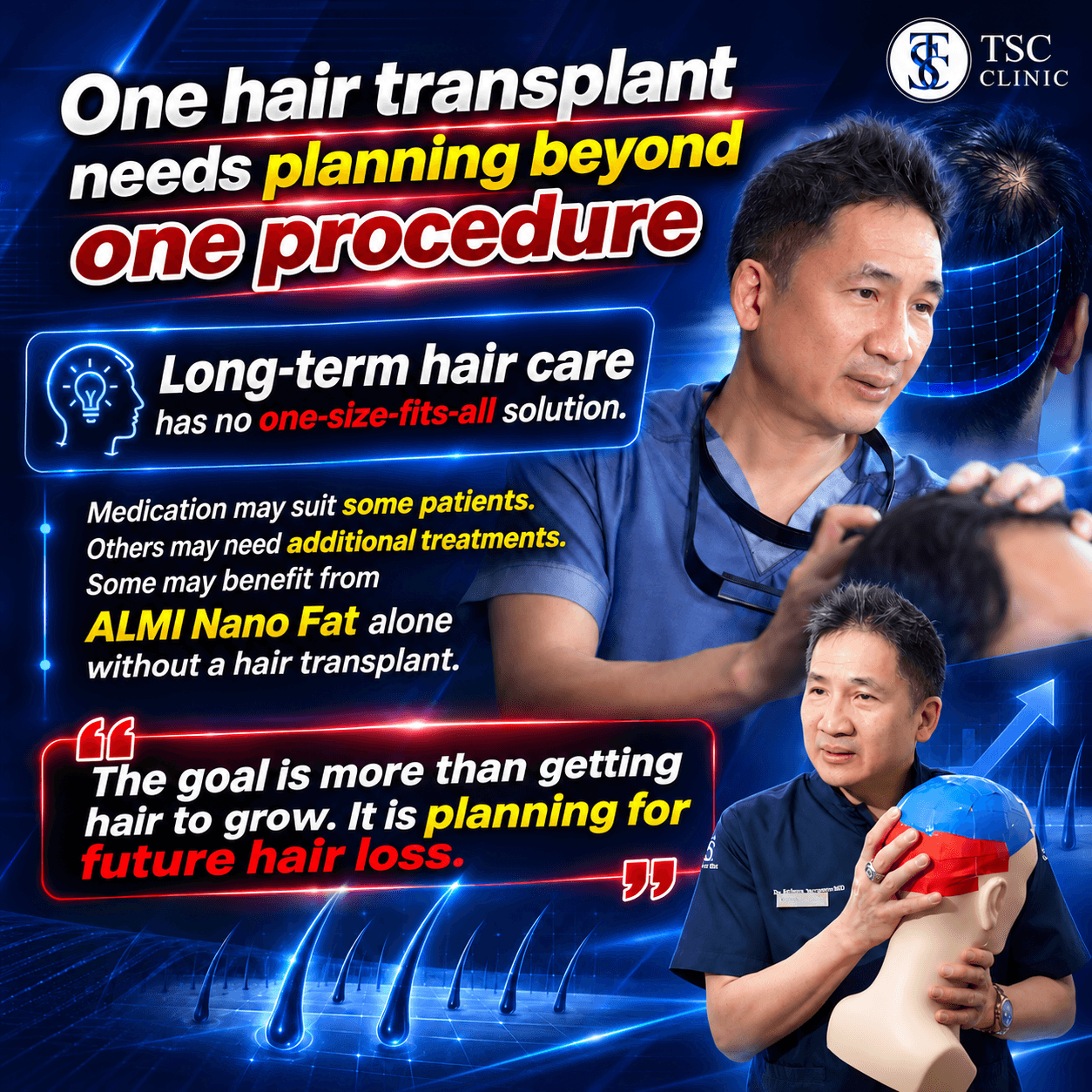
Getting transplanted hair to grow is only part of the picture, especially when looking at results over the years ahead. A good hair transplant plan should go beyond moving grafts into thinning or bald areas. It should also include care for the existing hair that remains. The aim is to help both the transplanted hair and the existing hair continue to look healthy and full.
Problems can arise with “all-you-can-transplant” packages or offers of unlimited grafts when they lead to excessive use of the available donor hair. A patient may be left with very little donor hair, poor growth from the transplanted grafts, and continued loss of their existing hair. Correcting the result later can be difficult if there are no longer enough suitable grafts for another procedure.
Why hair can become thin again after a transplant
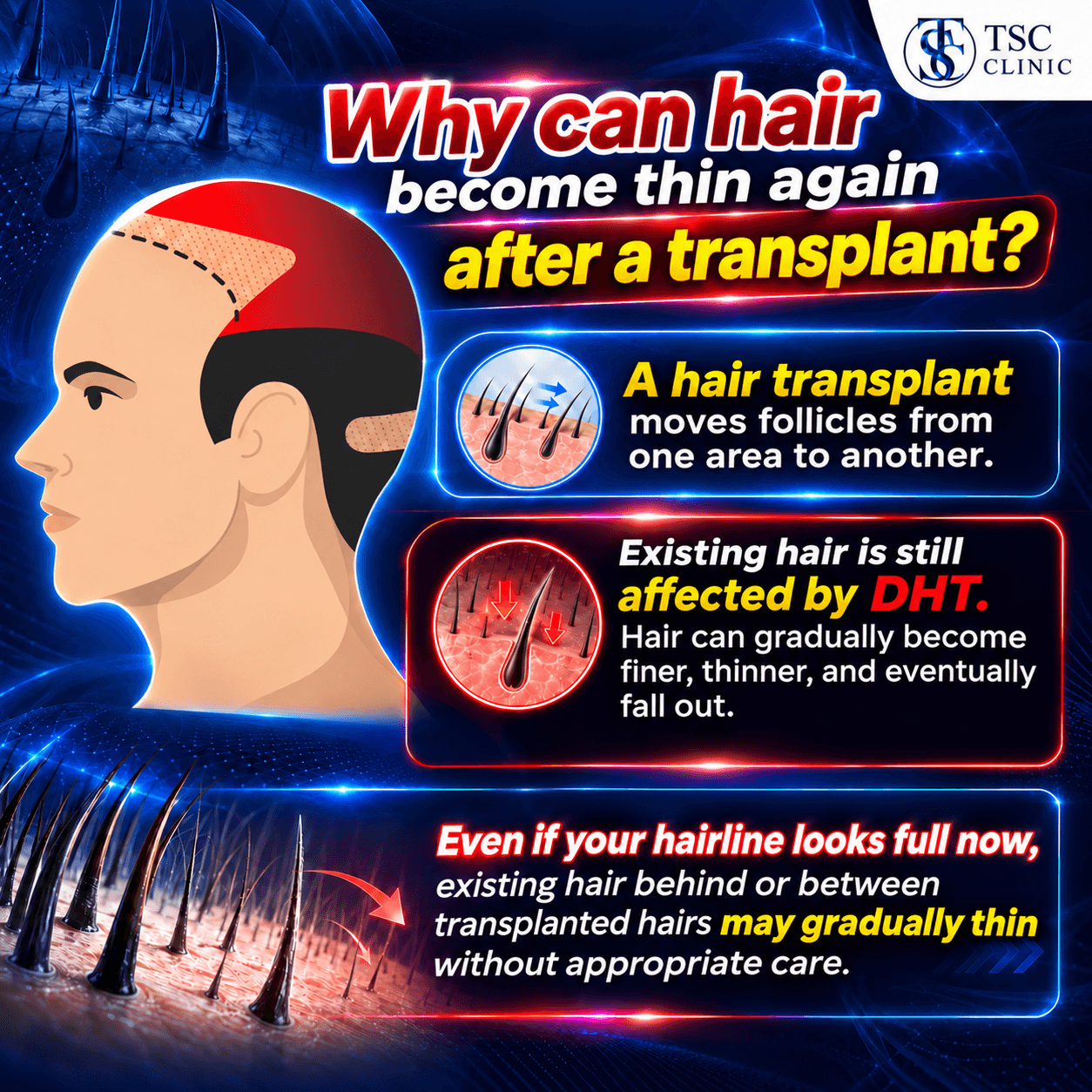
A hair transplant moves hair follicles from one area to another. What is often overlooked is that the existing hair can still be affected by DHT, or dihydrotestosterone. This hormone is a major factor in follicle miniaturization, a process in which hairs gradually become finer and thinner before eventually being lost.
The hairline may look full at first. But if the existing hair between the transplanted hairs is not treated appropriately, it can continue to fall out. Over time, the area may begin to look thin again.
Why treatment does not end with surgery
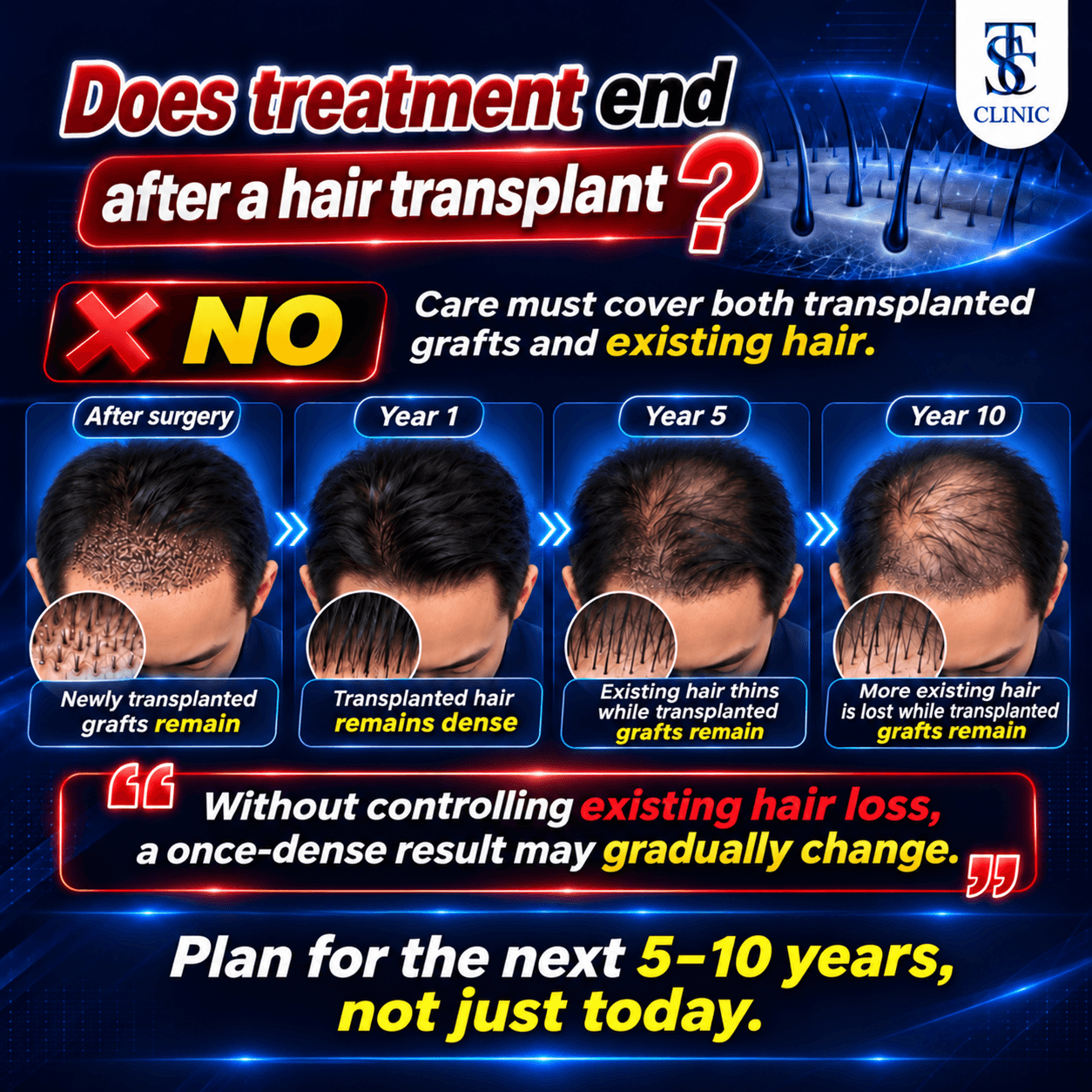
After a hair transplant, care should cover more than the newly placed grafts. There also needs to be a plan to manage ongoing loss of the existing hair. Without it, a result that once looked dense may gradually change as the original hair thins, even while the transplanted grafts remain.
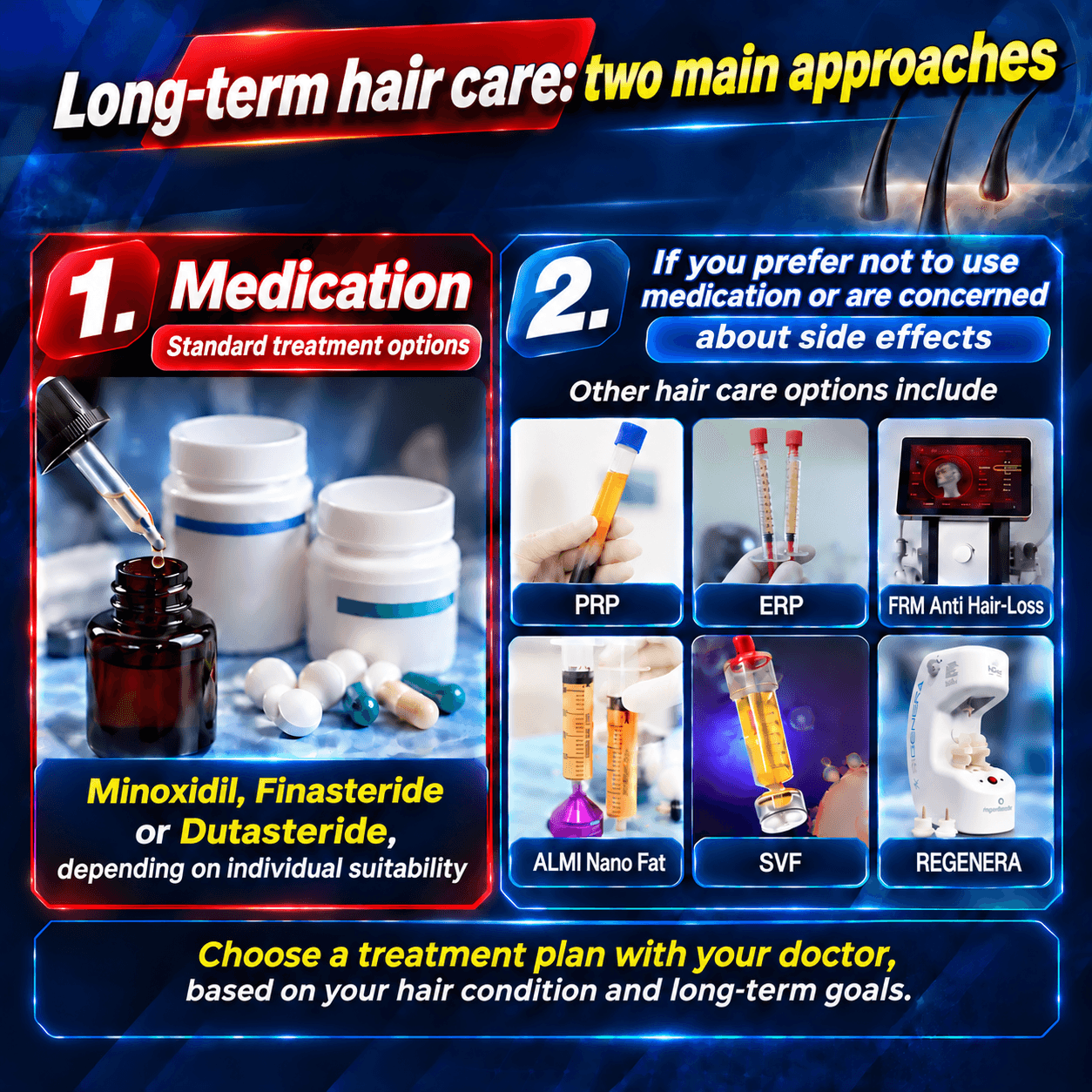
Planning a hair transplant therefore means thinking about how the hair may look in five to ten years, as well as how it looks today. The main approaches to ongoing care include:
- Medication: standard treatment options include minoxidil, finasteride, or dutasteride.
- Options for patients who prefer not to use medication: PRP, ERP, FRM Anti Hair-Loss, ALMI Nano Fat, SVF, or REGENERA.
There is no single treatment plan that suits everyone. Medication may be appropriate for some patients, while others may need to consider additional treatments alongside it to get the best result for their situation.
Caring for existing hair before a transplant
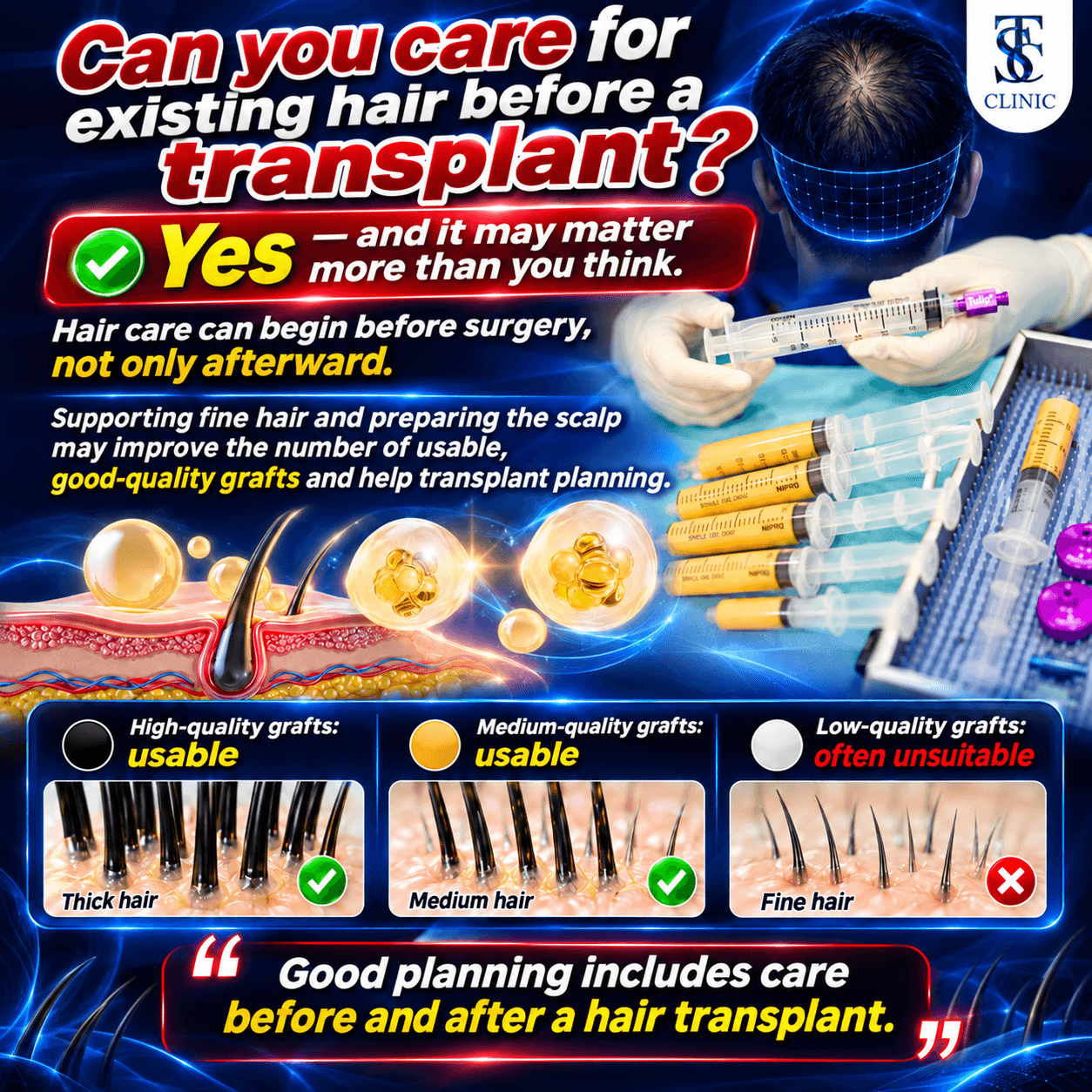
Care can begin before surgery, and this preparation matters more than many people realize. Poor-quality grafts, such as those with very fine hairs, may not be suitable for transplantation.
Helping fine hair become stronger and preparing the scalp before surgery can improve graft quality and support the outcome of the transplant. A well-planned approach should therefore include care before the procedure and continued treatment afterward.
What ALMI Hair Transplant involves
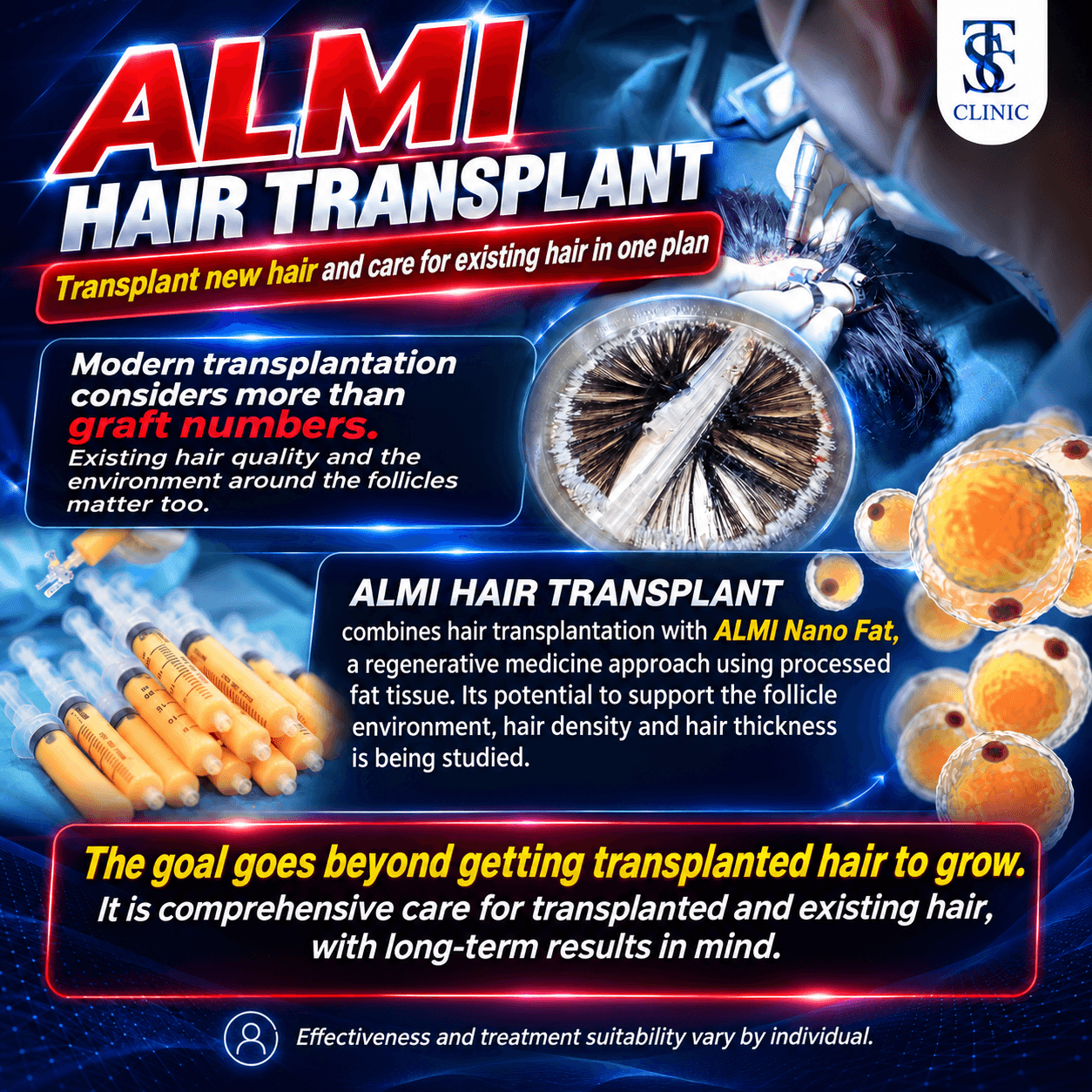
Modern hair transplantation needs to consider more than graft numbers. The quality of the existing hair and the condition of the tissue around the follicles also matter.
ALMI Hair Transplant combines hair transplantation with ALMI Nano Fat, an approach within regenerative medicine. Fat is taken from the patient’s own body, processed, and then injected into the scalp.
Studies exploring the potential of this technique suggest that it may help improve and support the environment around hair follicles and promote hair density. The aim is to care for both the transplanted hair and the existing hair as part of a longer-term treatment plan. Effectiveness and suitability vary from person to person and depend on a doctor’s assessment.
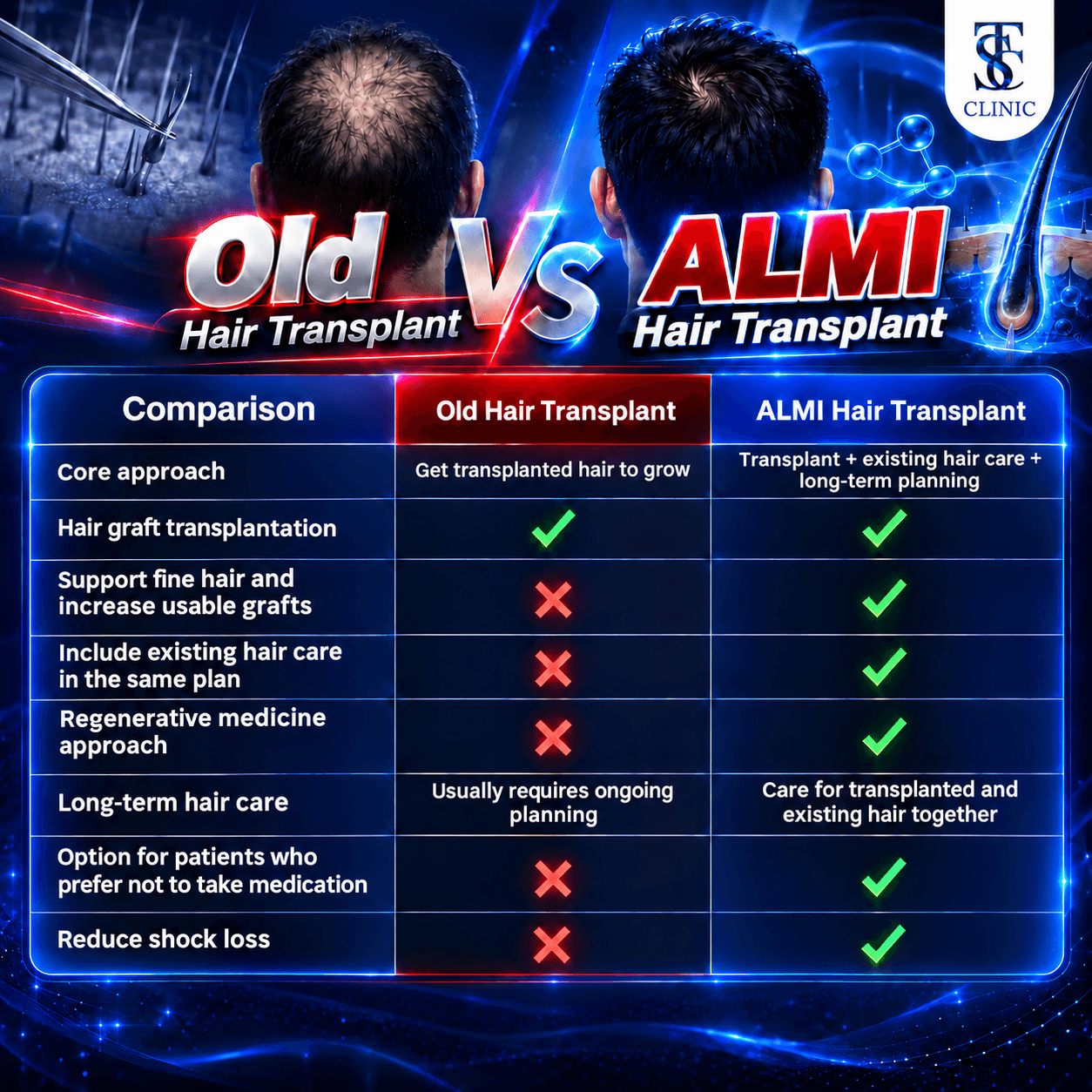
After a transplant, existing hair should not be left to become progressively thinner across the scalp. A successful hair transplant involves planning for future hair loss, caring for the newly transplanted hair, and supporting the hair that is already there. Together, these steps help maintain a natural-looking result and restore confidence.