Table of contents
- 1. Use the fewest grafts possible, for the longest possible future
- 2. The hairline must be as high as possible (appropriate for the patient)
- 3. Respect existing hair; do not disturb it unless necessary
- 4. Hair transplantation is not the only solution for every type of hair thinning
- 5. Make what is thought to be impossible, possible
Hair transplantation is not merely moving hair from one area to another; it is the strategic planning of a limited hair resource to achieve maximum efficiency. A single wrong decision can cause damage far beyond what is expected. This article compiles five essential philosophies that anyone considering a hair transplant should understand before making a decision, in order to achieve results that look natural, are safe, and sustainable.
1. Use the fewest grafts possible, for the longest possible future
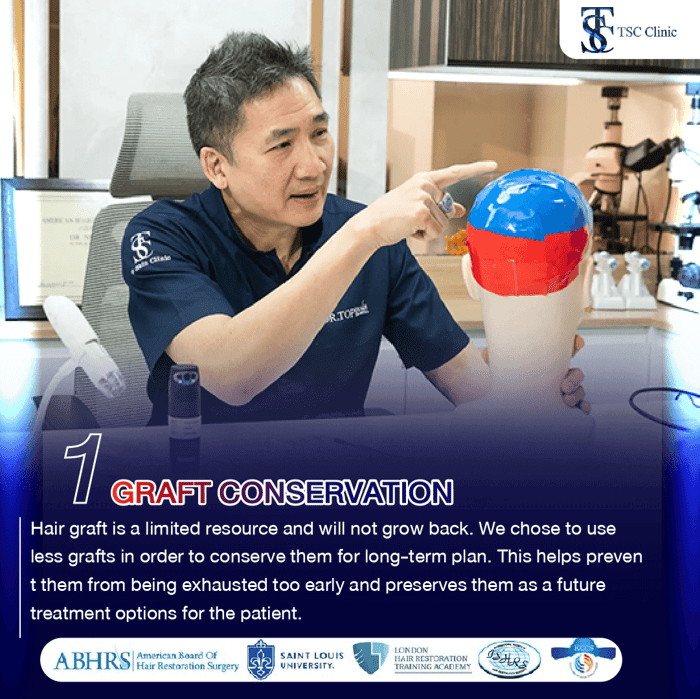
Because the number of hair grafts is limited—once they are used, they are gone forever and cannot regenerate—doctors must use grafts sparingly and with long-term planning. This is to prevent graft depletion too early and to preserve treatment options for the patient’s future. The area used for extracting hair follicle cells is called the Donor Area (the back of the scalp), which is not influenced by the hormones that cause hair loss. When hair follicle cells are transplanted to a new location,
the hair will grow normally. However, in the area where the follicle cells have been removed, new hair will not grow again. If too many grafts are extracted, an overharvesting condition can occur, causing the hair at the back of the head to become visibly thinner, showing noticeable gaps that cannot be corrected. Therefore, a good hair transplant requires careful planning of the appropriate number of grafts, so that new hair growth adequately covers areas of thinning or baldness while maintaining the natural density of the existing hair.
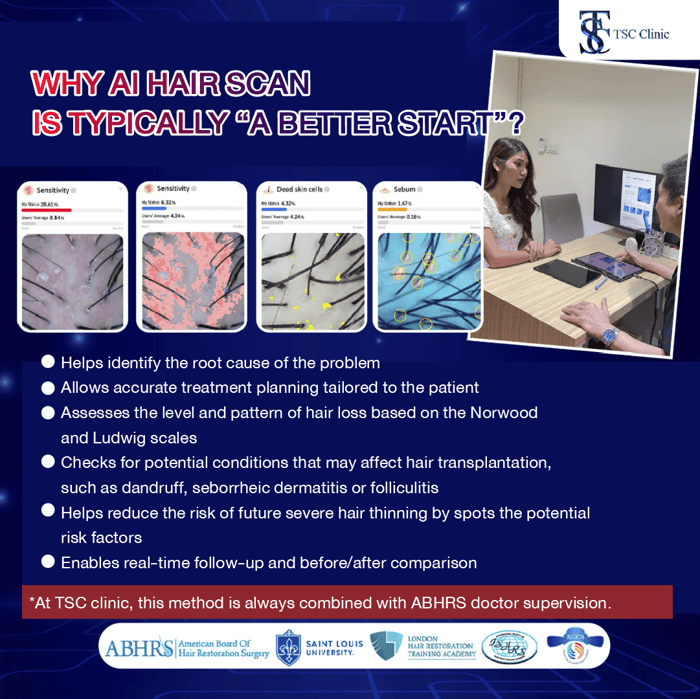
At THE SKIN CLINIC, we use AI Hair Scan technology to accurately analyze hair conditions, clearly showing how many hairs each individual graft contains on average. The average number of hairs per graft is an important factor in hair transplant planning. If one graft contains a higher number of hairs, the transplanted hair can appear denser without the need to use many grafts, thereby reducing the consumption of hair resources for the future. This technology also allows doctors to assess hair transplant potential from the beginning, making the treatment more effective and best suited to each patient.
2. The hairline must be as high as possible (appropriate for the patient)
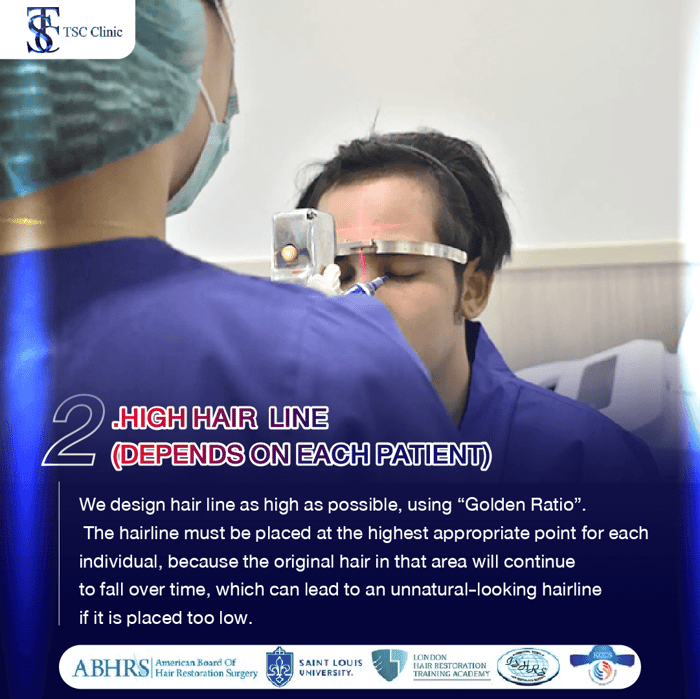
Doctors design the hairline based on the three-part facial proportion principle (Golden Ratio) and position it as high as appropriately suited to each individual patient, rather than as low as possible. This is because an excessively low hairline, as time passes and hair continues to fall out,
may eventually leave only the transplanted hair remaining, which appears unnatural. In the future, if additional hair transplantation is required, the available grafts may be insufficient to correct the gaps between the transplanted hair and the remaining natural hair.
3. Respect existing hair; do not disturb it unless necessary
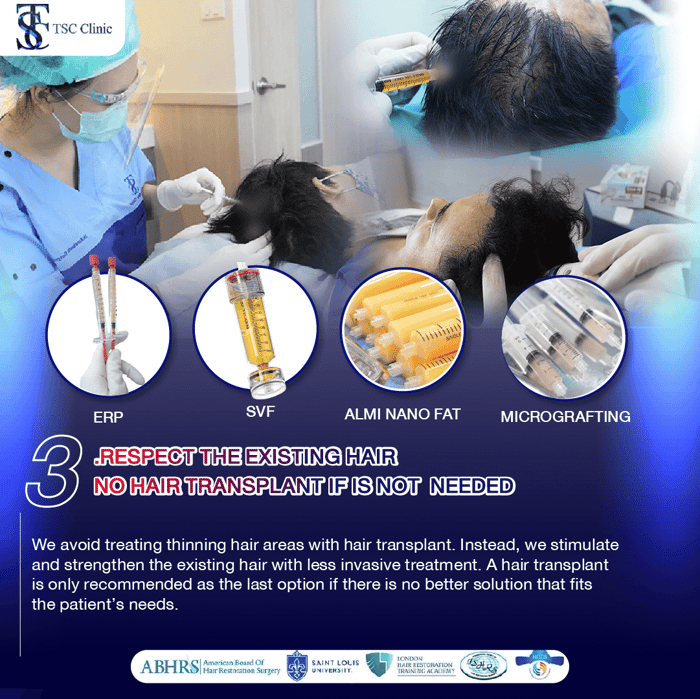
Doctors will try to avoid areas where existing hair is still present and will always prioritize stimulation and regeneration treatments to preserve the existing hair first. Hair transplantation is used as a last option, only when other treatment methods truly cannot meet the patient’s needs, in order to protect the existing hair for as long as possible. Techniques used to treat hair loss and thinning without hair transplantation include:
- ALMI Nano Fat: A hair follicle regeneration technique that uses the patient’s own fat, processed to obtain small-molecule fat, which is then injected into the scalp in areas affected by hair loss and thinning.
- SVF (Stromal Vascular Fraction): A process that uses the patient’s own fat and separates it to obtain stem cells and growth factors that have the ability to repair tissue, stimulate new hair growth, and restore weakened hair follicles to become strong again.
- ERP (Exosome Rich Plasma): mRNA technology that helps restore and stimulate hair follicle cells, slow down hair loss, and increase hair density.
- Micrografting Hair: A hair thinning restoration technique that uses hair follicle cells from the back of the scalp, which are processed to extract high-quality essential substances that help restore hair follicles, stimulate new growth, and slow hair shedding.
4. Hair transplantation is not the only solution for every type of hair thinning
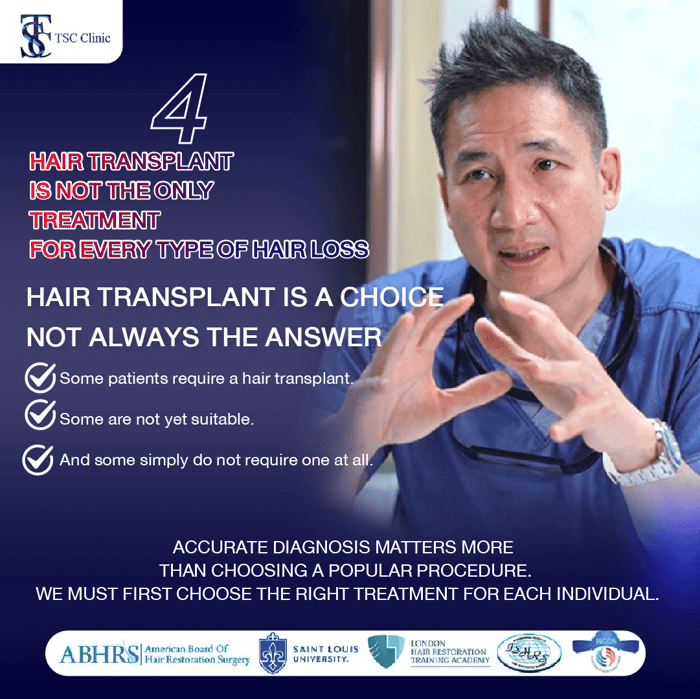
Hair transplantation is one of the treatment options, not the complete solution. Certain types of hair thinning must first be treated at the root cause. Some cases are not yet suitable for hair transplantation, and some cases may not require hair transplantation at all, including conditions in which hair transplantation cannot be performed, such as:
- Diffuse Unpatterned Alopecia (DUPA)
- Frontal Fibrosing Alopecia (FFA)
- Central Centrifugal Cicatricial Alopecia (CCCA)
- Alopecia Areata (AA)
- Trichotillomania
Therefore, an accurate diagnosis is more important than undergoing hair transplantation as quickly as possible. To achieve good results, treatment must begin with selecting the most appropriate approach for each individual. At THE SKIN CLINIC, we use AI Hair Scan technology to analyze the hair and scalp and identify the true underlying causes of the problem, allowing us to plan hair loss and hair thinning treatments accurately and effectively.
5. Make what is thought to be impossible, possible
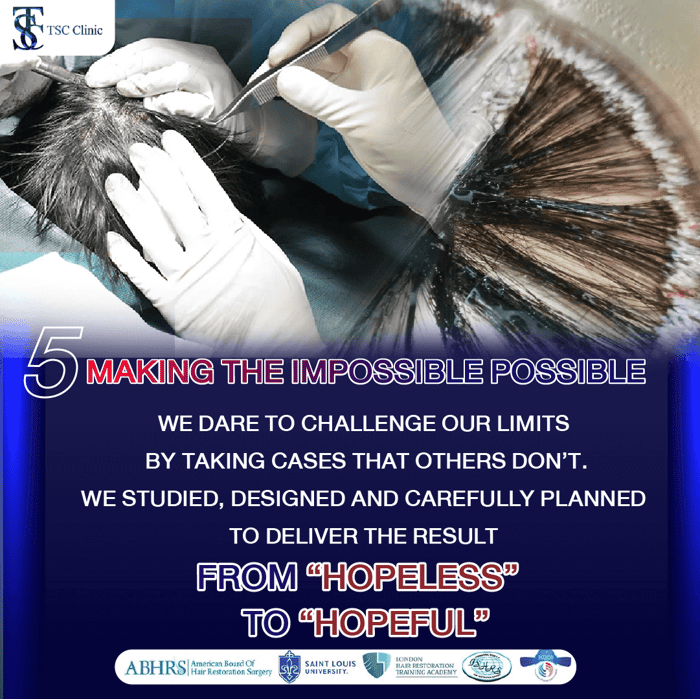
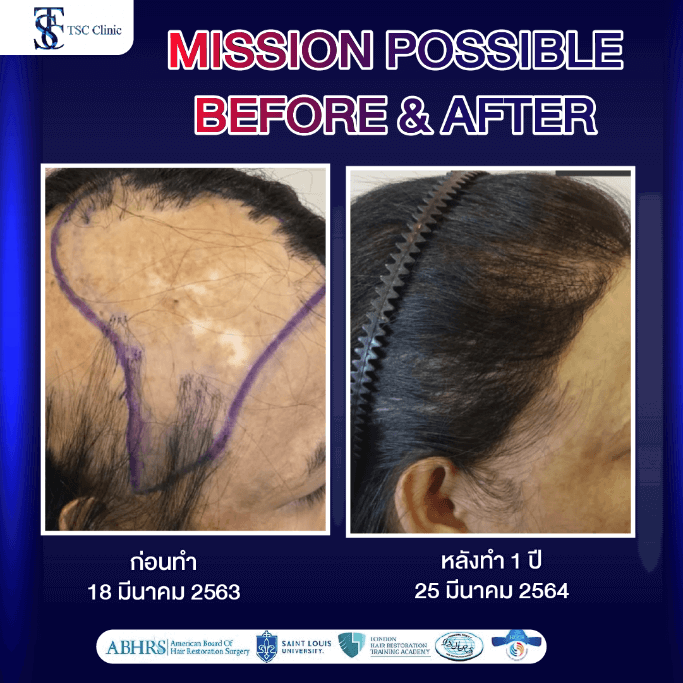
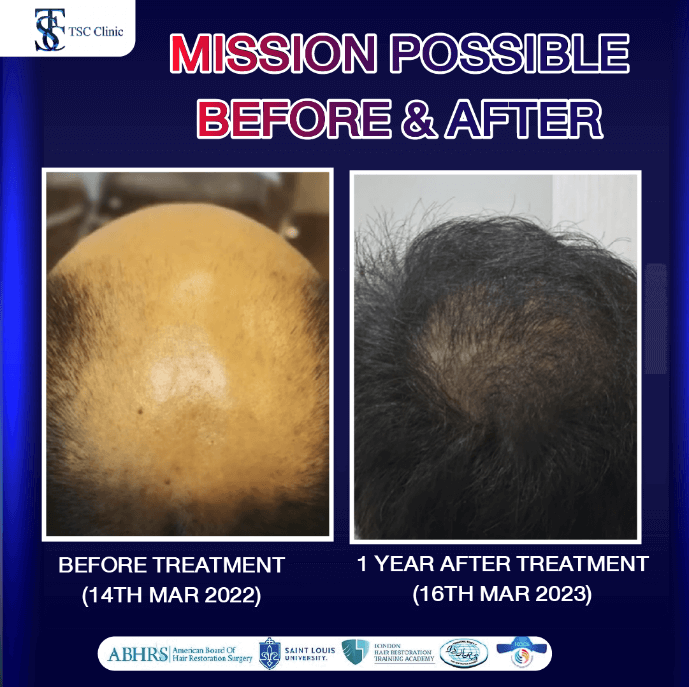
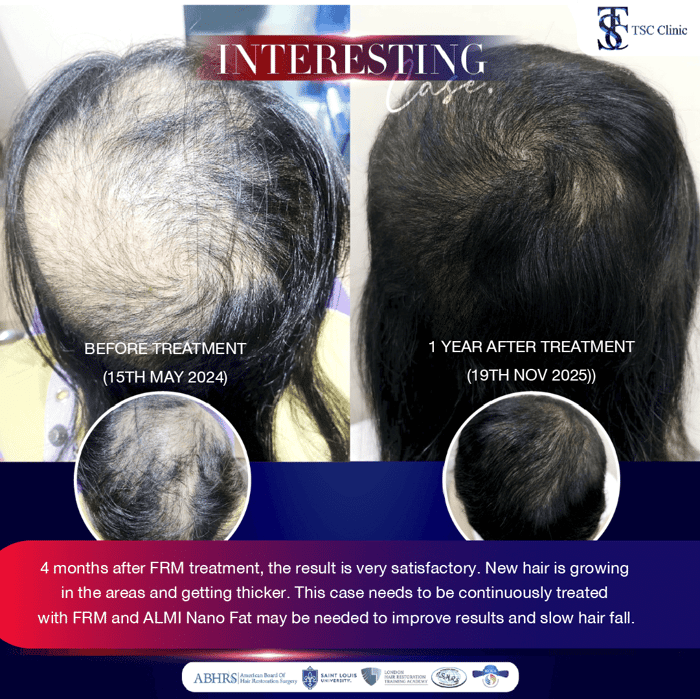
Pushing the limits of hair transplantation—cases that many people consider impossible. At THE SKIN CLINIC, we study, design, and perform each procedure with great care, transforming results that were once considered “unexpected” into outcomes that are “reliably achievable.” Even cases with no remaining hair at all can regain hair, and challenging cases such as scalp burn scars can also experience new hair growth once again.
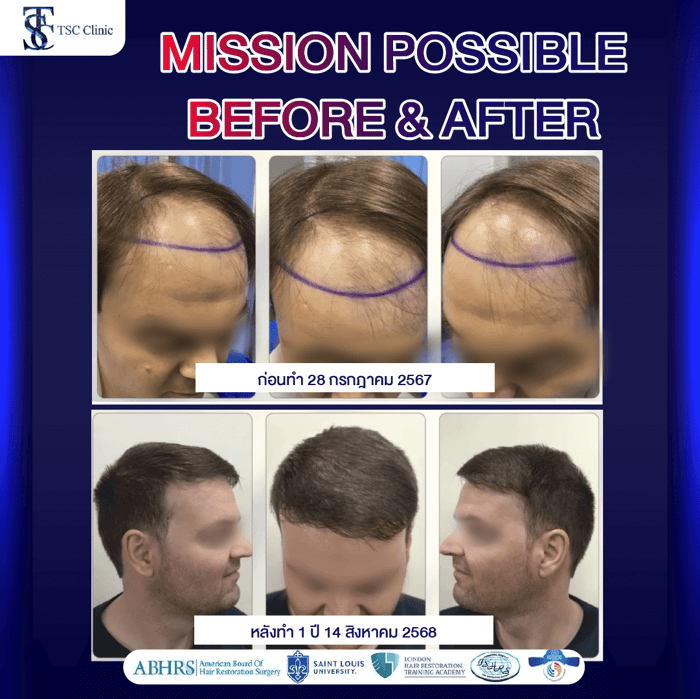
These five philosophies serve as a safeguard to prevent you from making the wrong decisions regarding hair transplantation. If you are facing problems with hair loss or hair thinning, do not allow the condition to progress to the point where it becomes difficult to treat. You can consult a team of specialist doctors at THE SKIN CLINIC, because proper treatment begins with an accurate and precise diagnosis.