Table of contents
Have you been using Minoxidil for only 3 months and feel like your hair is still just as thin as before? This problem makes many people lose heart and assume that the medication is not working, causing them to stop using it abruptly. But don’t jump to conclusions just yet, because there are deeper factors involved, from the hair growth cycle and the way you use it, which you may be doing incorrectly without realizing it to genetics. Let’s take a closer look at 5 important things you need to know before starting Minoxidil.
Common problems from using Minoxidil and how to fix them
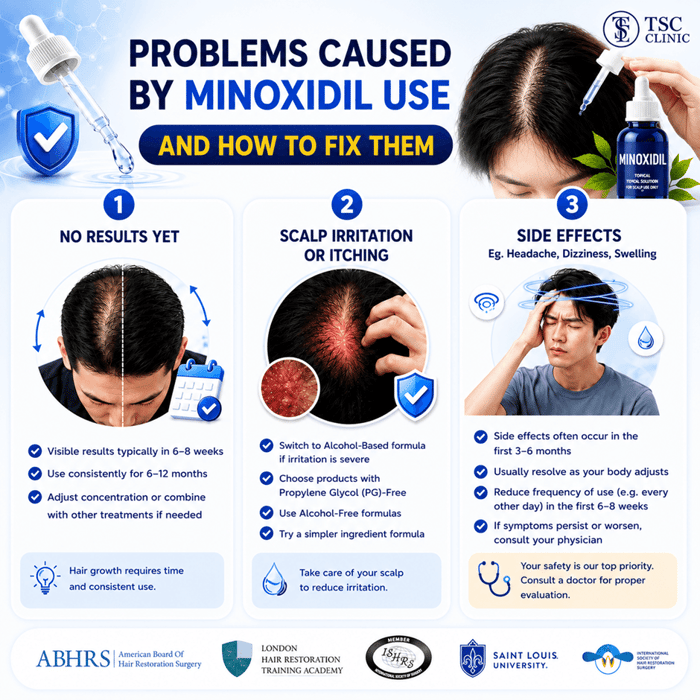
1. No visible results after use
- Hair needs time to grow, so do not stop the medication too soon.
- Evaluate the results every 6–8 weeks.
- Continue using it consistently for at least 6–12 months.
- Consider adjusting the concentration or adding other treatments in combination.
2. Itching or scalp irritation
- Switch from an alcohol-based formula to a gentler formula.
- Choose a product that does not contain propylene glycol (PG-Free).
- Use an alcohol-free formula if you are prone to allergic reactions.
- Take care of the scalp alongside treatment to help reduce irritation.
3. Side effects from the medication, such as lightheadedness, dizziness, or swelling
- These are commonly found during the first 3–6 months.
- The frequency of use can be temporarily reduced to every other day.
- In most cases, after continuous use for 6–8 weeks, the symptoms will gradually improve.
- If the symptoms are severe, you should consult a doctor, because safety is the most important priority.
Using Minoxidil requires time and continuous follow-up
Those who start using Minoxidil should not expect results within the first 1–3 months. In general, it is considered normal not to see clear changes during this period. In some cases, there may be temporary increased hair shedding, known as the Shedding Phase.
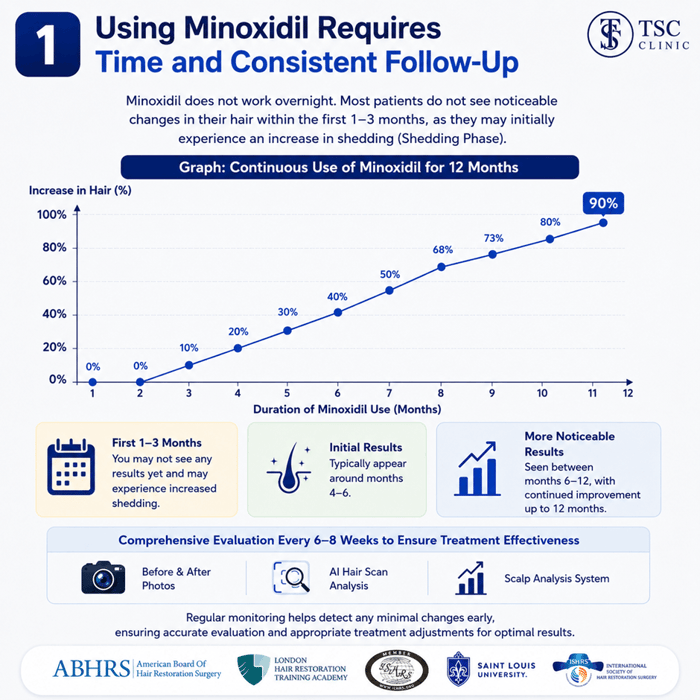
- During the first 1–3 months: Results may not be clearly visible yet, or there may be temporary increased hair shedding.
- During months 4–6: A clearer response may begin to appear.
- During months 6–12: Results become more noticeable and tend to stabilize after 6–12 months or longer of use.
To make the treatment more effective, results should be evaluated every 6–8 weeks by using photographs for comparison or AI Hair Scan technology to analyze hair density after using Minoxidil. This helps check how the scalp responds to the medication and assess the trend of new hair growth. This is because looking with the naked eye alone may not be enough to notice small changes. Regular follow-up helps make the evaluation more accurate and allows the treatment plan to be adjusted appropriately.
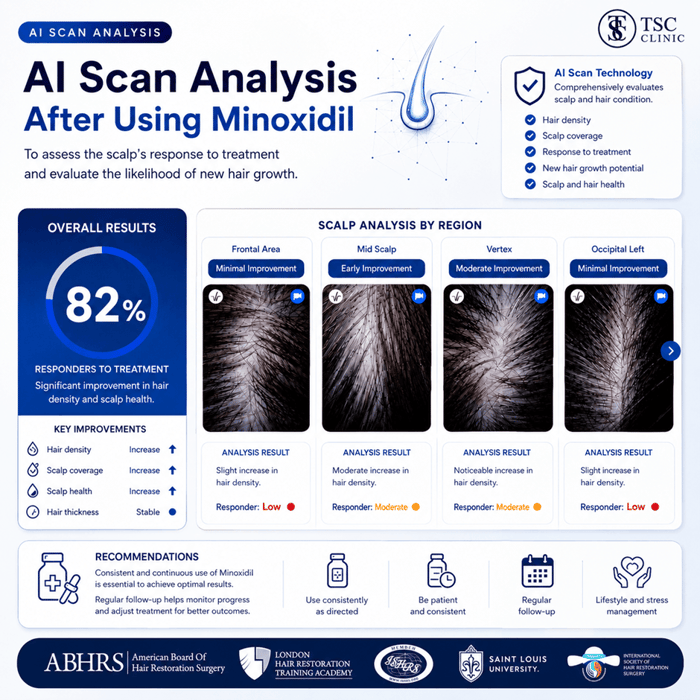
Additional recommendation: If the scalp responds well to Minoxidil, the medication should be used continuously while also supporting the treatment with lifestyle adjustments for better results, such as washing the hair with a gentle shampoo, avoiding stress, and eating nutritious food.
What should you do if you use Minoxidil and do not see results?
If Minoxidil has been used continuously for 6–12 months and there is still no response, further evaluation should be performed and the treatment plan should be adjusted appropriately.
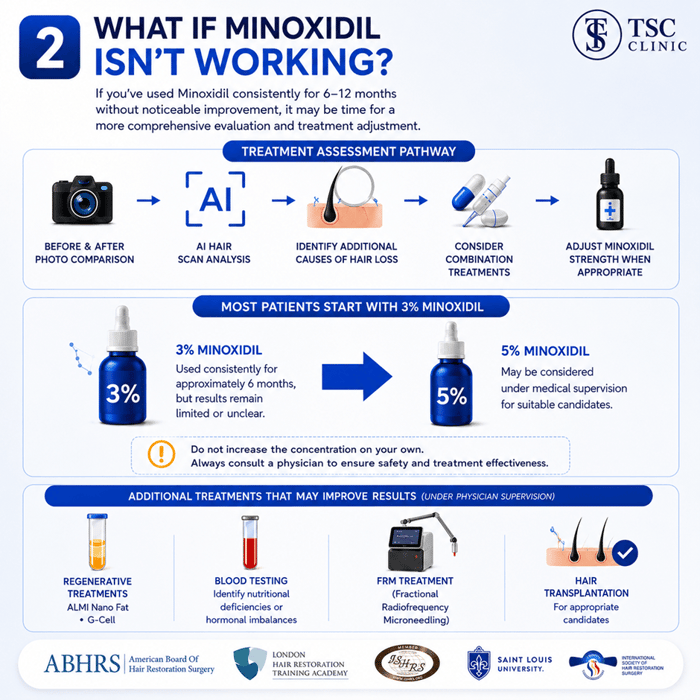
- Evaluation methods may include checking for other underlying causes of hair loss and performing blood tests to detect nutritional deficiencies or hormonal abnormalities.
- Treatment plan adjustments may include adjusting the medication concentration to suit the individual. However, as a precaution, you should not adjust the concentration by yourself. You should consult a doctor for maximum safety and effectiveness.
Other treatments may be considered in combination with Minoxidil to help enhance effectiveness under medical supervision, such as treatments including ALIMI Nano Fat, FRM Anti-Hair Loss, and hair transplantation in suitable cases.
Why do some people see results from Minoxidil while others do not?
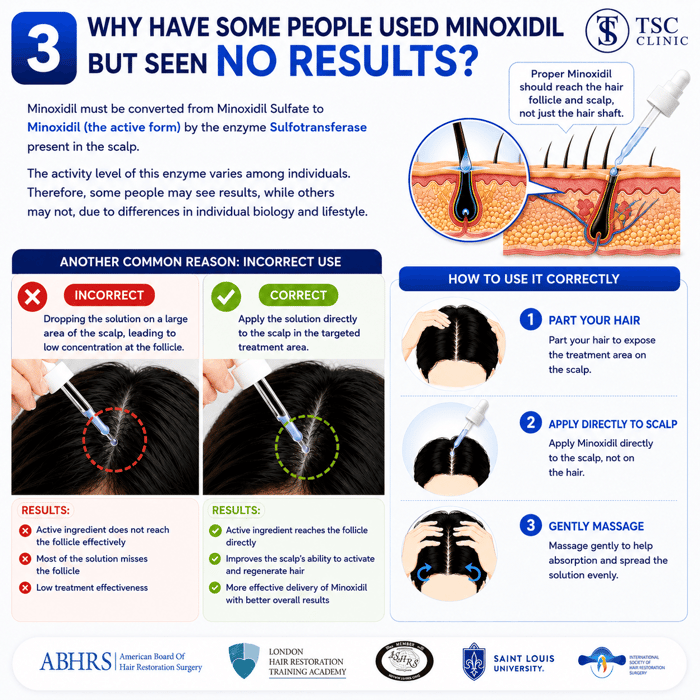
It is important to understand first that Minoxidil must be converted into Minoxidil Sulfate before it can become active. This process relies on the sulfotransferase enzyme found in the scalp. The activity level of this enzyme differs from person to person, which is why some people respond well to the medication, while others may respond only slightly or not at all. This is a factor related to each individual’s genetics. Another less common cause is:
- Incorrect application of the medication: If the drops are applied mainly onto the hair, most of the medication stays on the hair and has less contact with the scalp. As a result, Minoxidil cannot work at its full effectiveness.
- Correct application: The drops should be applied directly onto the scalp in the area that needs treatment. Then, gently massage the area to help the medication spread evenly across the scalp. Apply consistently twice a day.
Key takeaways every Minoxidil user needs to know
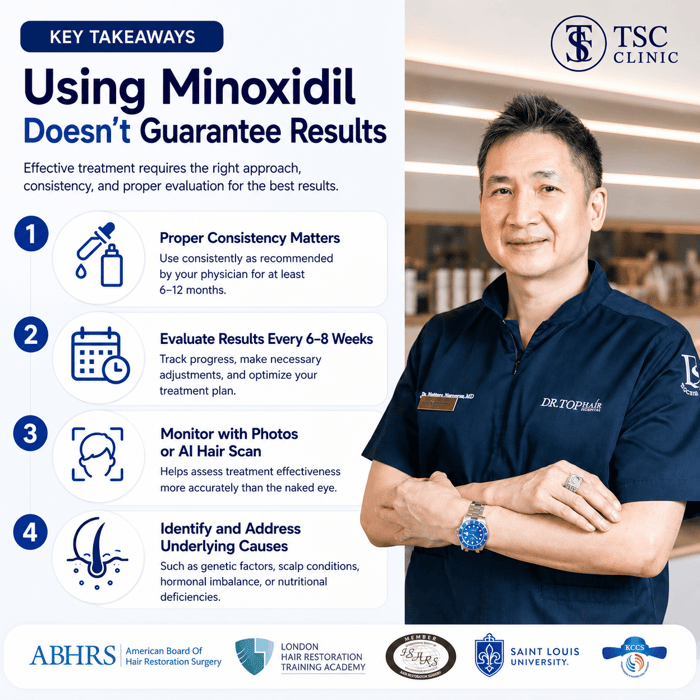
Using Minoxidil is not a treatment that produces immediate results. Effective treatment requires time, consistency, and continuous follow-up.
- Use the medication consistently according to the doctor’s instructions for at least 6–12 months in order to evaluate the treatment results.
- Follow up every 6–8 weeks to assess changes in the hair and adjust the treatment plan appropriately.
- Follow-up using photographs or AI Hair Scan can help compare hair density and evaluate treatment results more accurately.
- Identify other contributing factors that may cause hair loss, such as scalp diseases, inflammation, genetic conditions, or other health-related factors.
If you are one of those who have been using Minoxidil but still have not seen results, or if you are concerned about your current hair thinning condition, you can consult our hair specialists at THE SKIN CLINIC to identify the true underlying cause and create a treatment plan that meets your needs, helping restore your confidence and bring your hair back to looking fuller in your own way once again.