Table of contents
- Why does transplanted hair not grow after a hair transplant?
- Why do hair transplant prices vary so much from clinic to clinic?
- Why is hair transplantation a race against time?
- Additional costs you may have to pay if a hair transplant goes wrong
- 6 questions you must ask if you want good results
- Real cases: Why did the transplanted hair not grow, and can it be corrected?
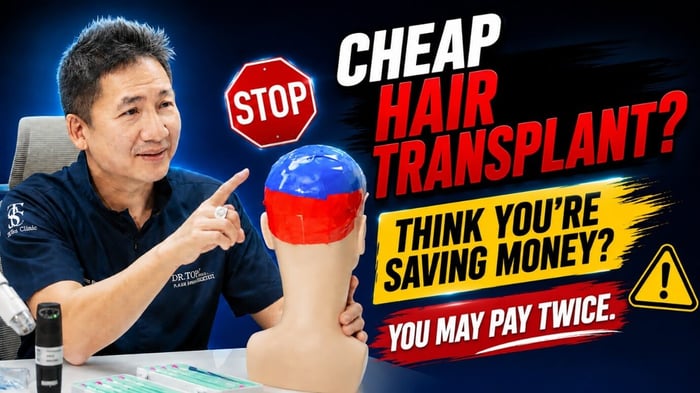
You may think you are saving money, but you may have to pay more than before! Before deciding to choose a “cheap hair transplant,” did you know that you may be putting yourself at risk of unexpected results, to the point that you may have to spend more money to fix it later? This is the truth you need to know before saving money today turns into a nightmare in the future.
Why does transplanted hair not grow after a hair transplant?
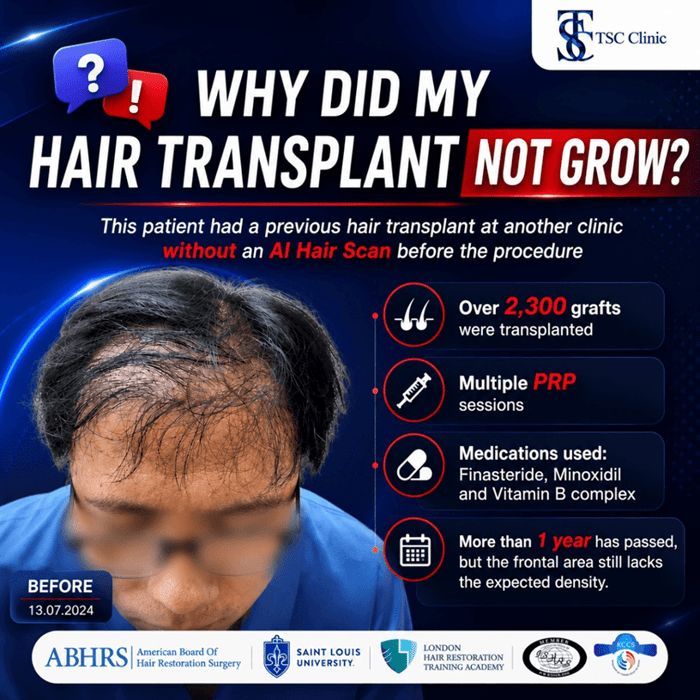
Hair not growing after a hair transplant can be caused by many factors. Many people misunderstand and think that “once hair is transplanted, it must grow 100%,” but the truth is not like that. This is because hair grafts can be damaged at every step of the hair transplant process, whether it is grafting extraction, graft sorting, storage, graft implantation, and post-procedure care. Most importantly, if imperfect hair grafts are transplanted, whether they are grafts without roots, broken grafts, grafts with broken legs, naked grafts without surrounding tissue, or grafts with damaged hair roots, “no matter how many times they are transplanted, the hair will not grow.”
Why do hair transplant prices vary so much from clinic to clinic?
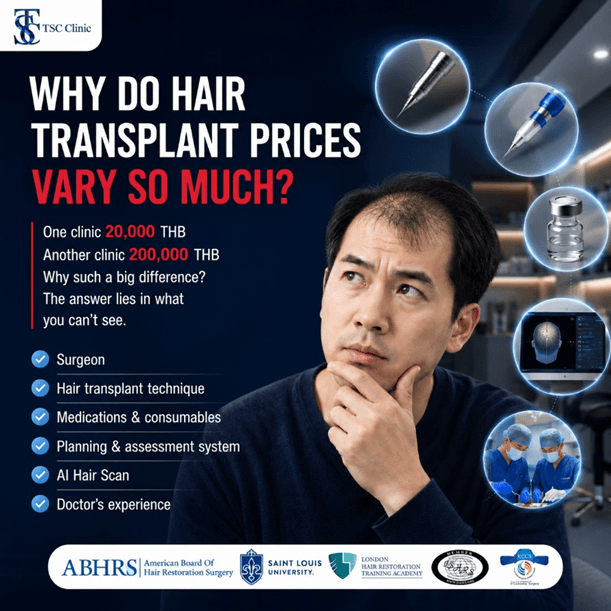
Some clinics offer hair transplants at 20,000 baht, while some clinics offer hair transplants at 200,000 baht. The difference in price comes from costs that many people may not know about, such as graft punch tools, implanter pens, anesthetic, and other equipment, as well as planning systems and graft assessment with AI Hair Scan, all the way to the experience of the doctor.
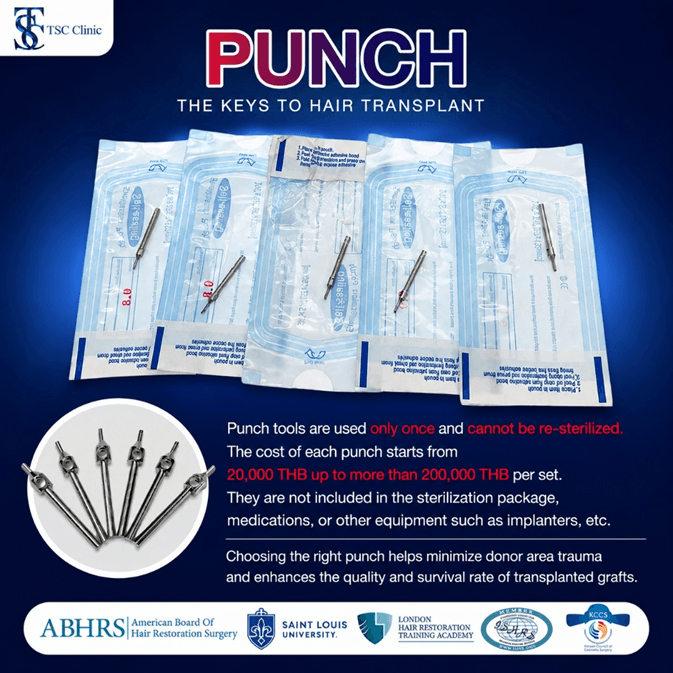
- Graft punch tool (Punch): A single-use device for harvesting hair roots, which should be allowed for the patient to take home. The cost ranges from a few thousand baht to 20,000 baht per set, not including sterile surgical kits, anesthetic, and other equipment. Choosing the appropriate punch tool helps reduce trauma to the hair roots and increases the chance of obtaining complete grafts before transplantation.
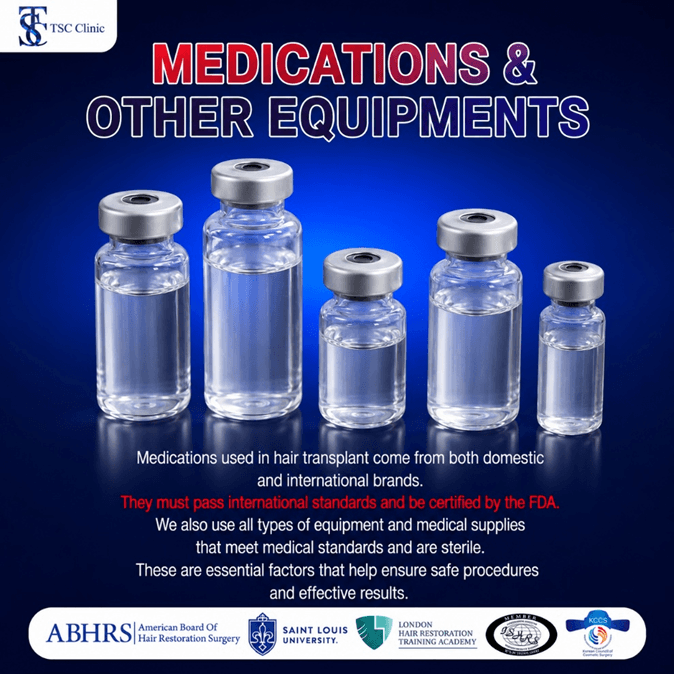
- Anesthetic and other materials and equipment: The anesthetic used in hair transplantation includes both products manufactured in Thailand and products imported from other countries, which must meet standards and be certified by the FDA. This also includes medical supplies and medical materials used throughout the treatment, which are another important cost that helps make the surgery safe and effective.
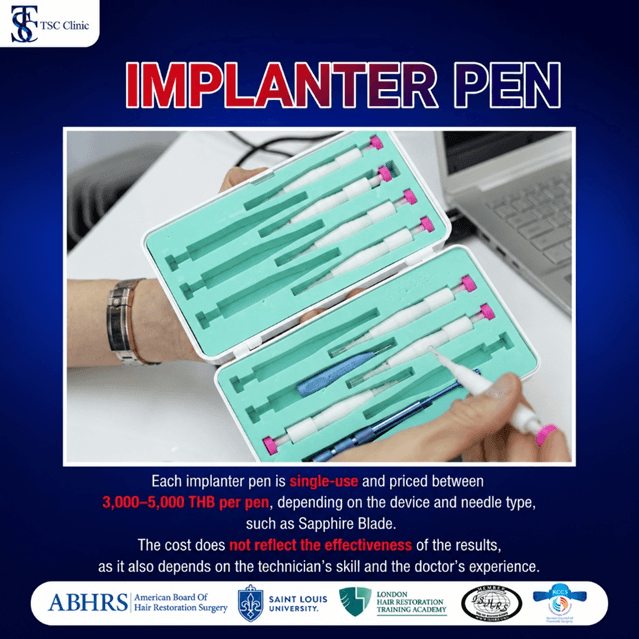
- Implanter Pen: Prices range from 3,000–5,000 baht per pen to specialized equipment such as a Sapphire Blade. However, more expensive equipment does not always mean better results. It also depends on the technique and experience of the doctor. Normally, an implanter pen should only be used once! To prevent reuse with other people or being used again, the hair transplant clinic must open the package in front of the patient and be willing to allow the patient to take the pen handle home.
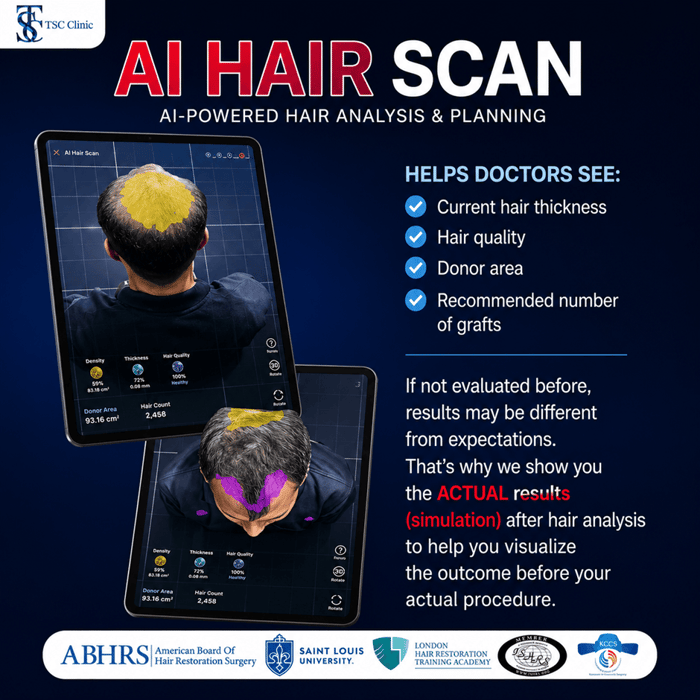
- Planning and graft assessment system (AI Hair Scan): This helps the doctor see the density of the existing hair, hair root quality, the Donor Area, and the appropriate number of grafts. If there is no assessment beforehand, the results may become a matter of guesswork. In addition, it can show patients the result as a realistic simulation to serve as a guideline before the hair transplant.
Why is hair transplantation a race against time?
The longer hair grafts stay outside the body, the higher the risk of damage becomes. Every step of hair transplantation requires speed, accuracy, and millimeter-level precision in order to obtain the highest-quality hair roots before transplanting them.

Additional costs you may have to pay if a hair transplant goes wrong
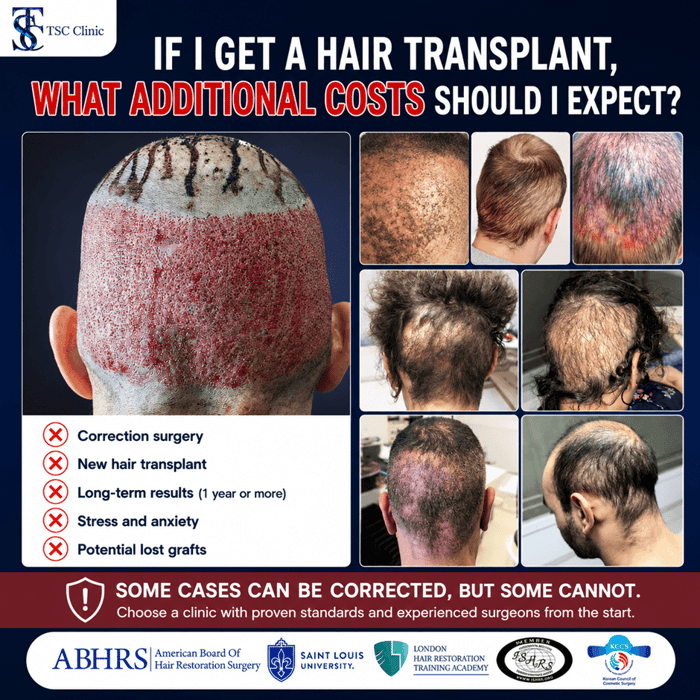
The price of a mistake from a hair transplant that must be paid includes correction costs, the cost of a new hair transplant, another one-year waiting period to see results, as well as stress and the number of grafts that have been lost. Some cases can be corrected, but some cases may not be correctable at all. The cheapest price may not be the best option if the result does not turn out as expected. What you may have to pay extra may not be only money, but also time, confidence, and the opportunity to use the remaining grafts. At the same time, the most expensive price may not be the best option either.
6 questions you must ask if you want good results
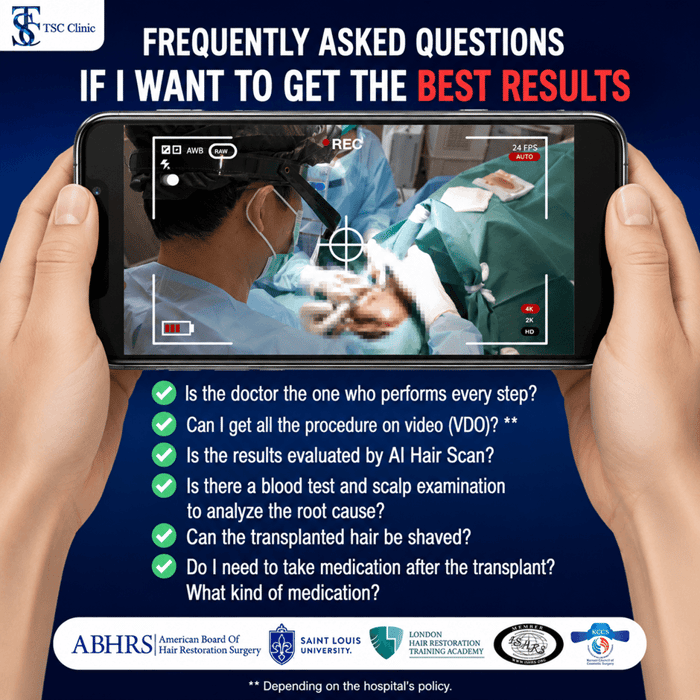
- Does the doctor perform every step?
- Can you request a video of every step of the hair transplant?
- Is there graft assessment with AI Hair Scan?
- Are blood tests and vitamin tests performed to analyze the root cause?
- Can you take the punch tool and graft implanter pen home?
- If you do not want to take medication after a hair transplant, what alternatives are available?
Real cases: Why did the transplanted hair not grow, and can it be corrected?
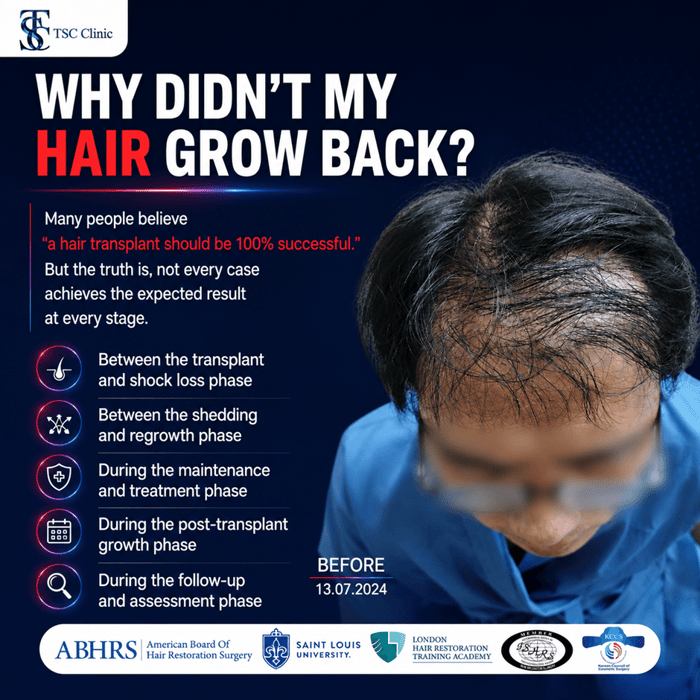
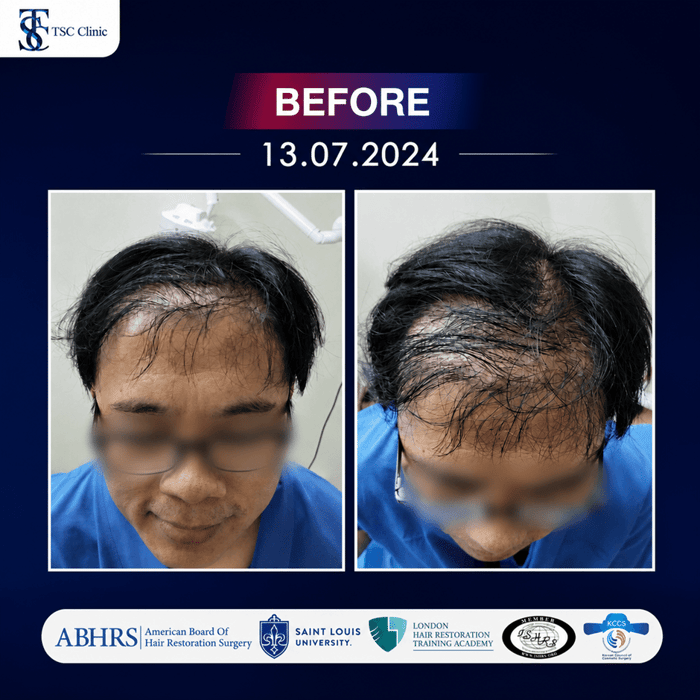
This is a case of a patient who had previously undergone a hair transplant elsewhere and did not have an AI Hair Scan before the hair transplant. A total of 2,300 grafts were used for the transplant. The patient continuously received PRP injections, took Finasteride, Minoxidil, and vitamin B complex regularly, but after one year, the hair still did not grow in some transplanted areas. The density was not as expected, while a large number of grafts had been lost. This condition is called “Poor Graft.”
Before performing another hair transplant, Dr. Top restored the remaining miniaturized hairs to become stronger using the ALIMI Nano Fat technique to revive the hair roots and stimulate new growth. It can reduce reliance on hair loss medication and is suitable for those who want to avoid the side effects of medication, together with the FRM Anti-Hair Loss technique to stimulate blood circulation in the scalp area, restore weak hair roots, and make the hair stronger. In addition, there are other techniques as well, such as:
- SVF (Stromal Vascular Fraction): This can stimulate hair growth in areas affected by genetic hair loss, increase hair thickness in thinning areas, and help restore scalp condition damaged by injury or excessive use of chemicals.
- ERP (Exosome Rich Plasma): This stimulates hair growth and restores scalp condition safely and effectively.
- Rigenera Micrograft Hair: A technique that uses the principles of cell therapy to stimulate hair growth, restore weak hair follicles to become stronger, and slow down hair shedding, making the hair thicker and healthier in a natural way.
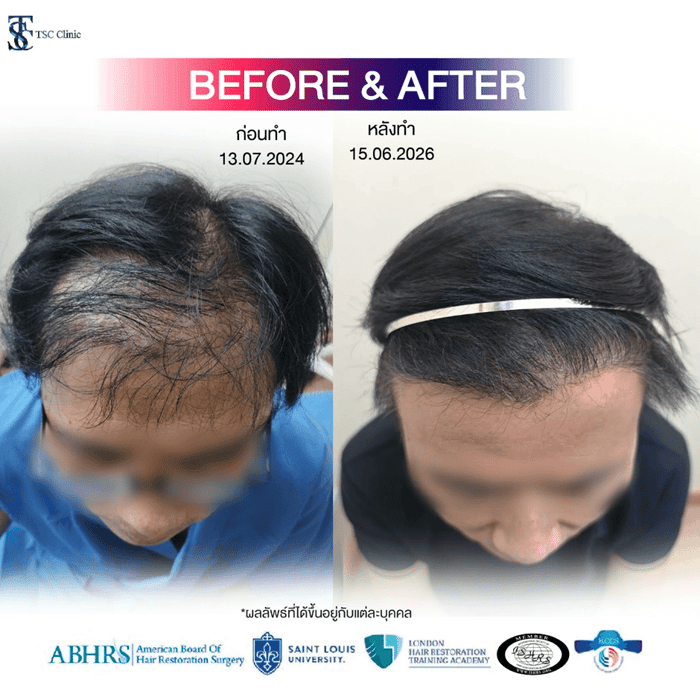
Because hair grafts are limited, choosing a cheap hair transplant that does not meet standards may cause damage that is difficult to correct. Therefore, before deciding to undergo a hair transplant, you should consider many factors, not only the cheapest price, but also focus on the doctor’s expertise and safety, in order to achieve the most worthwhile result for you.