Table of contents
- Why Isn't Changing Your Shampoo the Solution to Hair Loss?
- The Common Mistake Most People Make: Treating the Symptoms Without Getting a Blood Test
- What Is a Blood Test and Why Is It Important for People Experiencing Hair Loss?
- 3 Essential Blood Markers Everyone with Hair Loss Should Check
- Hair Loss on the Top of the Scalp: Is Genetics Really the Only Cause?
- Warning Signs of Inflammation Within the Scalp
- Did You Know? Thyroid Disorders Can Also Cause Hair Loss
- Additional Blood Tests That May Reveal More About the Root Cause of Hair Loss
- Why Do People Receive Different Results Even When Using the Same Hair Loss Treatment?
- What You Should Do Before Starting Any Hair Loss Treatment
Why Isn't Changing Your Shampoo the Solution to Hair Loss?
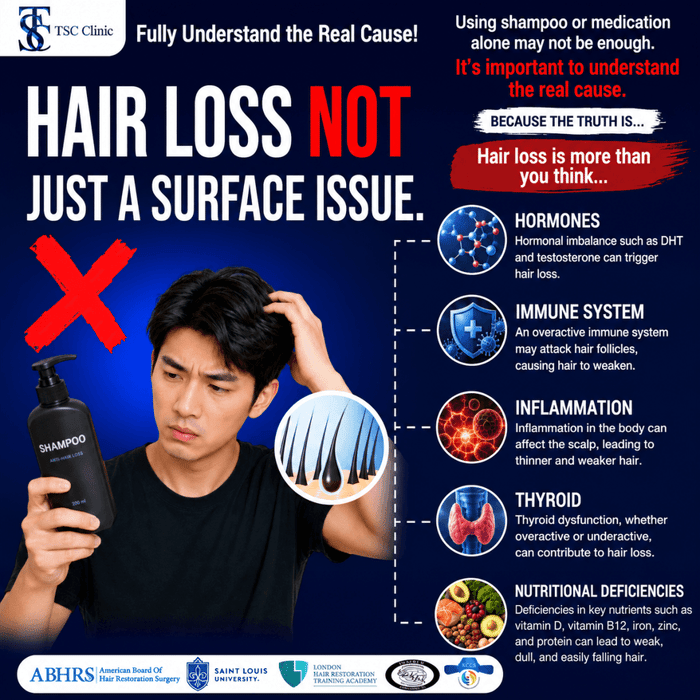
Hair loss is not always just a scalp issue. It can be linked to underlying health conditions such as:
- Hormonal imbalances, including DHT (Dihydrotestosterone) and estrogen, which can contribute to hair loss.
- Immune system disorders, which may attack hair follicles and cause patchy hair loss.
- Chronic inflammation within the body, which can disrupt the hair growth cycle and increase shedding.
- Thyroid dysfunction, whether overactive or underactive, which can negatively affect hair growth.
- Nutritional deficiencies, especially deficiencies in key vitamins and minerals such as Vitamin D, Vitamin B12, Iron, and Zinc, which can weaken hair and make it more prone to shedding.
The Common Mistake Most People Make: Treating the Symptoms Without Getting a Blood Test
When experiencing hair loss, many people turn to self-treatment based on advice found online, such as:
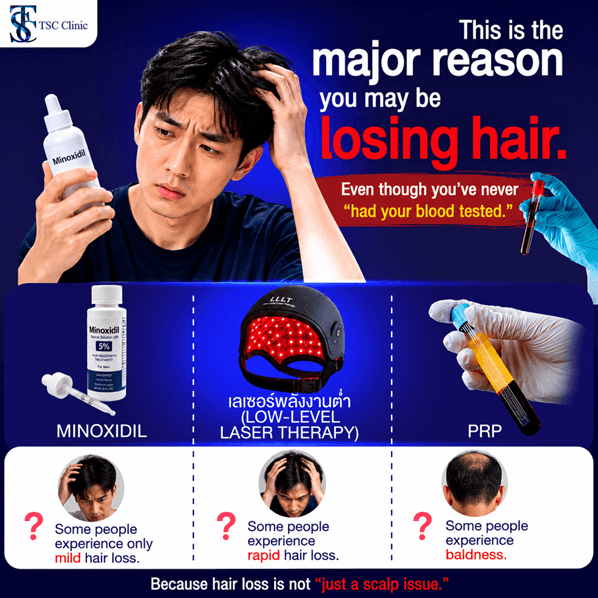
- Using Minoxidil without medical guidance, which may provide limited results for some individuals.
- Trying Low-Level Laser Therapy (LLLT) helmets or caps, which may even worsen hair shedding in certain cases.
- Undergoing PRP (Platelet-Rich Plasma) therapy, which may not be effective for everyone.
After 3–6 months of treatment, many are disappointed by the lack of improvement. The reason is often simple: the body lacks the necessary “building blocks” needed for healthy hair growth.
What Is a Blood Test and Why Is It Important for People Experiencing Hair Loss?
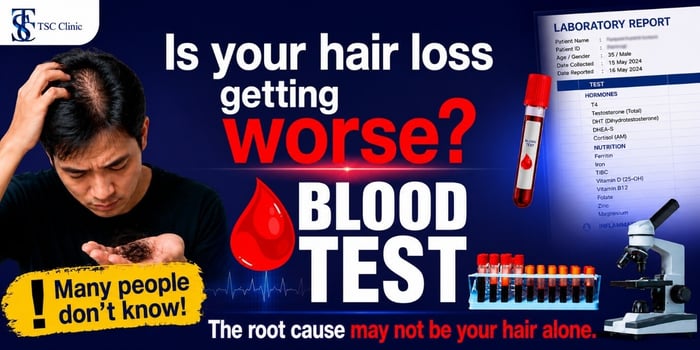
A Blood Test serves as a crucial diagnostic tool for hair restoration specialists because it provides a comprehensive overview of your health.
It helps to:
- Identify hormonal abnormalities, such as elevated DHT levels or thyroid disorders that may be damaging hair follicles.
- Assess vitamin and mineral levels, revealing deficiencies in nutrients essential for hair growth, such as Iron, Zinc, and Vitamin D.
- Create a personalized treatment plan, allowing doctors to prescribe targeted medications, supplements, or therapies based on the root cause of your hair loss.
3 Essential Blood Markers Everyone with Hair Loss Should Check
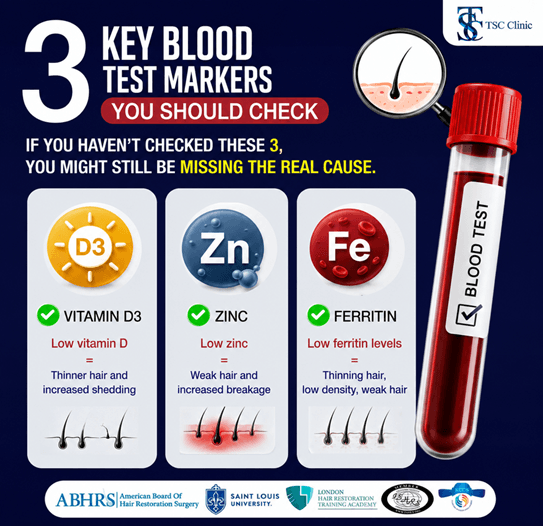
If you haven't checked these three markers, you may still be missing the real cause of your hair loss:
- Vitamin D3 – Low levels may result in weaker hair and slower recovery.
- Zinc – Deficiency can contribute to hair shedding and scalp inflammation.
- Ferritin – Low iron stores may lead to thinning hair, fatigue, and weakened hair strands.
Hair Loss on the Top of the Scalp: Is Genetics Really the Only Cause?
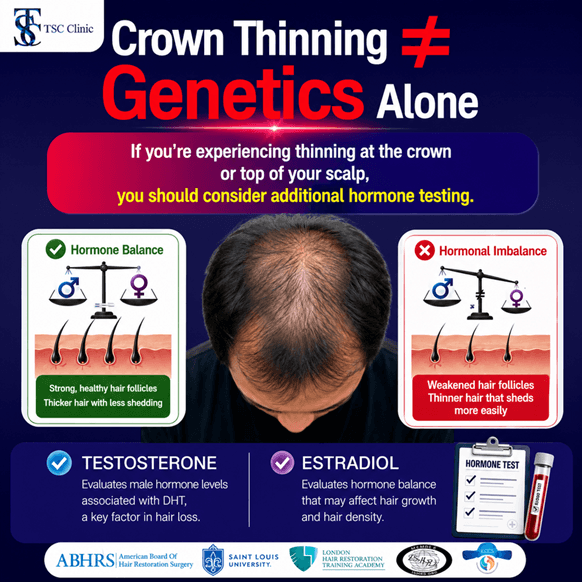
Hair thinning on the crown or top of the scalp can also be caused by hormonal imbalances that weaken hair follicles and increase hair shedding. If you notice thinning in the middle of the scalp, additional hormone testing may be recommended, including: Testosterone, to assess male hormone levels associated with DHT production. Estradiol, to evaluate hormonal balance that may affect hair growth.
Warning Signs of Inflammation Within the Scalp
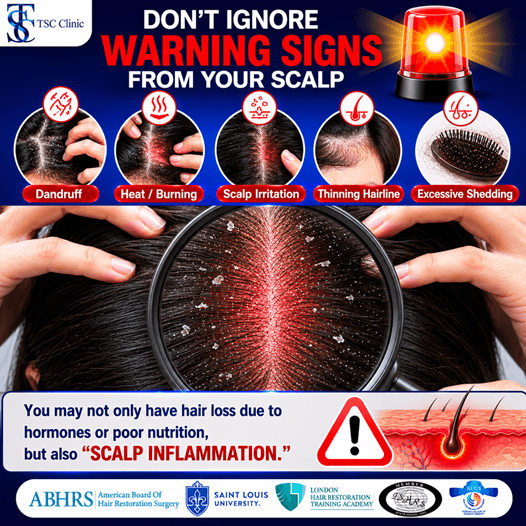
Hair loss may also be linked to underlying inflammation. Common warning signs include: persistent itching, burning sensations, scalp irritation, excessive hair shedding, hair loss around the sides of the scalp. If redness and itching are present, using Minoxidil may further aggravate scalp irritation.
Did You Know? Thyroid Disorders Can Also Cause Hair Loss
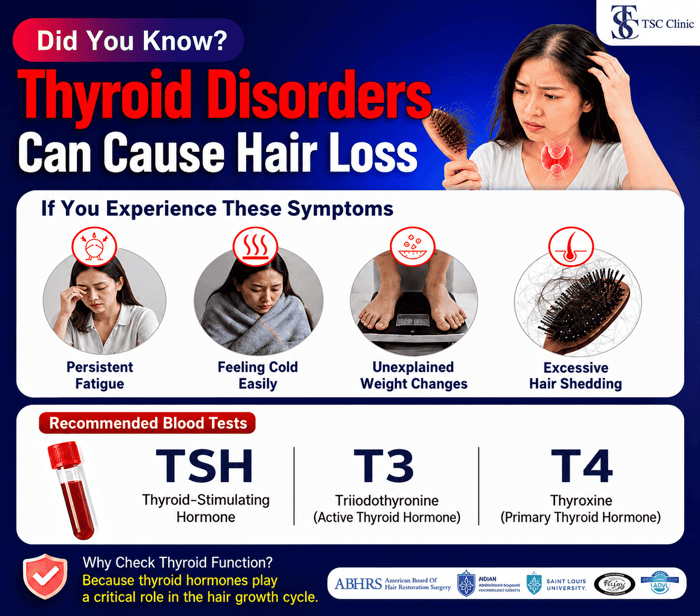
The thyroid gland plays a vital role in regulating the hair growth cycle. When thyroid function becomes abnormal, hair loss can occur. If you experience symptoms such as fatigue, sensitivity to cold, weight fluctuations, and significant hair shedding, thyroid testing may be recommended, including:
- TSH (Thyroid-Stimulating Hormone) – Evaluates thyroid function.
- T3 – The active thyroid hormone.
- T4 – The primary thyroid hormone produced by the thyroid gland.
Additional Blood Tests That May Reveal More About the Root Cause of Hair Loss
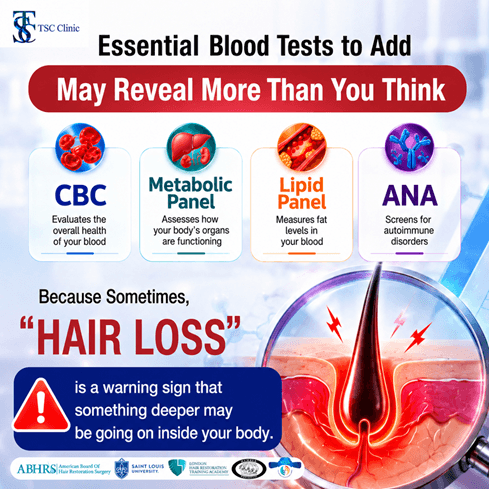
Sometimes hair loss is a warning sign of a broader health issue. Additional blood tests that may help identify underlying causes include:
- CBC (Complete Blood Count) – Evaluates overall blood health.
- Metabolic Panel – Assesses metabolism and the function of major organs.
- Lipid Panel – Measures cholesterol and blood fat levels.
- ANA (Antinuclear Antibody Test) – Screens for autoimmune disorders.
Why Do People Receive Different Results Even When Using the Same Hair Loss Treatment?
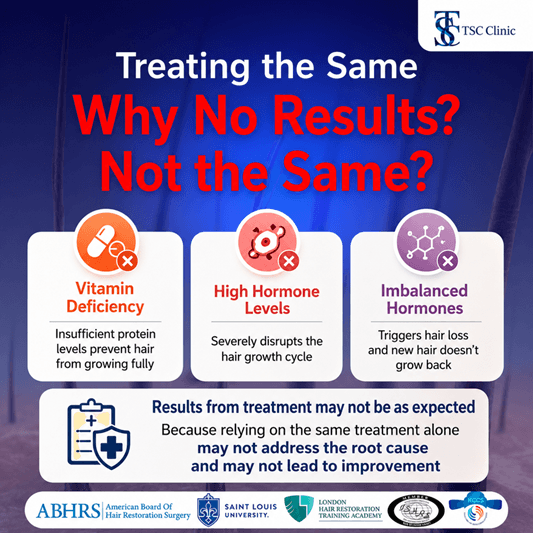
Have you ever wondered why someone else achieves great results with the same treatment while your hair remains thin despite investing significant time and money? The answer is that every individual is different. Hair loss treatments may not work as expected if the underlying cause remains unresolved, such as: vitamin D deficiency, chronic inflammation, hormonal imbalance, nutritional deficiencies
What You Should Do Before Starting Any Hair Loss Treatment
Avoid treating hair loss through guesswork. Identifying the root cause is the most important step before beginning any treatment. Recommended evaluations include: blood testing, hormone assessment, inflammation screening, nutritional deficiency testing. At The Skin Clinic, we utilize AI Hair Scan technology to determine whether viable hair follicles remain, assess potential vitamin deficiencies, and screen for conditions such as Systemic Lupus Erythematosus (SLE) and thyroid disorders. Effective hair loss treatment is not just about temporarily reducing shedding—it is about addressing the root cause to achieve long-term, sustainable results.
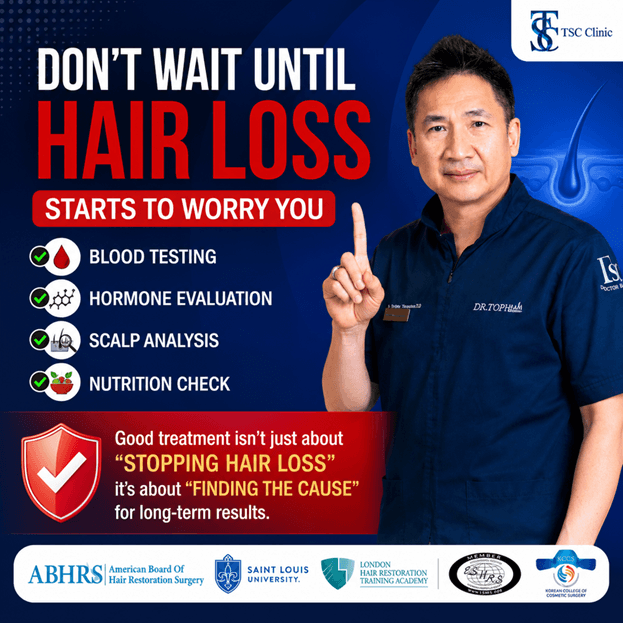
It’s time to stop wasting money on trial-and-error hair loss treatments. For anyone struggling with hair loss or thinning hair, at The Skin Clinic, we place great importance on treating the root cause of the problem. Every case is cared for by an ABHRS-certified hair restoration specialist (American Board of Hair Restoration Surgery) to ensure clear, effective, and sustainable results. There is no need to keep wasting time and money on treatments based on guesswork or repeated trial and error.
Don't wait any longer! Schedule your free consultation with our experts today!