Table of contents
- Does Finasteride really cause “gynecomastia – impotence”?
- Does Finasteride affect sperm and cause infertility?
- Does taking Finasteride cause birth defects in unborn babies?
- Does Finasteride really cause prostate cancer?
- True or not? Minoxidil causes impotence.
- Why does using Minoxidil cause even more hair loss?
- If I stop using Finasteride or Minoxidil, will my hair fall out worse than before?
- Is it true that Finasteride can only be used by men?
- Do Finasteride and Minoxidil give immediate results once you start using them?
- Is it true that Minoxidil only works on the crown of the head?
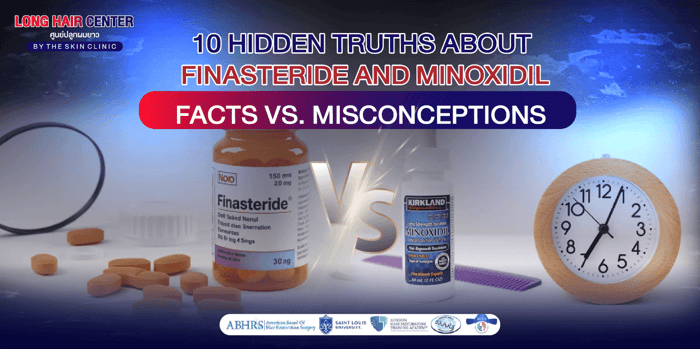
You may have heard that “taking Finasteride makes you impotent” or “using Minoxidil causes even more hair loss.” But are these really the truth, or are they just misconceptions that have been passed around. Misunderstandings about hair loss treatments such as Finasteride and Minoxidil often make many people hesitant, afraid to start treatment, creating confusion and considerable worry. This article will take you to explore 10 hidden truths: facts vs. misconceptions about Finasteride and Minoxidil, so that you can make decisions based on accurate and safer information.
Does Finasteride really cause “gynecomastia – impotence”?

Does Finasteride affect sperm and cause infertility?
Studies have found that Finasteride may slightly reduce sperm count, but it does not cause infertility or result in an infertile condition.

Does taking Finasteride cause birth defects in unborn babies?
Many people misunderstand that if men take Finasteride, the drug may pass through sperm and affect the fetus. In reality, Finasteride only affects the fetus when women take the drug themselves, because it may interfere with the development of male fetal genitalia. For men, taking Finasteride is safe and does not affect the fetus.

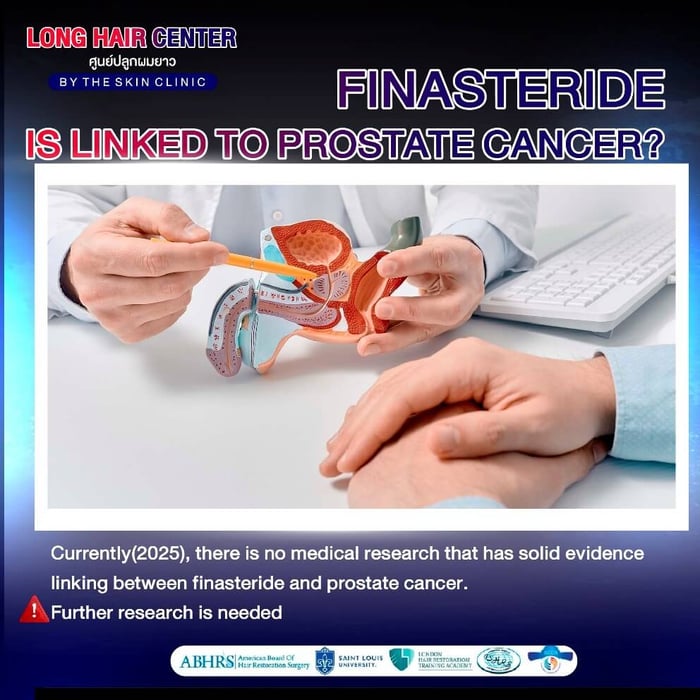
Does Finasteride really cause prostate cancer?
As of current medical evidence (2025), there is no confirmation that Finasteride is a direct cause of prostate cancer. This issue is still under research and requires further studies.
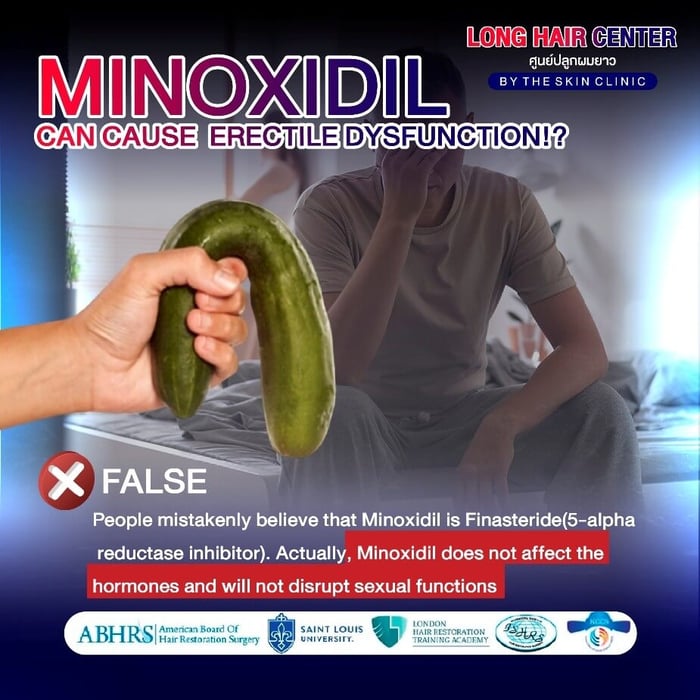
True or not? Minoxidil causes impotence.
Not true! Many people misunderstand and think that the hair loss drug Minoxidil works like Finasteride. In fact, Minoxidil has no effect on male sex hormones and does not reduce sexual performance. The mechanism of Minoxidil is to dilate blood vessels on the scalp, improving blood circulation. When more blood flows to the hair roots, it stimulates new hair growth. On the other hand, Finasteride works by inhibiting the production of DHT to slow hair loss.
Why does using Minoxidil cause even more hair loss?
Using Minoxidil may cause a condition known as “shock loss” during the first three months of treatment. This is a normal reaction of the hair follicles responding to the stimulation of the hair growth cycle, and it gradually decreases as the follicles adjust. After that, new hair starts to grow within 3–4 months. However, if hair loss continues for 4–6 months or becomes abnormally severe, it may indicate other problems such as product allergy or an undiagnosed hair loss condition.

If I stop using Finasteride or Minoxidil, will my hair fall out worse than before?
It is important to understand that these drugs cannot permanently stop hair loss; they only slow it down. Many people worry that stopping Finasteride or Minoxidil will make hair loss rebound worse. In reality, the hair will gradually return to its original state before treatment, but not worse than before.
Is it true that Finasteride can only be used by men?
For women of childbearing age, Finasteride is strongly not recommended because it may affect fetal development. However, for postmenopausal women, doctors may consider prescribing it under close medical supervision.

Do Finasteride and Minoxidil give immediate results once you start using them?
Both Finasteride and Minoxidil require time and consistency to show results. They do not work instantly. Finasteride typically shows clear effects after six months of continuous use, while Minoxidil may show signs of new hair growth after about three months.

Is it true that Minoxidil only works on the crown of the head?
Many people wonder if Minoxidil works only for bald spots on the crown. This is not true! Minoxidil can work both on the crown and the front of the scalp. However, results vary depending on each individual’s response.
However, Finasteride and Minoxidil are not miracle drugs that can be used by everyone. When experiencing hair loss or thinning, the most important thing is to identify the true underlying cause, such as genetics, hormonal imbalances in the body, scalp-related diseases, nutritional deficiencies, or even stress. Consulting a specialist doctor will help address the problem more precisely and ensure the best long-term results for your hair.