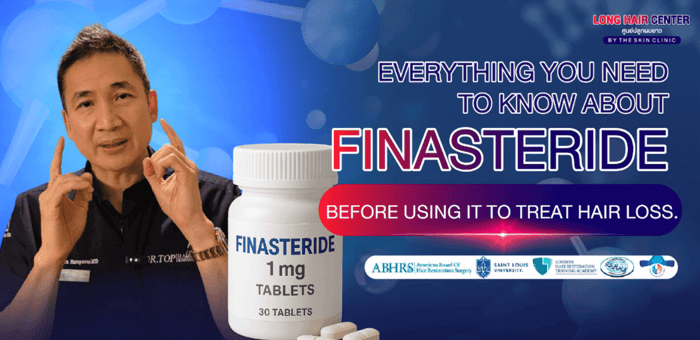
When we talking about hair loss treatment, we are looking for an effective way to treat thinning hair. You may have heard of Finasteride, whether from friends or clinics. But before you decide to start taking this medication to tackle your hair thinning concerns, this article will take you through every important aspect of Finasteride. From how it works to the possible side effects, we’ll uncover all the essential facts you need to know. By the end, you’ll be well-informed and confident in deciding whether Finasteride is the right choice for your hair loss treatment.
Table of contents
- When should you start taking Finasteride?
- Which areas respond best to Finasteride treatment for hair loss?
- 5 hormones to test before starting Finasteride
- How does Finasteride work?
- Does Finasteride really increase female hormones in men?
- What should you do if you experience side effects from Finasteride?
- If hair keeps falling out while using Finasteride, should you stop?
- Conclusion
When should you start taking Finasteride?
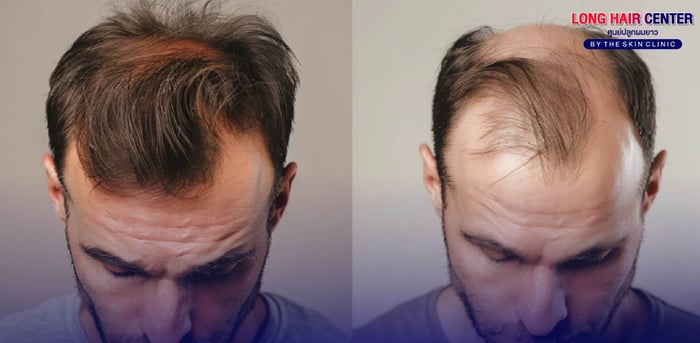
Hair loss treatment “Don’t wait until it’s too late. You should start taking care from the early stage.” If you decide to use Finasteride at the onset of thinning hair, the treatment will be more effective and yield clearer results. However, if you wait until there is significant hair loss before beginning treatment, the chances of hair regrowth are greatly reduced. To achieve the best possible results of treating in hair thinning, starting the medication early is crucial.
Which areas respond best to Finasteride treatment for hair loss?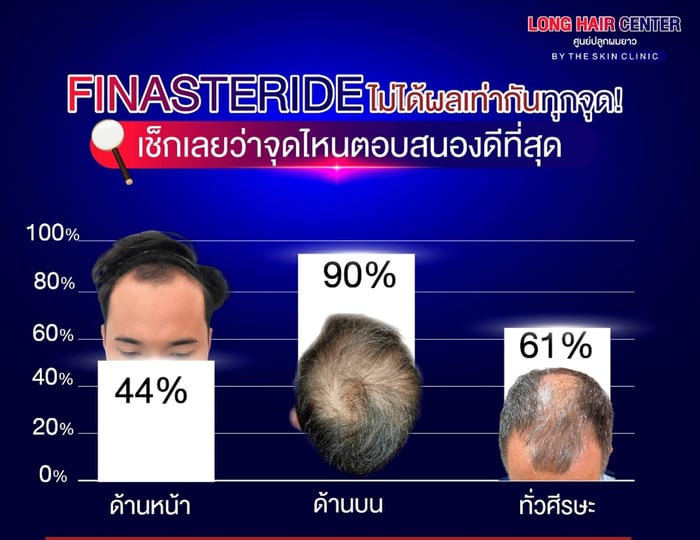
Finasteride does not work equally well on all areas. Different parts of the scalp may respond differently to the treatment. If a certain area responds well within the first year, it often maintains good results continuously for at least five years. The areas that respond best to Finasteride treatment are: the crown, the top of the scalp, and the frontal area, respectively. These are typically the areas most affected by hereditary hair thinning.
5 hormones to test before starting Finasteride
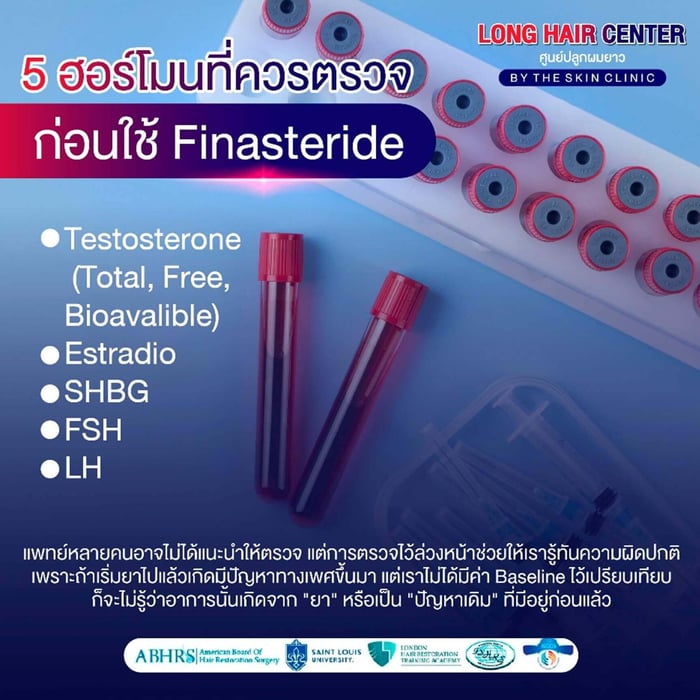
Before using Finasteride, it is recommended to check 5 hormones:
- Testosterone
- Estradiol
- SHBG
- FSH
- LH
These are all important hormones related to the reproductive system and overall body balance. Testing them in advance helps detect any abnormalities. Because if problems such as sexual dysfunction arise after starting the medication, and you don’t have baseline hormone levels for comparison, it will be unclear whether the symptoms are caused by Finasteride or a pre-existing condition. Understanding these hormone levels before starting Finasteride helps doctors plan more precise treatments for hair loss and effectively monitor any potential side effects.
How does Finasteride work?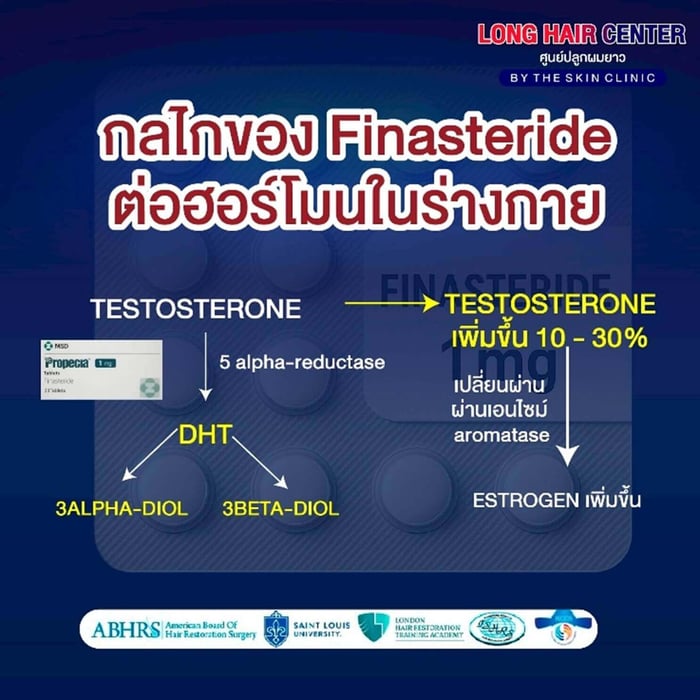
Blocking DHT is the key mechanism in hair loss treatment with Finasteride. The drug inhibits the enzyme 5-alpha reductase, which converts the male hormone Testosterone into Dihydrotestosterone (DHT), the main cause of hereditary hair loss in men (Androgenetic Alopecia). DHT causes hair follicles on the scalp to shrink, shortens the hair growth phase, gradually makes hair thinner, and ultimately leads to hair loss.
Does Finasteride really increase female hormones in men?
Because Finasteride blocks the conversion of Testosterone into DHT, it reduces the level of male hormones, while female hormones (Estrogen) may increase in compensation. Risks that men should be aware of include breast enlargement or sagging, mood swings, depression, testicular pain, tightness in the genital area, and reduced sexual desire. Therefore, you should consult a doctor if you experience any side effects to receive proper guidance.
What should you do if you experience side effects from Finasteride?
If side effects from Finasteride begin to occur, there is no need to stop the medication immediately. You can reduce the dosage to a “microdose” instead, for example, from 1 mg per day down to 0.5 mg, or switch to taking it only 2–3 times per week. This can significantly reduce the chance of side effects. In some cases, topical Finasteride may be considered. Although side effects are less likely, its effectiveness may also be lower compared to oral medication.
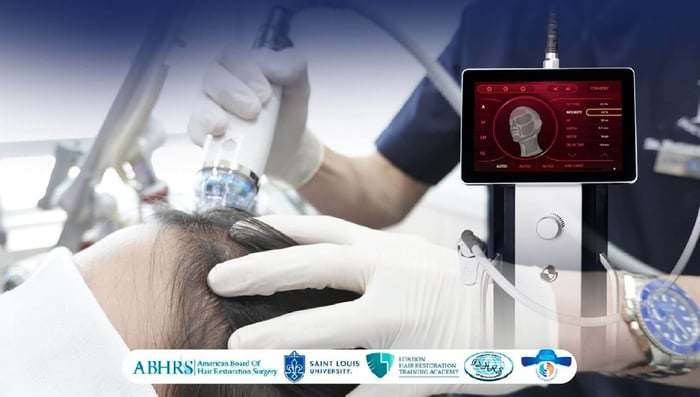
Another option that reduces the need for high medication doses, with fewer side effects but continued hair regrowth, is combining low-dose Finasteride with a hair restoration treatment like FRM Anti Hair-Loss to enhance the effectiveness of hair thinning treatment. The FRM Anti Hair-Loss technique helps stimulate blood flow to the hair roots. This approach is suitable for individuals who want consistent treatment but wish to minimize side effects, while still achieving good long-term results in terms of reducing hair loss and promoting thicker hair. Therefore, the FRM Anti Hair-Loss technique is another new option for those who want to balance between treatment effectiveness and long-term safety.
If hair keeps falling out while using Finasteride, should you stop?
Many people decide to stop using Finasteride on their own because they still see hair falling out and don’t see quick results. But don’t stop just yet! In fact, Finasteride requires at least 6 months to start showing results, with the peak effectiveness seen at around 1 year. The mechanism of action involves reducing DHT, the main culprit in hair thinning. In the early stages of taking the medication, some hair shedding may occur, this is normal. However, if you continue the treatment consistently, results will gradually become more noticeable. If you’ve decided to use Finasteride, the most important thing is to use it continuously and not to stop without medical advice, as this may lead to hair thinning returning.
Conclusion
Don’t decide on your own just yet! If you’re considering using Finasteride or want to explore the most suitable hair loss treatment options for you, consult with our expert doctors at The Skin Clinic. Our medical team is ready to provide you with detailed advice, accurately analyze your hair loss condition, and develop a personalized treatment plan that meets your needs. Whether it’s hair restoration treatments, hair transplantation, or a combination of different approaches, we’re here to help you achieve healthy, stronger hair and restore your confidence.