Table of contents
When we're talking about hair loss solutions, there are many options for treating hair thinning, whether it's medication, thickening treatments, or hair transplants. But which method is right for you? The journey of someone experiencing hair loss isn’t just about treatment, it’s a path filled with questions and hopes. This article will take you back to the starting point, equipped with a clearer “map” than ever before, so you won’t waste time on methods that don’t suit you. Instead, you'll gain a better understanding of the treatment options available, leading to the results you hope for, confidently and sustainably.
What are the available methods for the journey from thinning hair to thicker hair, and what are the pros and cons of each?
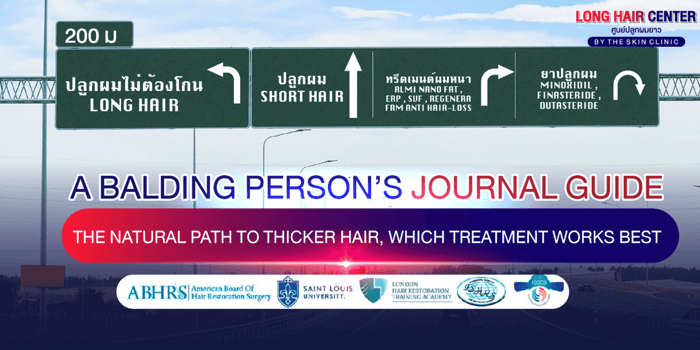
When it comes to treating hair loss, whether with medication, hair thickening treatments, or hair transplantation, each option is a different path. Choosing the wrong one may be a road with no way back. Making a decision too quickly may lead you astray. But with the guidance of a medical professional, you’ll know which route is right for you and will truly lead you to your destination.
1. If you choose to take medication
Whether it’s Minoxidil, Finasteride, or Dutasteride, be aware that this is like taking an expressway with no exit. Taking medication to treat hair loss might seem like an easy and fast solution, but it’s essentially a long-term commitment. Once you start, you may need to keep taking it for life, stopping could cause your hair to fall out just as before. Additionally, while some people respond well to the medication, others may no effect.
2. If you choose to undergo a hair transplant
Hair transplantation offers a clear and permanent transformation, but it’s also a one-way street. Once hair follicles are extracted and transplanted, the original area won’t grow hair again. If the transplant is placed incorrectly, uses an unsuitable technique, or follows a poorly planned hairline design, fixing it can be much more complicated than starting from scratch. Hair transplantation isn’t just about getting hair to grow; it’s about growing it right with careful planning.
3. If you choose hair thickening treatments
Before jumping onto the hair transplantation, there’s another path, stimulating hair roots using your own cells to rejuvenate and strengthen the follicles. This is more like a scenic route with exits. The advantage of this path is that it doesn’t involve drugs, has no risk of allergic reactions, and doesn’t require ongoing treatment. You can stop or pause whenever you wish. While it’s not a shortcut, walking the right path can still lead you to your goal of thicker hair.
Techniques to restore and strengthen hair roots using your own-cell hair thickening treatments
At The Skin Clinic, we offer various non-surgical solutions for treating hair thinning and loss. These autologous (self-cell based) techniques stimulate hair follicles safely and naturally, using no chemicals and carrying zero risk of allergic reactions. Popular methods include: ALMI Nano Fat, SVF, Rigenera, ERP และ FRM Anti Hair-Loss
ALMI Nanofat – Enhancing hair thickness with fat
This method extracts your own fat and processes it into nano-sized fat cells through a four-step microfiltration process. The resulting nano-fat is then injected into targeted areas to stimulate hair follicles to produce more hair.
FRM Anti Hair Loss – Stimulating hair roots with RF waves
Combines microneedling with high-frequency radio waves to increase blood circulation in the scalp and stimulate new hair growth.
Rigenera Micrograft Hair – Micrograft hair transplant
Uses a non-transplant approach to hair regeneration by extracting small tissue samples from the back of the scalp with a Rigenera device. The solution is then injected into thinning areas to reduce hair shedding and repair weakened follicles.
SVF for Hair Loss
This technique slows hair loss and promotes hair follicle growth. Your fat is processed to extract stem cells and isolate the Stromal Vascular Fraction (SVF), which is then injected into the scalp.
ERP (Exosome Rich Plasma)
A technique that revitalizes and strengthens hair follicle cells while slowing hair loss, this method uses exosome extraction technology, with the exosomes then injected into areas of the scalp affected by thinning.
Hair thickening treatments vs. hair transplant: Which one is right for you?
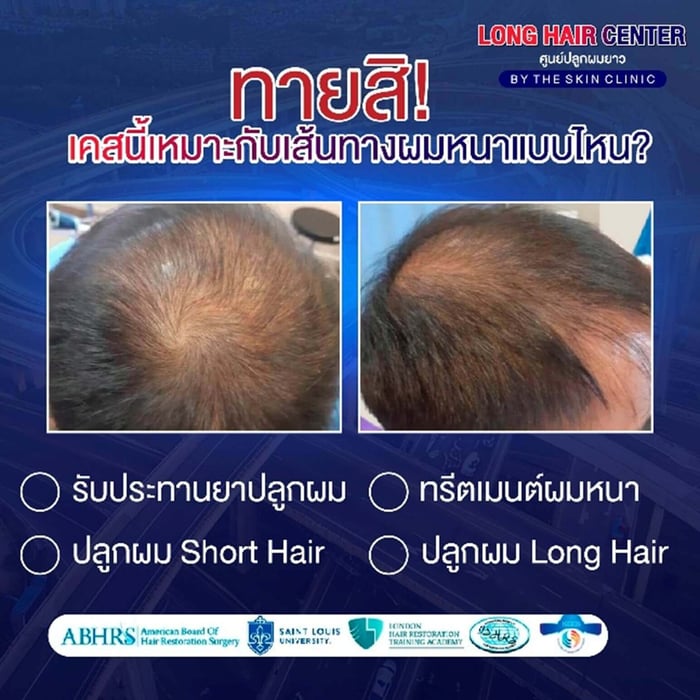
If you have diffuse thinning across the scalp but still have some fine hairs, don’t rush into a hair transplant just yet. The number of grafts available from the back of your scalp may not be enough for a full transplant, and you might not have enough hair resources if future correction is needed. One recommended option is to start with follicle-stimulating treatments to restore hair root strength and slow down hair loss as a hair loss solutions.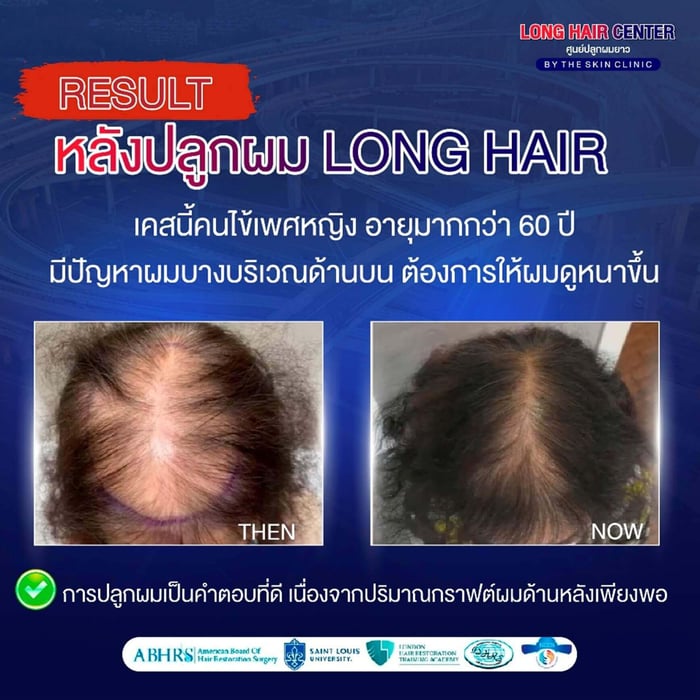
In some cases, especially for women with a widow’s peak or female-pattern thinning, a hair transplant may be necessary. Medication might not be the most suitable solution as the results can be minimal. Improper medication use can also lead to unwanted side effects. While some results may be seen, a thorough assessment under a doctor’s care is crucial.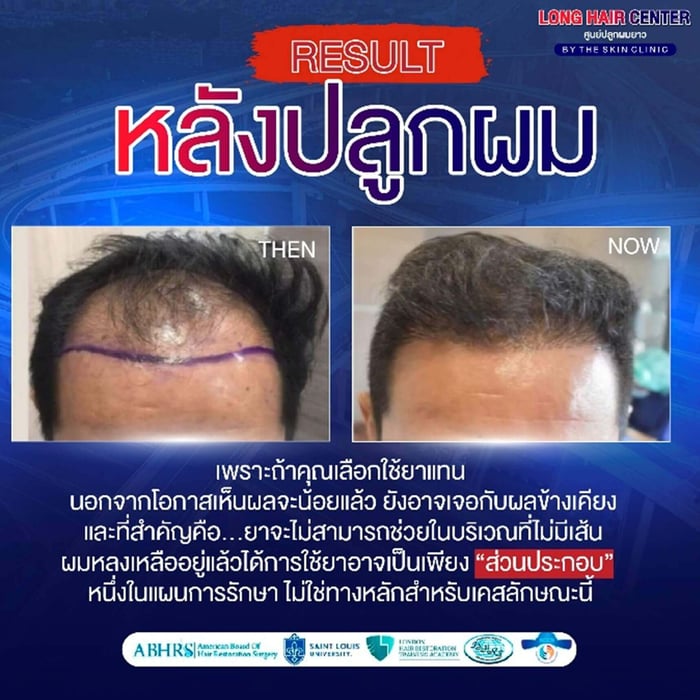
For those with clearly receding front hairlines, shiny scalp, and no remaining baby hairs, hair transplantation is also appropriate. A doctor may still recommend hair stimulation treatments to prolong the lifespan of existing hair that isn’t being transplanted.
Some people use medication even though there is no hair left on the scalp. In such cases, medicine alone cannot regenerate new hair. Others repeat PRP injections or other treatments multiple times but see no meaningful results, this is like taking the wrong path: wasting time and money, yet getting no closer to your goal. For these cases, a hair transplant is the most appropriate solution. That’s why proper planning from the beginning is the true path to successful hair restoration.
Hair thinning is not the end of your confidence, not if you have the right map for this journey. There’s no one-size-fits-all formula when it comes to hair restoration. What truly matters is an accurate assessment of your condition and starting with the right treatment plan from the very beginning. That’s the first step on the path toward naturally stronger, thicker hair.