Table of contents
- DHT: The Villain Hormone That Destroys Hair!
- What to Do When Side Effects from Finasteride Occur
- Planning to Have a Baby? Know This Before Using Finasteride
- Male breast enlargement from Finasteride, Should You Stop or How to Fix It?
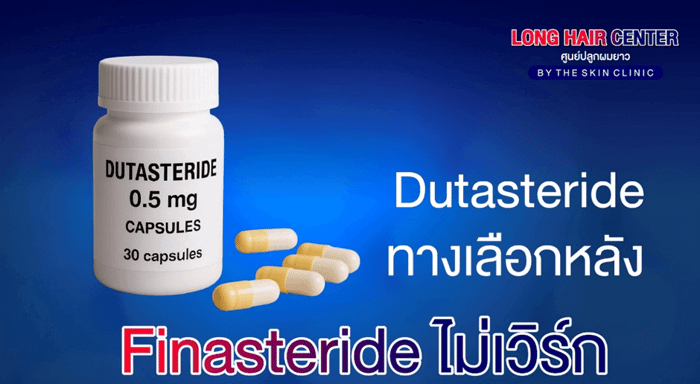
- Dutasteride: An Alternative When Finasteride Doesn’t Work
- When Finasteride Fails: A New Path from Medication to Self-Cell Therapy
Before we can talk about the side effects of Finasteride, For anyone currently taking Finasteride to treat hair loss or just considering starting, you may be wondering: Will I experience side effects? Some people even hesitate, unsure whether they should stop the medication on their own. The truth is, there are safe ways to manage potential issues if you understand how the drug works and know the proper strategies to handle them. This article will guide you beyond the worries, helping you understand the real risks and discover possible coping approaches. It will also show you that hair loss treatment isn’t limited to just one path, so you can confidently choose the method that best suits you.
DHT: The Villain Hormone That Destroys Hair!
What to Do When Side Effects from Finasteride Occur
Do You Feel Any of These After Taking Finasteride?
- Decreased sexual desire
- Reduced arousal
- Difficulty achieving or maintaining an erection
- Brain fog (mental fatigue)
- Depressed mood
- Breast enlargement (gynecomastia)
Option 1: Stop the medication and consult a doctor
- Stop taking the medication immediately until the symptoms fully resolve. This should always be done under a doctor’s supervision.
- Once the symptoms improve, consult your physician to evaluate the underlying cause and determine an appropriate treatment plan or dosage adjustment.
This step is crucial for ensuring safety and supporting the long-term effectiveness of treatment.
Option 2: Lower the dosage to reduce side effects
- If side effects begin to appear, reduce the dosage from 1 mg/day to 0.5 mg/day (half a tablet).
- Continue at this dosage for 6–12 months. If no side effects occur, you may return to the normal dose.
However, if hair loss does not worsen, it is not necessary to increase the dosage. If side effects recur after resuming the normal dose, discontinue the medication immediately.
Option 3: Switch from oral pills to topical solution to minimize side effects
- If stopping oral Finasteride resolves the symptoms, you may switch to topical Finasteride (applied externally).
- If side effects of Finasteride still occur with the topical form, discontinue use immediately. However, if no side effects appear, you may continue using it.
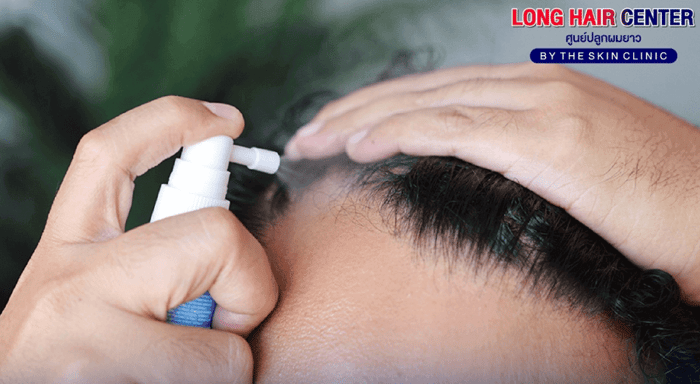
Option 4: Pro tip! Start with Minoxidil before discontinuing Finasteride
If you still feel uncertain or worried, even though medical studies have confirmed both the results and effectiveness of the drug, you may consider starting with Minoxidil for 6–8 weeks before discontinuing Finasteride, following an appropriate treatment plan.
Planning to Have a Baby? Know This Before Using Finasteride
For men taking Finasteride, there is no need to worry about risks to the fetus, as the drug does not affect sperm quality. Therefore, it can be used as usual. However, for women, especially those who are pregnant or of childbearing age, Finasteride should be strictly avoided. Even handling the medication should be avoided, as it may pose risks to safety and interfere with the development of male fetal genitalia.
Male breast enlargement from Finasteride, Should You Stop or How to Fix It?
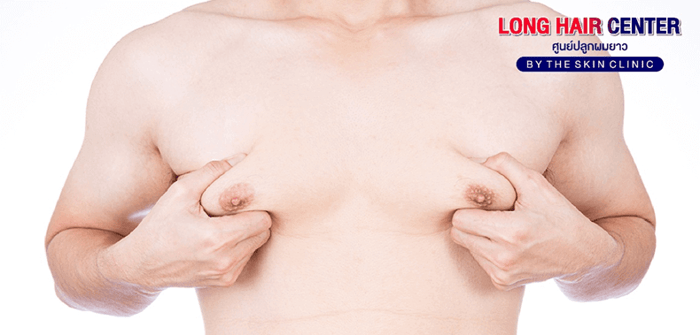
If gynecomastia (male breast enlargement) occurs, it is recommended to stop taking Finasteride immediately. In most cases, the condition gradually improves on its own. However, if you prefer not to discontinue the medication due to satisfactory hair loss results and wish to address the gynecomastia instead, surgical removal of the breast tissue (mastectomy) may be considered.
Dutasteride: An Alternative When Finasteride Doesn’t Work
An important point to understand is that Dutasteride is not considered a first-line drug for treating male pattern hair loss (MPHL). If Dutasteride is used as the initial treatment and fails to produce results, the available treatment options may become more limited. However, if there is no satisfactory response to Finasteride after 6–12 months of use, switching to Dutasteride may be considered to achieve better outcomes.
When Finasteride Fails: A New Path from Medication to Self-Cell Therapy
If continued use of Finasteride shows no improvement or if hair loss worsens, it may indicate that your body is not responding to the treatment. In such cases, it is important to promptly investigate the cause and adjust the treatment plan by:
- Hair analysis with AI Hair Scan – to thoroughly evaluate hair roots and scalp condition.
- Testing for nutritional or vitamin deficiencies (malnutrition) – to identify underlying causes of hair loss.
Consulting a specialist – to develop a personalized treatment plan.
Considering autologous hair root stimulation therapies (using your own cells), such as ALMI Nano Fat, Micrografting Hair, SVF, ERP, and FRM Anti Hair-Loss, which help restore and strengthen hair follicles, reduce long-term dependence on medication, avoid side effects, and provide ongoing hair health support, especially for those experiencing genetic hair loss or thinning
Although Finasteride is an effective treatment for hair loss, it is important to consult a doctor before starting the medication. If side effects occur, discuss them with your physician to find the most suitable solution. In fact, there are many other treatment options for hair loss and thinning that may be more suitable for each individual. If you are looking for the right approach, we recommend a free consultation with hair and scalp specialists at The Skin Clinic to find a safe and effective treatment plan tailored for you.