Table of contents
- Why did the surgeon choose to consult Dr. Top?
- Factors that led the surgeon to decide on a hair transplant with Dr. Top
- Case study: When a surgeon experiences hair thinning after a hair transplant, how should this case be properly treated?
- Is hair thinning or hair loss after a hair transplant normal?
- How should hair be cared for after a hair transplant to ensure long-lasting results?
- 5 things you should know if you are looking for a hair transplant clinic
Many people believe that “once you get a hair transplant, that’s the end of the problem” and that no ongoing care is necessary. However, in reality, it is still possible to face hair thinning even several years after undergoing a hair transplant.
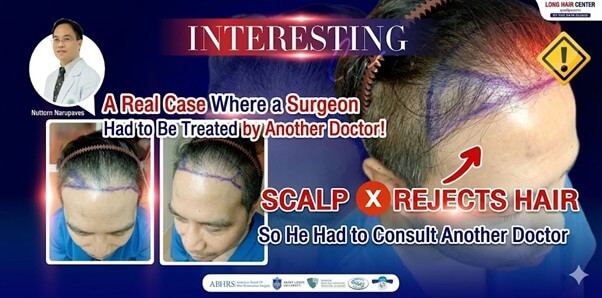
This article takes you through a real case of a 49-year-old surgeon who had previously undergone a hair transplant, but later noticed that his hairline began to recede and his hair became visibly thinner.
As a result, he decided to seek treatment with Dr. Top. We will also address common questions, such as: Is hair loss after a hair transplant normal? And how should hair be properly cared for to ensure long-term results?
Why did the surgeon choose to consult Dr. Top?
The Skin Clinic by Dr. Top Hair Hospital is a specialized hair clinic that has earned international trust and recognition. Dr. Top is an American Board–certified physician in hair transplantation surgery with over 20 years of experience and multiple global awards in the field of hair restoration. He is widely recognized both in Thailand and internationally, particularly for advanced techniques such as non-shaven hair transplantation or the Long Hair technique.
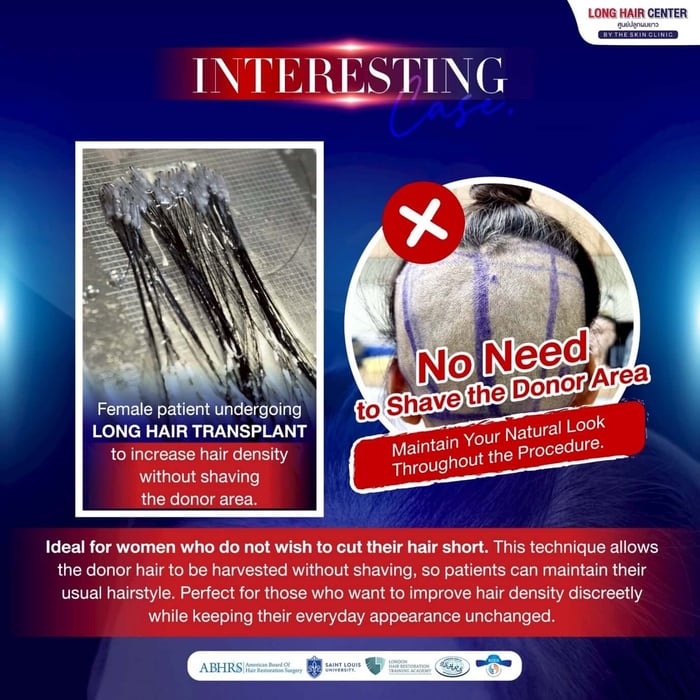
For Long Hair transplantation, The Skin Clinic by Dr. Top Hair Hospital is considered one of the first clinics in Thailand to pioneer this technique. This method allows patients to immediately see their hairline and the direction of hair growth right after the procedure, without shaving the donor area at the back of the scalp. In addition, hair direction can be adjusted during the transplantation process itself, resulting in a clearly natural-looking outcome from the first day. 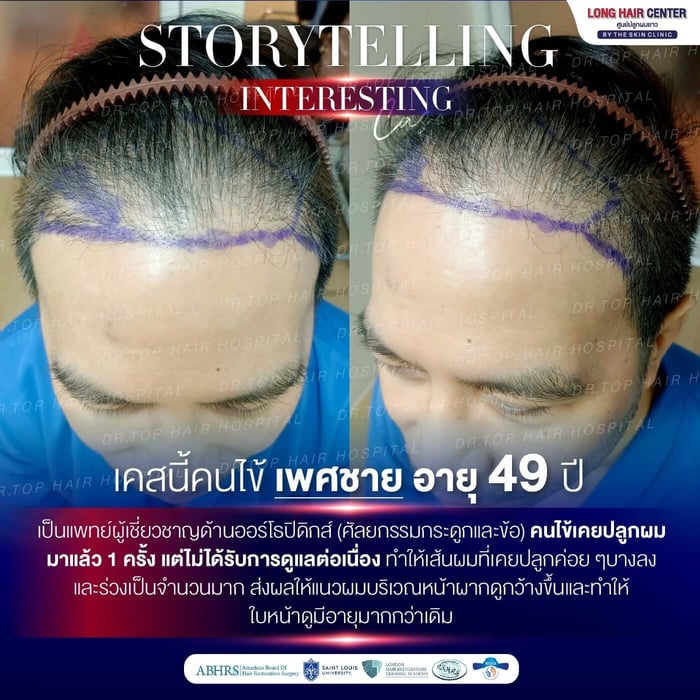
Factors that led the surgeon to decide on a hair transplant with Dr. Top
The Skin Clinic by Dr. Top Hair Hospital has successfully performed over 10,000 hair transplant cases worldwide, supported by real patient reviews in both photographs and videos, which clearly demonstrate proven results. Another key factor is transparency at every step of the treatment process. The clinic builds patient confidence by recording real-time videos of graft counting to prevent issues such as fake grafts, missing grafts, or damaged grafts. These videos also serve as important reference data for long-term follow-up and ongoing care, ensuring that patients receive the best possible outcomes.
Case study: When a surgeon experiences hair thinning after a hair transplant, how should this case be properly treated?
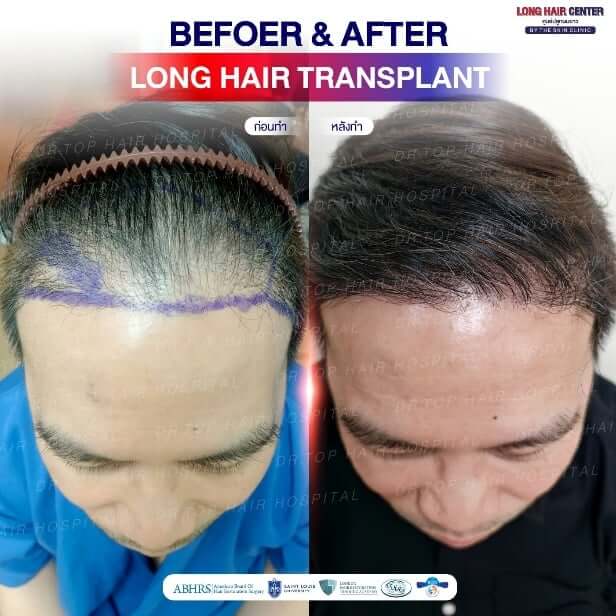
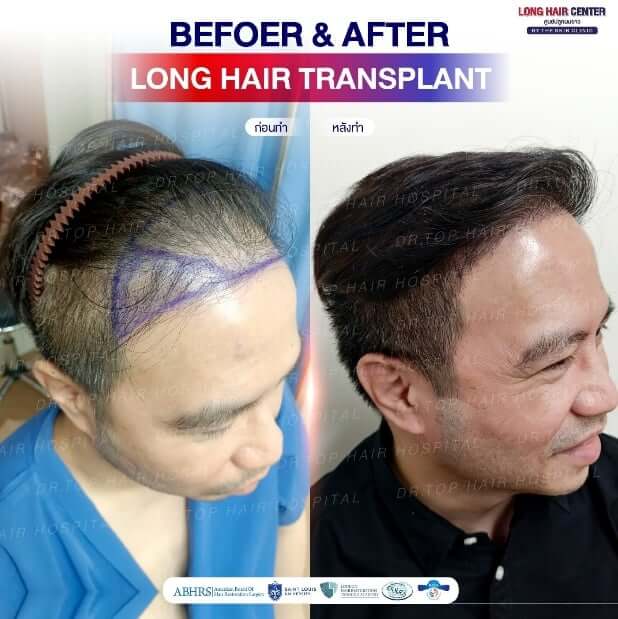
The patient is a 49-year-old male, a specialist in orthopedics (bone and joint surgery). He had previously undergone one hair transplant approximately 5 years ago, but did not receive continuous follow-up care. As a result, the transplanted hair gradually became thinner and shed in significant amounts. The most noticeable issue was the widening of the frontal hairline, which made his face appear older. Dr. Top therefore designed a treatment plan using a Combination Technique: Long Hair x FRM.
This technique was used to add density to thinning areas, arrange hair direction for a natural appearance, and reduce the width of the thinning hairline area.
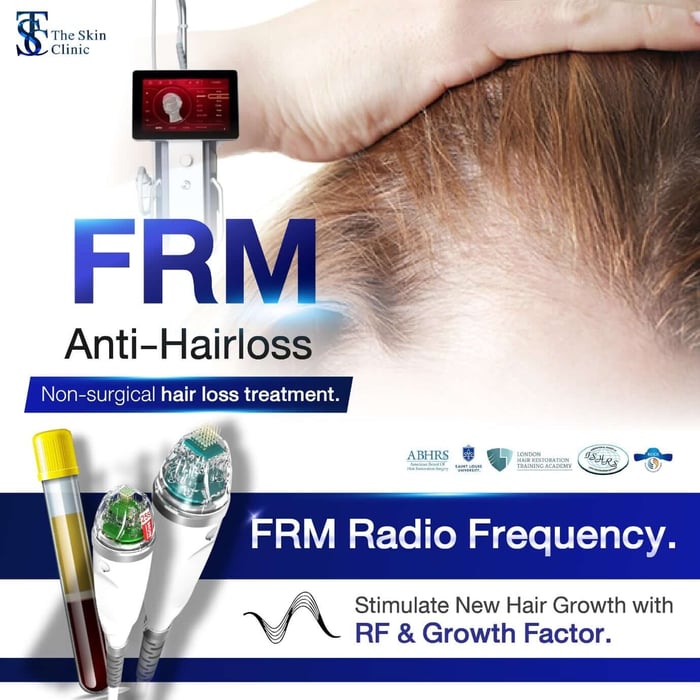
FRM helps stimulate collagen production and improve blood circulation in the scalp, revitalizes weakened hair follicles, and promotes long-term hair growth. Dr. Top’s research on FRM Anti–Hair Loss has been published at international medical conferences, confirming its effectiveness in treating hair loss in combination with hair transplantation.
By integrating both techniques, the treatment effectively addressed hair thinning, helping the hair regain thickness, strength, and natural alignment, while restoring long-term confidence for the patient.
Is hair thinning or hair loss after a hair transplant normal?
Hair loss occurring five years after a hair transplant can happen due to several reasons, such as natural hair loss caused by the hormone DHT, weakening of transplanted hair, or improper hair care that damages the transplanted hair. A lack of ongoing maintenance is a major contributing factor. Causes of hair loss 5 years after hair transplant.
- Loss of surrounding non-transplanted hair (Non-Planted Hair Loss):
The hormone DHT continues to affect original, non-transplanted hair, causing progressive thinning. Medication is often required to manage this condition.
- Weakened or damaged transplanted hair:
Although transplanted hair is generally strong, improper care, such as excessive heat styling, hair dyeing, chemical treatments, or incorrect washing techniques, can cause transplanted hair to become brittle, break, and shed.
- Hair Root Atrophy:
As age increases, hair follicle cells may become less active, leading to weaker transplanted or natural hair.
How should hair be cared for after a hair transplant to ensure long-lasting results?
Although this case involved hair transplantation in the hairline area, which may appear straightforward, the challenge was that the patient had already undergone a previous transplant, resulting in a limited donor area. Therefore, graft extraction had to be carefully planned, using grafts efficiently to preserve donor hair for potential future procedures if needed.
At one month after the transplant, visible improvement was observed. However, to help maintain the transplanted hair for a longer period, Dr. Top recommended continued treatment with FRM (Fractional Radiofrequency Microneedle), which helps slow hair shedding. This technique is an excellent alternative for patients who are concerned about medication side effects and supports long-term hair strength and retention.
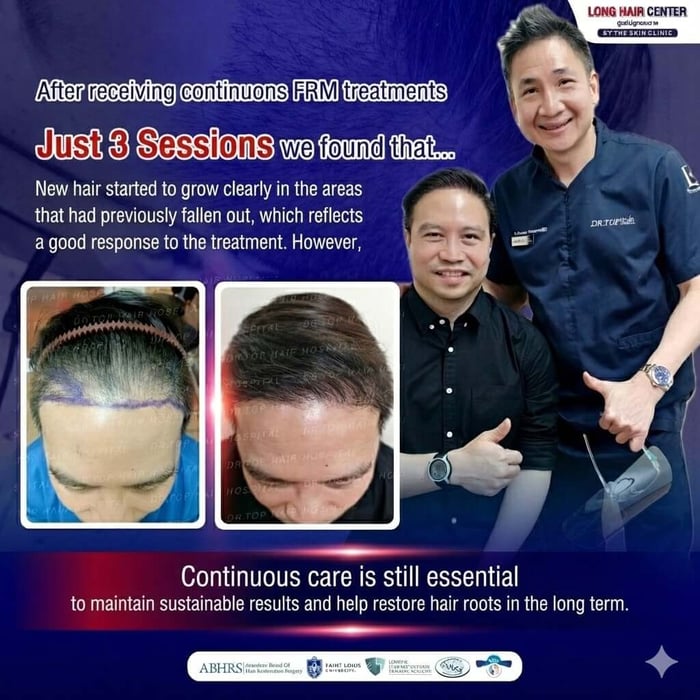
After undergoing three consecutive FRM sessions, noticeable new hair growth was observed in previously thinning areas, indicating a strong positive response to treatment. Nevertheless, continuous hair care remains essential to sustain long-term results and support ongoing hair follicle recovery.
5 things you should know if you are looking for a hair transplant clinic
- Ask to see that graft extraction tools are opened from new, sealed packaging for every case to ensure cleanliness, safety, and reduced risk of infection.
- Implanters (hair transplant pens) must be brand new and not reused to maintain sharpness, hygiene, prevent infection, and ensure natural, dense hair growth.
- Request video documentation of the hair transplant procedure to confirm that the treatment is performed by a qualified specialist.
- Request real-time graft counting videos to verify that the stated graft numbers are accurate, enhancing transparency and treatment standards.
- Corrective treatment should be possible if results do not meet expectations; patients should openly discuss evaluation and revision plans with their physician.
This case clearly demonstrates that continuous hair care is the key to achieving sustainable, long-term results. If you are experiencing hair loss or hair thinning after a hair transplant, or if you are looking to plan proper long-term hair care, you can consult with The Skin Clinic by Dr. Top Hair Hospital. The clinic offers professional consultations to assess your scalp condition and design a personalized treatment plan tailored specifically to your needs.