Table of contents
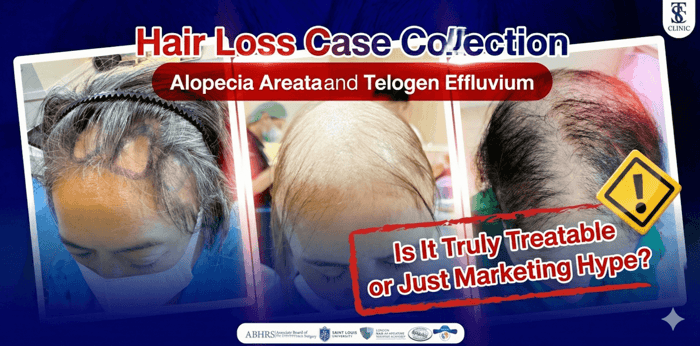
Hair loss and hair thinning can be emotionally challenging, significantly affecting mental well-being and self-confidence. This is especially true for conditions such as Alopecia Areata (patchy hair loss) and Telogen Effluvium (acute hair shedding), which often raise concerns about whether hair can grow back to its original state and if these conditions are truly treatable. This article provides clear answers along with effective treatment approaches to help restore hair growth and regain confidence.
What causes Telogen Effluvium and Alopecia Areata?
- Telogen Effluvium: Telogen Effluvium occurs when certain triggering factors cause a large number of hair follicles in the growth phase (Anagen Phase) to shift prematurely into the resting phase (Telogen Phase) at the same time. As a result, hair sheds simultaneously, making the hair appear noticeably thinner. New hair is unable to grow fast enough to replace the shedding hair. This condition commonly occurs after experiencing severe stress or significant physical changes, such as illness, surgery, hormonal changes, or nutritional deficiencies.
- Alopecia Areata: Alopecia Areata is caused by an abnormal immune system response in which the body mistakenly identifies hair follicles as foreign substances and attacks them. This immune reaction leads to inflammation around the hair follicles, resulting in rapid hair loss in distinct patches. Other contributing factors may include genetics, chronic stress, scalp infections, and hormonal imbalances.
Can Telogen Effluvium and Alopecia Areata be treated with hair transplantation?
In general, hair transplantation is not the first-line treatment for Telogen Effluvium and Alopecia Areata. This is because hair in these conditions often has the potential to regrow naturally once the underlying cause is properly addressed. Performing a hair transplant while the root cause remains unresolved may increase the risk of newly transplanted hair shedding again. Therefore, initial treatment typically focuses on strengthening hair follicles, reducing hair loss, and stimulating natural regrowth.
Can Telogen Effluvium and Alopecia Areata be completely cured?
- Alopecia Areata: In many cases, hair can regrow naturally. When autoimmune conditions are involved, treatments aimed at restoring the immune system to its most balanced and normal function can significantly improve hair regrowth.
- Telogen Effluvium: Although there are treatments that help restore hair health and accelerate regrowth, hair typically begins to grow back naturally within 3–6 months once the follicles recover. However, if this recovery period has passed and hair continues to shed without signs of regrowth—or if hair loss recurs—it is strongly recommended to consult a specialist. Prolonged follicle inactivity may lead to follicular miniaturization or atrophy, making recovery more difficult.
What treatment options are available for Alopecia Areata and Telogen Effluvium?
There is multiple treatment approaches designed to stimulate hair regrowth. The choice of treatment depends on the severity of the condition and individual patient factors. For these conditions, Dr. Top recommends a Combination Treatment approach, integrating complementary therapies that enhance each other’s effectiveness:
• ALMI Nano Fat: Nourishes hair follicles using nano fat rich in growth factors. This technique helps restore weakened follicles and stimulates new hair growth.
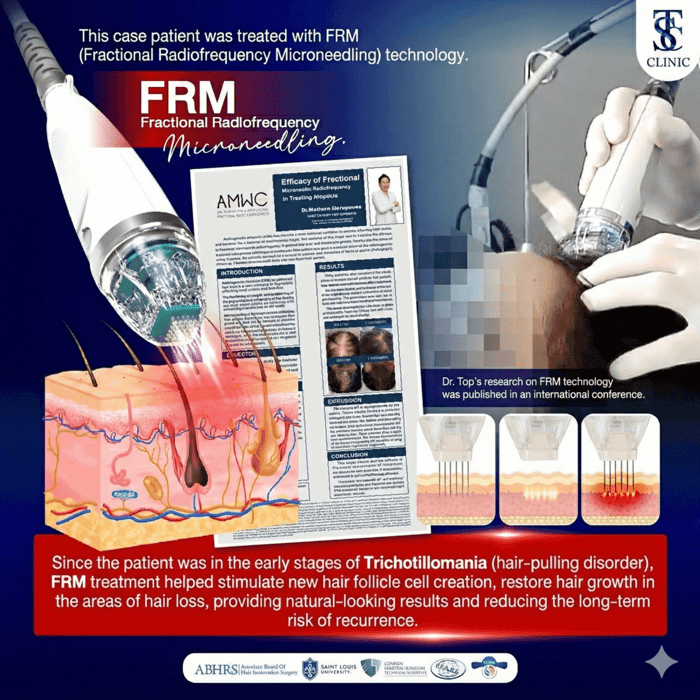
• FRM Microneedling RF: Uses radiofrequency energy combined with micro-needles to stimulate collagen production, strengthen the scalp, and enhance follicular function.
• Long Hair Transplant: Applied selectively in areas where density enhancement is needed, helping restore hair volume in a natural-looking manner.
Case studies of Alopecia Areata and Telogen Effluvium
In cases of Alopecia Areata and Telogen Effluvium, the most important first step is a thorough diagnostic evaluation using AI Hair Scan technology. This assessment helps determine whether viable hair follicles are still present, checks for possible vitamin deficiencies, and includes screening for underlying conditions such as Systemic Lupus Erythematosus (SLE) or thyroid disorders. Identifying the true underlying cause is a crucial step before initiating any form of treatment.
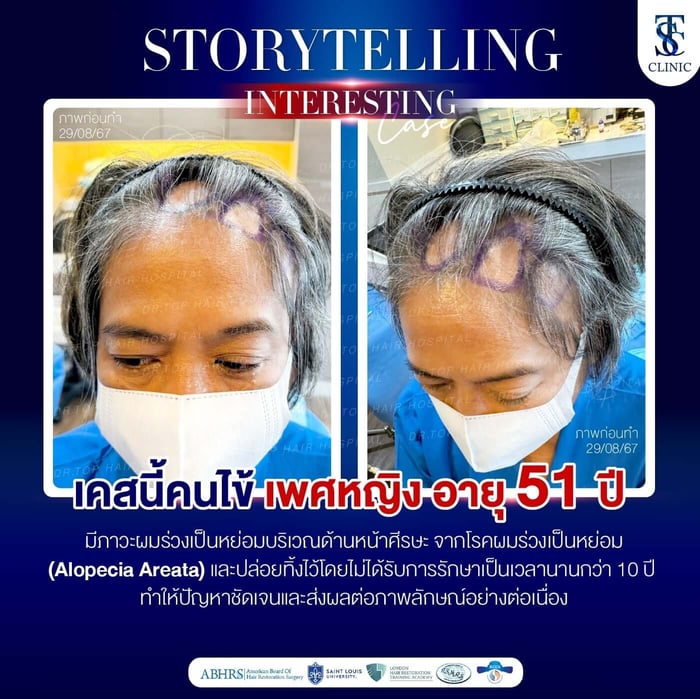
- Case 1: Female Patient, Age 51
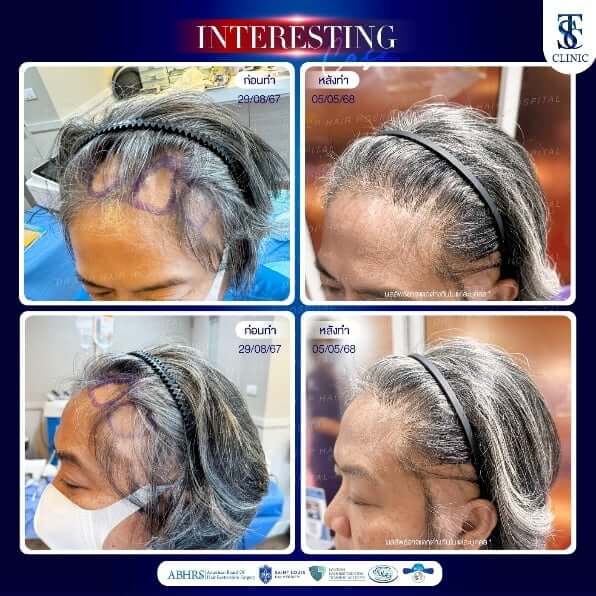
The patient presented with patchy hair loss in the frontal scalp area caused by Alopecia Areata. The condition was left untreated for more than 10 years, resulting in clearly visible hair loss and a significant impact on her overall appearance. For this case, Dr. Top recommended a Combination Treatment using two techniques:
ALMI Nano Fat to stimulate and restore weakened hair follicle cells, and Long Hair Transplant to naturally increase hair density.
- Case 2: Female Patient, Age 30
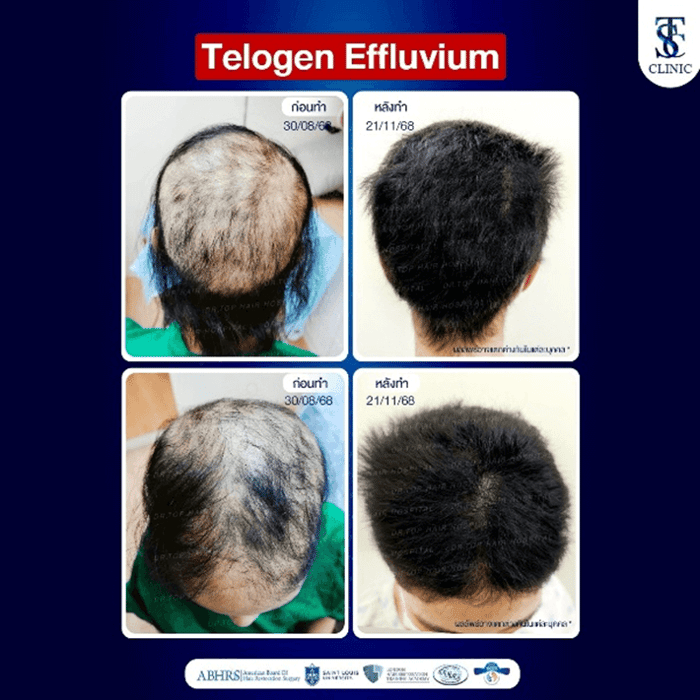
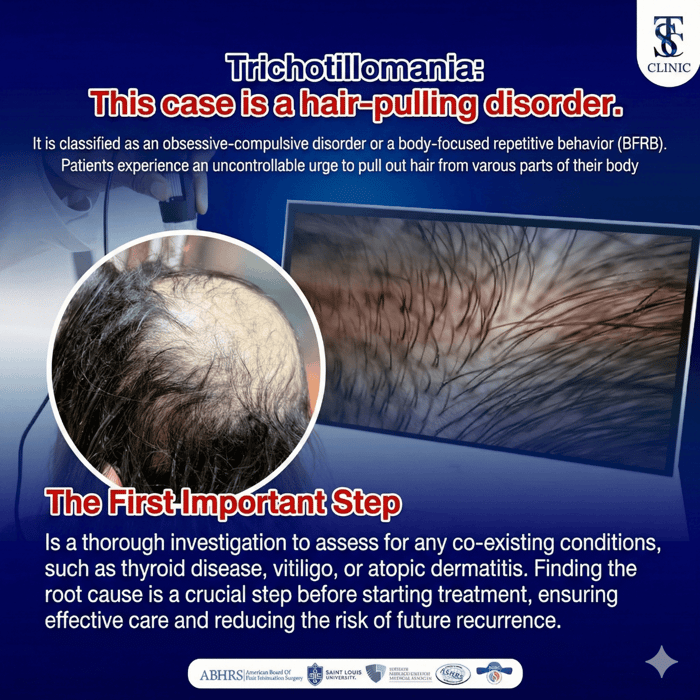
This patient initially experienced temporary diffuse hair shedding across the entire scalp, resulting in excessive hair loss. She received continuous treatment with steroid injections. Subsequently, she was diagnosed with Trichotillomania (hair-pulling disorder), which further exacerbated hair thinning over a wide area at a rapid pace, nearly progressing to extensive baldness within approximately three months. For this case, Dr. Top recommended a Combination Treatment using two techniques:
ALMI Nano Fat to stimulate and restore hair follicle cells, combined with FRM therapy.
- Case 3: Female Patient, Age 34
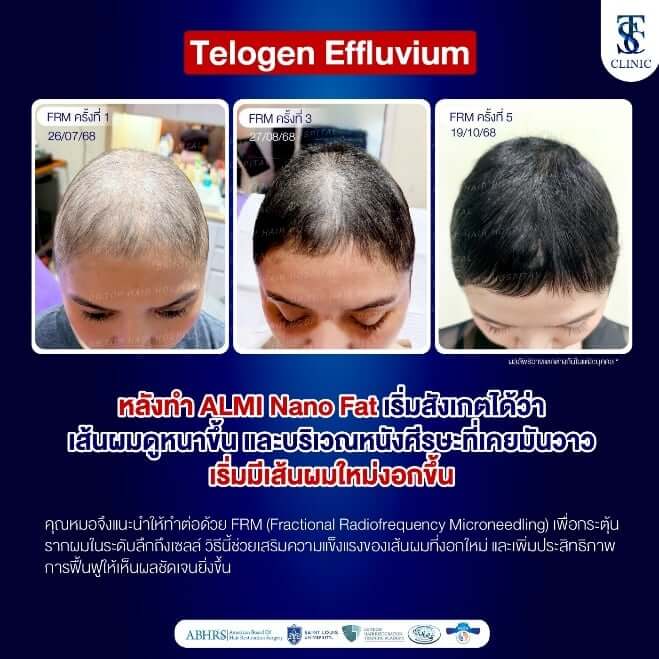
The patient experienced hair loss across the entire scalp due to Telogen Effluvium, an acute hair shedding condition triggered by a severe infectious illness. This resulted in abnormally excessive hair loss. The patient experienced ongoing anxiety and stress related to her hair condition for nearly one month before deciding to seek medical consultation. For this case, Dr. Top recommended a Combination Treatment using two techniques: ALMI Nano Fat to stimulate and restore hair follicle cells, together with FRM therapy.
Because hair loss does not occur in just one form—and not every case requires hair transplantation—if you are experiencing hair loss or thinning that is causing stress and uncertainty about where to begin treatment, we recommend consulting with us at THE SKIN CLINIC. Our specialists provide comprehensive hair analysis and personalized treatment planning, carefully tailored to your individual condition and needs.