Table of contents
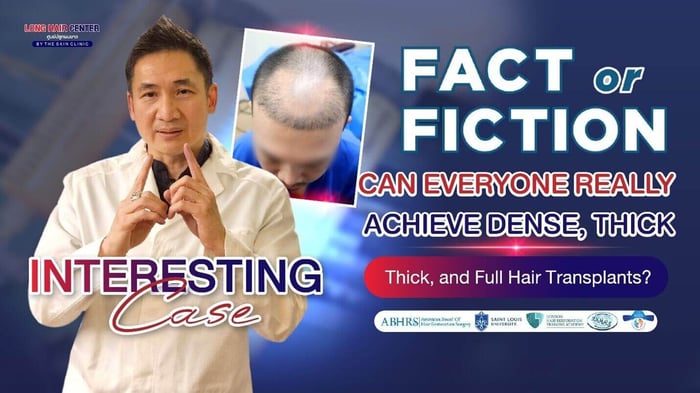
For those considerin Froalag a hair transplant, it’s natural to wonder why some people achieve dense, full results while others seem to have less coverage. So, is it truly possible for everyone to achieve a dense, thick, detailed, and full hair transplant? Before deciding to undergo a hair transplant, it's important to understand the facts, procedures, techniques, and individual factors that can influence the success of the treatment. This article will guide you through these details to help you prepare confidently for your journey toward having a fuller head of hair.
Is High-Density Hair Transplantation suitable for everyone?
Successful hair transplantation requires a long-term treatment plan, not just achieving natural-looking, satisfying results immediately after the procedure. Preserving the existing hair is equally important to maintain overall density. Otherwise, continued hair loss could create noticeable gaps between the transplanted hair and the original hair. Thus, not everyone is suitable for high-density hair transplantation. The achievable density depends on several individual factors.
What Factors Affect Hair Transplant Density?
How severe the hair thinning or baldness is
If baldness covers a large area but the available donor hair is limited, achieving high-density transplantation may not be possible. However, if the transplant focuses on a smaller area, such as the hairline, and there is an ample supply of donor hair, achieving a dense, full appearance is possible.
The number of grafts available for transplantation
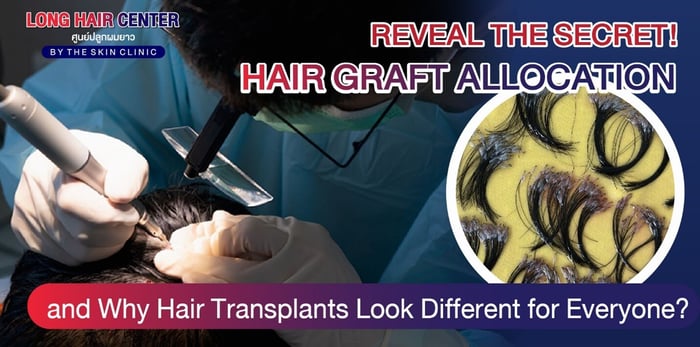
The outcome in terms of density, thickness, and detail depends on each individual’s hair resources, both in quantity and thickness. The more severe the thinning or balding, the more grafts are typically needed. If there is insufficient donor hair, it may not be possible to completely cover the bald area, requiring the available grafts to be distributed strategically across the scalp.
The area where the hair transplants is needed
Different areas require different numbers and types of grafts. For example, in the front hairline area, single-hair grafts are often used to create the most natural look. In contrast, for the crown or top of the scalp, grafts containing 3–4 hairs are used to achieve a denser appearance.
Case Example from The Skin Clinic Using ALMI Nano Fat Technique
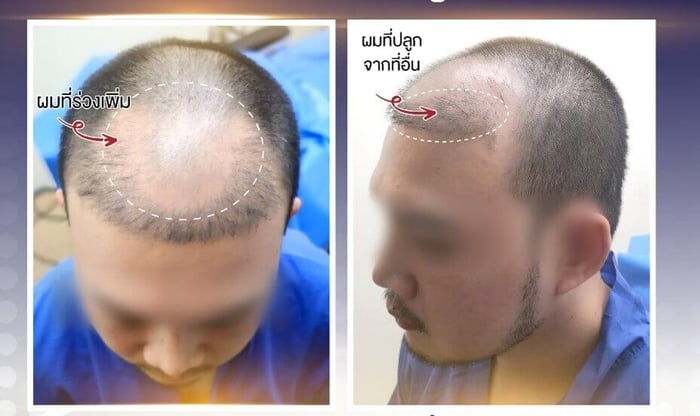
Patient Case Example from The Skin Clinic. A patient who had previously undergone a hair transplants at another clinic experienced increased hair loss afterward and did not wish to undergo another transplant. This case was particularly challenging to correct because the previous clinic had over-harvested grafts from the back of the scalp, resulting in abnormal thinning and visible scalp exposure, a condition known as over-harvesting. Consequently, there was insufficient donor hair left for any future transplant sessions, a situation that is extremely difficult, and sometimes impossible, to correct. So, how was this case treated?
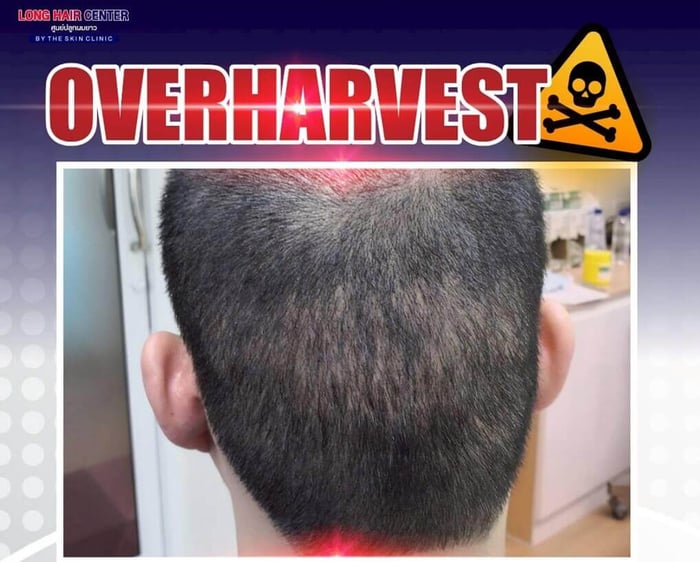
Since the patient still had some existing hair at the front of the scalp, the medical team developed a long-term treatment plan by using the ALMI Nano Fat technique. This method stimulates the hair follicles using the patient’s own fat-derived cells, helping to thicken and strengthen the hair, extend the hair growth cycle, and minimize the need for excessive graft usage. This allows the remaining graft resources to be managed as efficiently as possible for future transplantation.

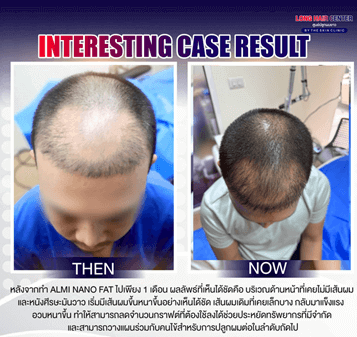
After just one month of ALMI Nano Fat treatment, the results were visible: new hair growth appeared in the previously balding areas, and the existing fine, thin hair became stronger and thicker. This improvement reduced the number of grafts needed for any future hair transplants sessions, conserving the limited hair resources available and enabling better planning with the patient for the next steps. It’s important to note that not every case will achieve the same successful results. Here’s how the ALMI Nano Fat technique helps:
- Stimulates blood circulation to nourish the scalp more effectively
- Strengthens and prolongs the life and quality of newly grown hair
- Thickens fine and thin hair, making it stronger and fuller
- Slows down hair shedding and extends hair lifespan
- Completely safe, uses 100% of the patient’s own cells
- Single treatment, performed once, no need for frequent sessions
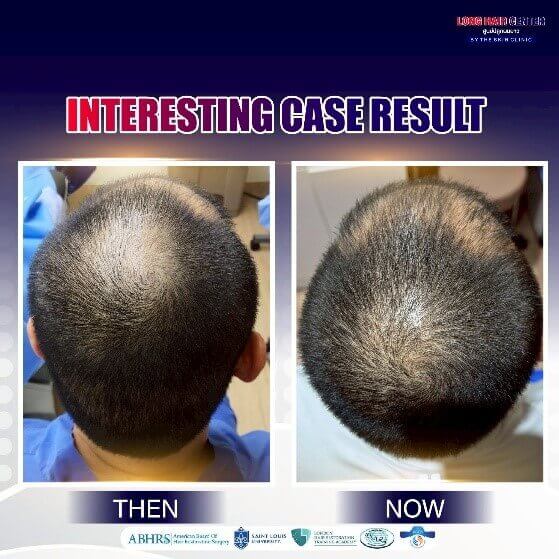
Hair transplant density varies across different levels, and not everyone can achieve the same degree of thickness, fullness, and detail. The results depend on several factors, such as each individual’s original hair resources, the severity of baldness, and the specific areas targeted for transplantation. Successfully treating hair thinning and baldness requires careful, personalized planning between the doctor and the patient. This collaborative approach ensures a tailored treatment strategy that delivers natural-looking results and the highest level of patient satisfaction.