Table of contents
A hair transplantation isn’t just about aesthetics; it’s a significant investment in regaining your confidence and quality of life. Before you take the step toward hair transplant, this article explores 5 essential factors that expert hair transplant doctors from Hair Transplant Clinic evaluate before recommending the procedure. Understanding these criteria will help you prepare and make an informed decision about hair transplant journey.
Can Everyone Get a Hair Transplant?
5 Criteria Doctors Use to Analyze Before Hair Transplant

1. Hair Density in the Back Area per Square Centimeter
On average, there should be at least 80 grafts/cm² or about 150 hairs/cm². Lower density means fewer available grafts. Only up to 50% of grafts can be harvested since the removed grafts won’t regrow in the same spot. Planning is crucial and starts with an AI Hair Scan for precise analysis, which is an essential feature that a hair transplant clinic should have. Visual inspection alone can be inaccurate. Without AI Hair Scan data, there’s no clear information on whether the donor area (back of the scalp) has enough hair or usable area, possibly leading to wrong assessments and affects the results of the hair transplant.

2. Size of the Donor Area
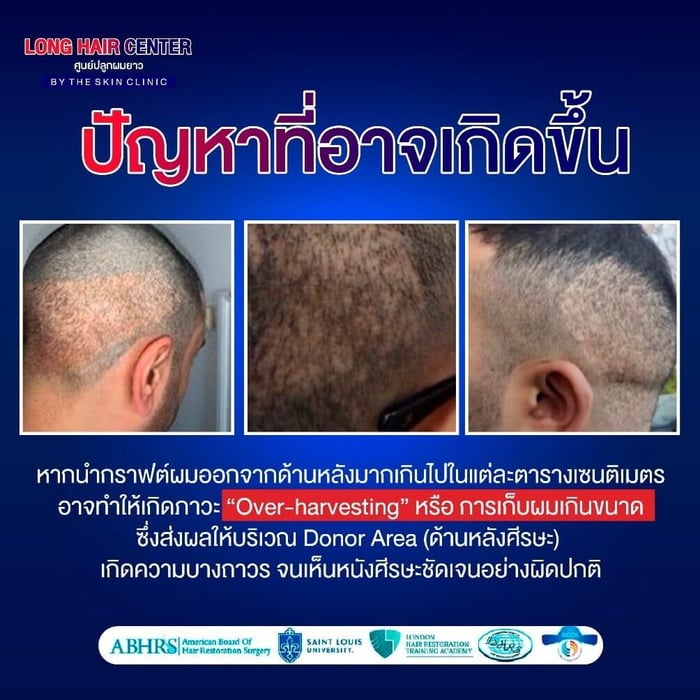
The area at the back of the head (Donor Area) is the source of hair used for transplantation. Since this area is limited, accurate measurement is crucial. Before a hair transplant, doctors will precisely measure to assess whether this area has enough grafts for the procedure. If the doctor overestimates the donor area for hair transplant, it may lead to harvesting grafts from “unsafe” zones. Although the transplanted hair may initially grow well, in the future, these grafts could shrink and fall out, resulting in non-permanent outcomes. Conversely, harvesting too many grafts per square centimeter from the back can cause “Over Harvesting,” which leads to permanent thinning of the donor area, making the scalp unusually visible.
3. Hair Type and Thickness
Hair characteristics like straight, wavy, or curly require different densities during transplantation. Grafts differ per individual. Knowing the average hairs per graft is critical because grafts with multiple hairs produce denser results. AI Hair Scan technology measures this clearly, helping to assess transplant potential accurately.

4. Average Number of Hairs per Graft
Having many grafts doesn’t always mean thicker hair because each graft contains 1-4 hairs. The “average hairs per graft” is often overlooked but is vital to predicting transplant outcomes. Clinics using AI Hair Scan can determine hair quality clearly. For example, grafts averaging 1–2 hairs may require many grafts but yield less density, whereas grafts with 3–4 hairs per graft provide better density with fewer grafts. Therefore, don’t just trust “more grafts = thicker hair.” Start with precise analysis and professional planning for the best result.

5. Risk Assessment for Hair Transplantation (ATPN)
This model assesses 4 factors:
- A = Age
- T = Treatment compliance (how well the patient follows treatment plans)
- P = Progression of hair loss over the past 2 years
- N = Norwood scale class in the family (family history of baldness)

These five criteria are essential for hair transplant planning, helping you understand possible outcomes, the hair transplantion process, and potential limitations clearly. If you’re looking for a hair transplant clinic, consult with our specialists at The Skin Clinic for personalized advice tailored just for you.