Table of contents
- Why has Finasteride been trusted worldwide for over 30 years?
- What are the possible side effects of Finasteride in men?
- Is it true that topical Finasteride significantly reduces side effects compared to oral Finasteride?
- How is Finasteride different from Minoxidil?
- How do the results of topical and oral Finasteride compare?
- If you use a higher-dose topical solution, can it deliver results equal to the oral form?
- Does topical Finasteride really lower DHT levels only in the scalp without affecting hormones in the body?
- If you’re worried about side effects, what is Dr. Top’s treatment standard?
- What is Dr. Top’s “Standard” protocol for patients with thinning hair?
- Is the combination of topical Finasteride + Minoxidil truly one of the most effective treatments for hair loss?
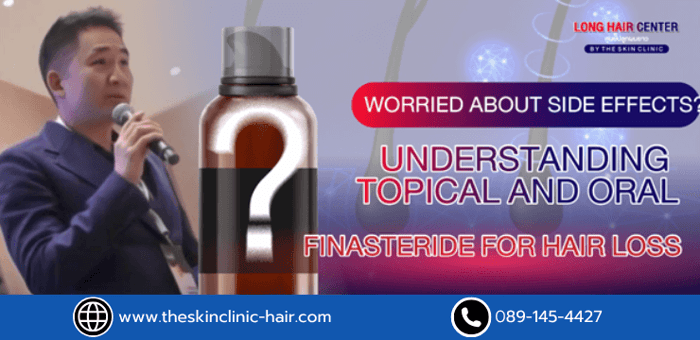
So, does the topical and oral Finasteride version work just as well? Which one gives better results? This article gathers all the answers to your most common questions, explained by Dr. Top, a hair restoration specialist certified by the American Board of Hair Restoration Surgery (ABHRS), to help you understand and make the most confident decision.
Why has Finasteride been trusted worldwide for over 30 years?
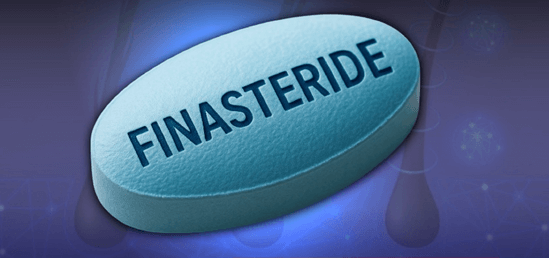
- Finasteride, a medication for hair loss, has been globally recognized since 1992. It is FDA-approved in the United States and has been used to treat hereditary hair loss for over 30 years. Doctors widely accept and prescribe it because research clearly shows that it effectively inhibits the hormone DHT (Dihydrotestosterone) the main cause of hair loss. Finasteride helps reduce hair shedding and restores hair strength. DHT binds to androgen receptors at the hair roots, causing the follicles to stop functioning. As a result, the hair growth cycle shortens, hair strands become thinner and weaker, hair falls out more easily, and the follicles gradually shrink until they can no longer produce new hair.
What are the possible side effects of Finasteride in men?
- Some people may experience symptoms such as decreased libido, reduced arousal, difficulty maintaining an erection, brain fog, depressed mood, or enlarged breast tissue (gynecomastia). In reality, side effects from Finasteride are quite rare because the drug works by blocking the DHT hormone responsible for hair loss, not by destroying male hormones. Research shows that sexual side effects occur in only about 2% of users. Post-Finasteride Syndrome (PFS), which includes symptoms like decreased sexual desire, ejaculation disorders, suicidal thoughts, insomnia, panic attacks, anxiety, and depression is still under scientific investigation. As of 2025, although there have been some patient reports, there is still no definitive medical conclusion confirming whether PFS truly exists. However, Dr. Top believes that medical science can always evolve and if future evidence supports these findings, the theory may change accordingly.
Is it true that topical Finasteride significantly reduces side effects compared to oral Finasteride?
- In recent years, topical Finasteride has been developed as an alternative to oral medication to help reduce the risk of side effects particularly sexual side effects, which occur in about 2% of oral users, while maintaining nearly the same effectiveness in blocking DHT.
- Research supports that topical Finasteride can directly lower DHT levels in the scalp. The active ingredient works specifically on hair follicles, helping to increase hair density. Moreover, because the drug is absorbed into the bloodstream at a much lower rate, it tends to cause fewer systemic side effects than the oral form.
How is Finasteride different from Minoxidil?
Finasteride works by:
- Inhibiting the DHT hormone, the main cause of hereditary hair loss
- Reducing excessive hair shedding
Minoxidil works by:
- Stimulating the growth of new hair
- Helping thin, weak hair gradually become thicker, stronger, and fuller
How do the results of topical and oral Finasteride compare?
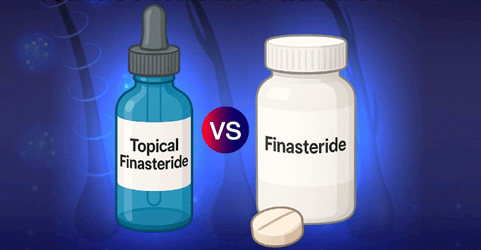
- The results of topical and oral Finasteride are not 100% identical. Generally, the oral form tends to be more effective, while the topical form is safer yet still delivers noticeable results, with only slightly lower efficacy. However, if the topical medication is not applied consistently, the treatment’s effectiveness may decrease, and results may not be clearly visible.
If you use a higher-dose topical solution, can it deliver results equal to the oral form?
- Using a higher-dose topical Finasteride may provide results that are nearly comparable to the oral form. However, research is still ongoing to precisely compare the efficacy
- between topical and oral Finasteride formulations. More studies are needed to obtain conclusive and comparable data.
Does topical Finasteride really lower DHT levels only in the scalp without affecting hormones in the body?
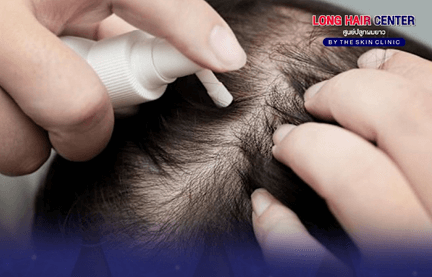
- Yes, topical Finasteride works by directly inhibiting DHT in the scalp, with minimal effect on overall body DHT levels. Therefore, it is suitable for individuals who wish to avoid the potential side effects associated with oral Finasteride. Using the topical formula allows safe, localized treatment.
If you’re worried about side effects, what is Dr. Top’s treatment standard?
- For patients concerned about side effects, Dr. Top typically begins treatment by combining Finasteride with Minoxidilto reduce the risk associated with oral Finasteride. After discussion and evaluation, if the patient is comfortable with the potential side effects, Dr. Top may then consider transitioning to the oral form for enhanced efficacy.
What is Dr. Top’s “Standard” protocol for patients with thinning hair?
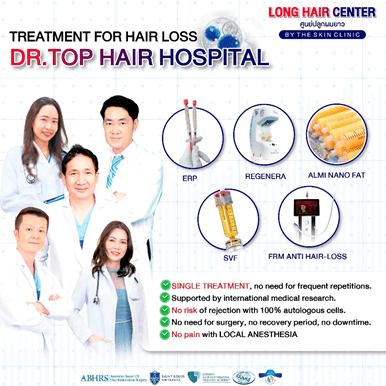
- In addition to using topical Finasteride combined with Minoxidil, Dr. Top also enhances treatment by stimulating hair follicles with advanced techniques such as FRM Anti Hair-Loss, ALMI Nano Fat, Regenera, ERP, and SVF. These procedures help strengthen hair roots, restore scalp health, and promote long-term sustainable hair regrowth.
Is the combination of topical Finasteride + Minoxidil truly one of the most effective treatments for hair loss?
- According to Dr. Top, combining topical Finasteride with Minoxidil into a single 2-in-1 formulation is an excellent and highly suitable option. This combination treatment enhances overall effectiveness by both reducing hair loss and stimulating new hair growth, making it one of the best approaches for treating hair loss and thinning.
To achieve the most effective results in treating hair loss and thinning, it is essential to begin by identifying the underlying cause in order to create a personalized and appropriate treatment plan. Not every case will respond to Finasteride or Minoxidil in the same way, the outcome depends on individual factors such as hair condition, overall health, and personal goals. In addition, there are many other advanced techniques available for hair restoration. You can visit THE SKIN CLINIC for a personalized consultation to find “the right solution” for your hair loss treatment.