Table of contents
- Why alopecia areata can cause widespread hair loss
- Why new hair can grow back white after alopecia areata
- Why hair transplantation is unsuitable while AA is active
- Patient case of extensive hair loss and white regrowth
- Treatment options when a hair transplant is unsuitable
- Changes observed after four sessions over four months
- Can hair grow back on its own and regain its black color
- Accurate diagnosis and ongoing care are essential
Alopecia areata (AA) can cause distress, particularly when hair loss spreads across most of the scalp. Seeing newly regrown hair appear white, despite previously having black hair, can add to that concern.
White regrowth after alopecia areata may reflect changes in hair pigmentation associated with the condition. Hair can regain its dark color, as illustrated by the patient case below, but results vary. This article explains how AA affects hair follicles and pigment cells, why hair transplantation is unsuitable while the disease is active, and the care options considered by Dr. Top for one patient.
Why alopecia areata can cause widespread hair loss
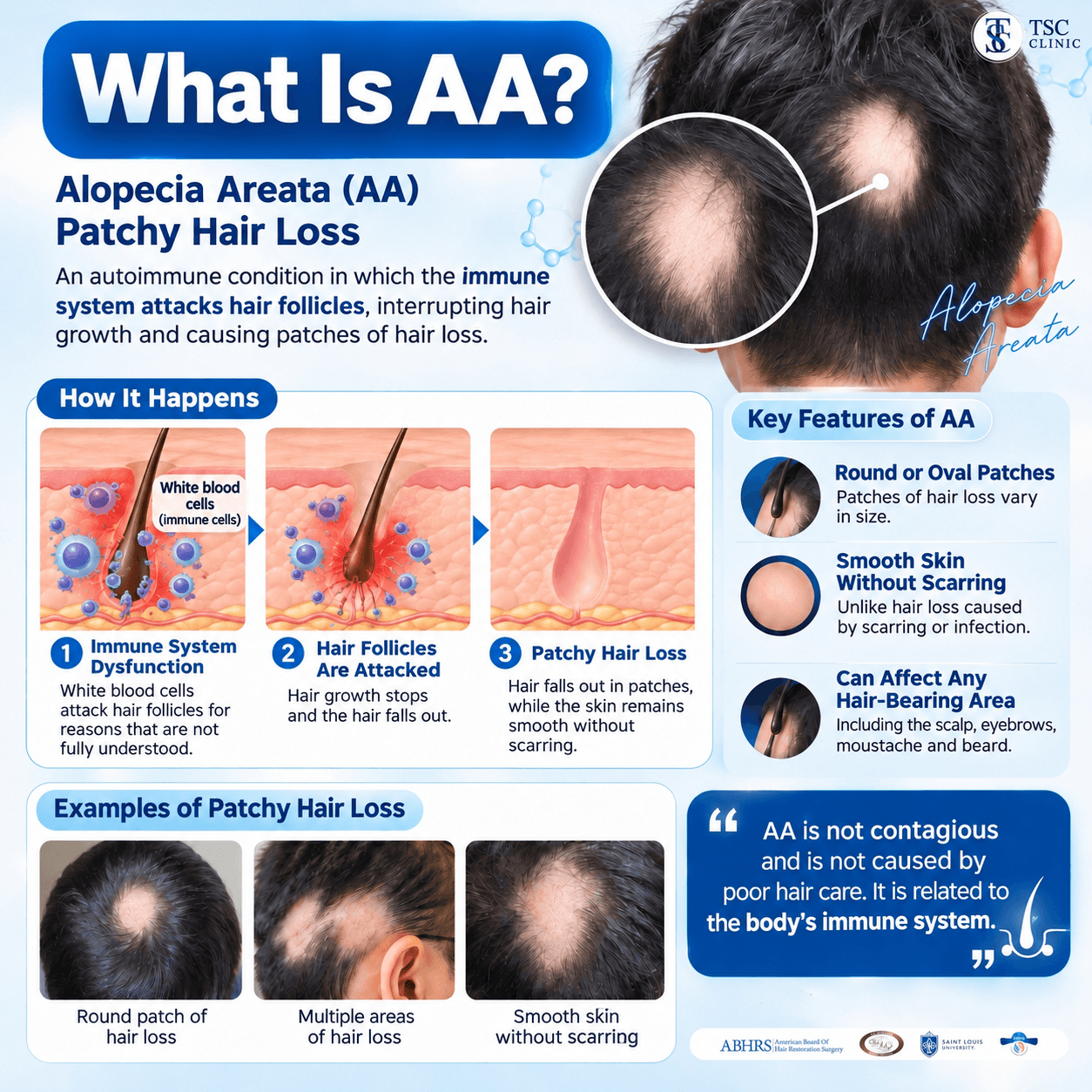
Alopecia areata (AA) is an autoimmune condition in which the immune system attacks hair follicles. This disrupts hair growth and causes patches of hair loss. The affected skin is usually smooth and does not develop scarring. Hair loss may appear as round patches or affect several areas of the scalp, and in more extensive cases it can involve most of the scalp.
Why new hair can grow back white after alopecia areata
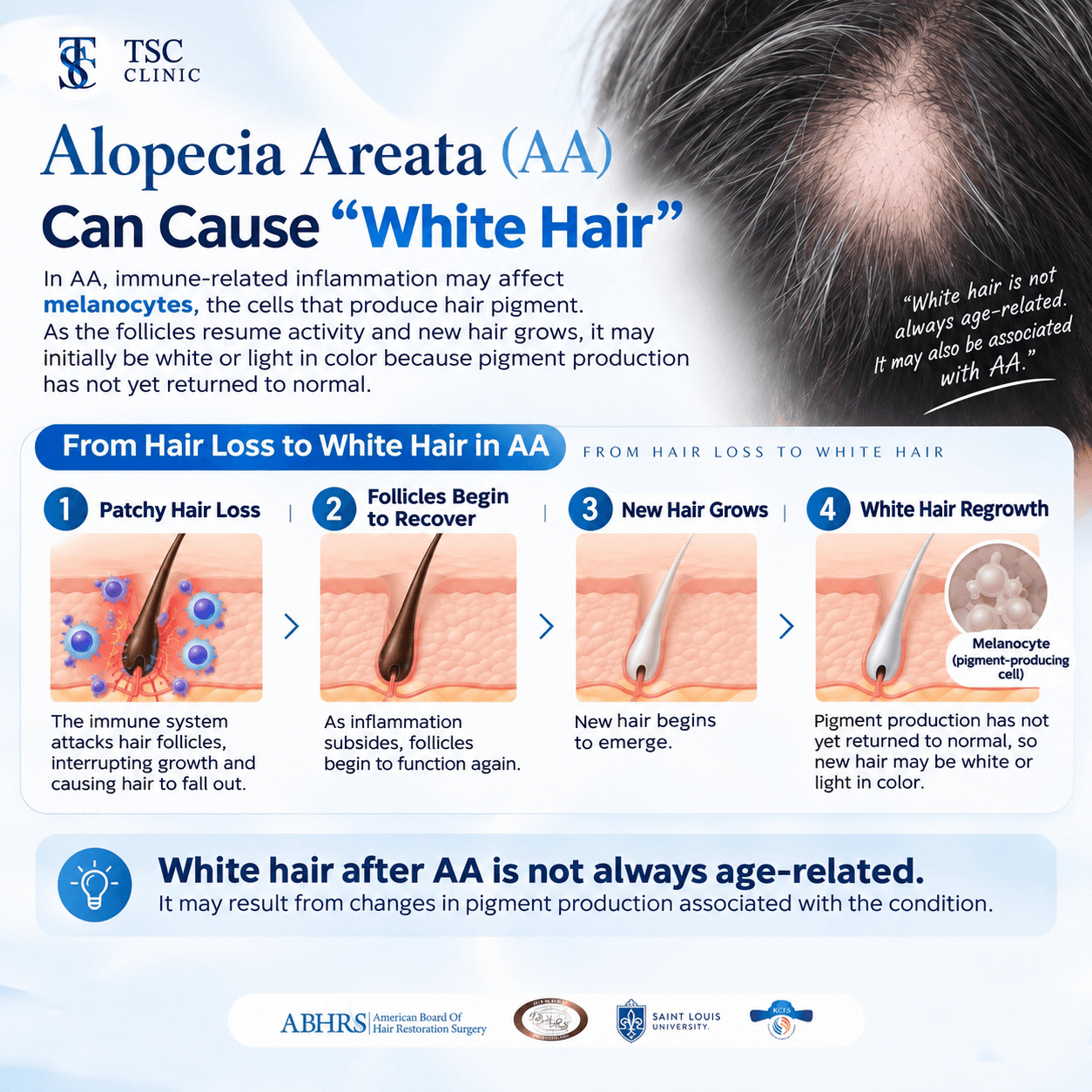
Alopecia areata can affect hair color as well as hair growth. Immune-related inflammation may affect melanocytes, the cells responsible for producing the pigment that gives hair its color.
As inflammation subsides and the follicles begin functioning again, new hair may initially grow back white or gray because pigment production has not yet returned to normal. White hair after AA therefore does not always mean age-related graying. It may be associated with changes in pigment production that occur alongside the condition.
Why hair transplantation is unsuitable while AA is active
If a hair transplant is performed while alopecia areata remains active, the transplanted hair may fall out again. The donor area at the back of the scalp, where hair grafts are usually taken, may also be affected. Its follicles may be weakened or damaged, leaving too few suitable grafts.
Because the immune system can unpredictably attack hair follicles in different areas, the donor region may no longer be a reliable source of transplantable hair. Active disease should therefore be assessed before considering a hair transplant.
Patient case of extensive hair loss and white regrowth
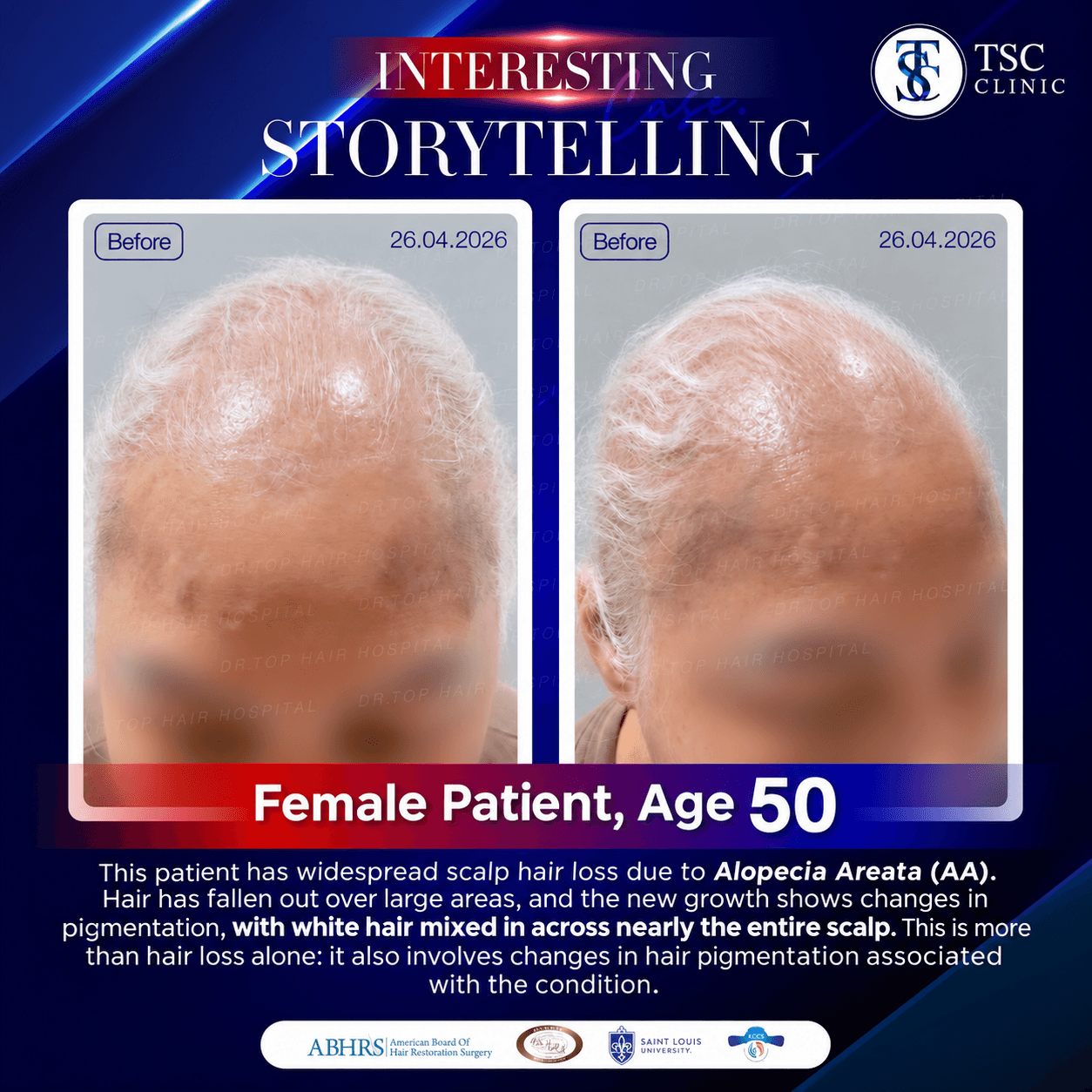
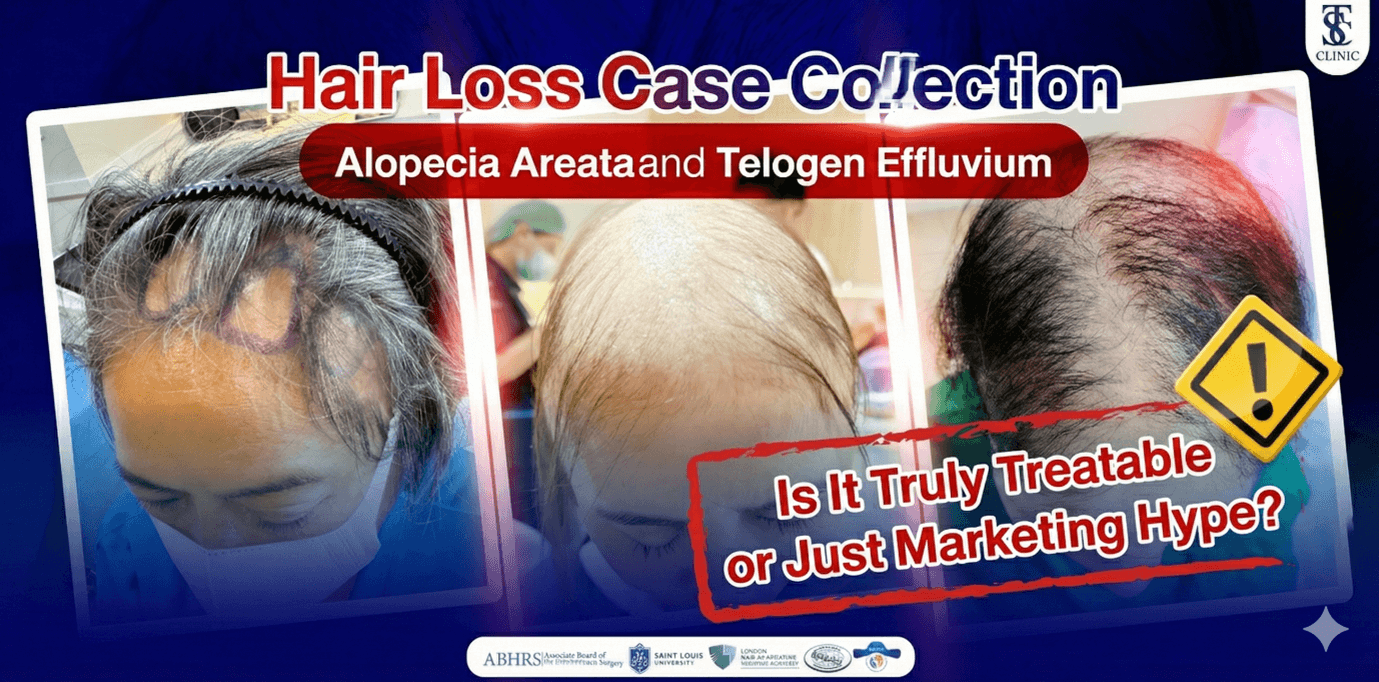
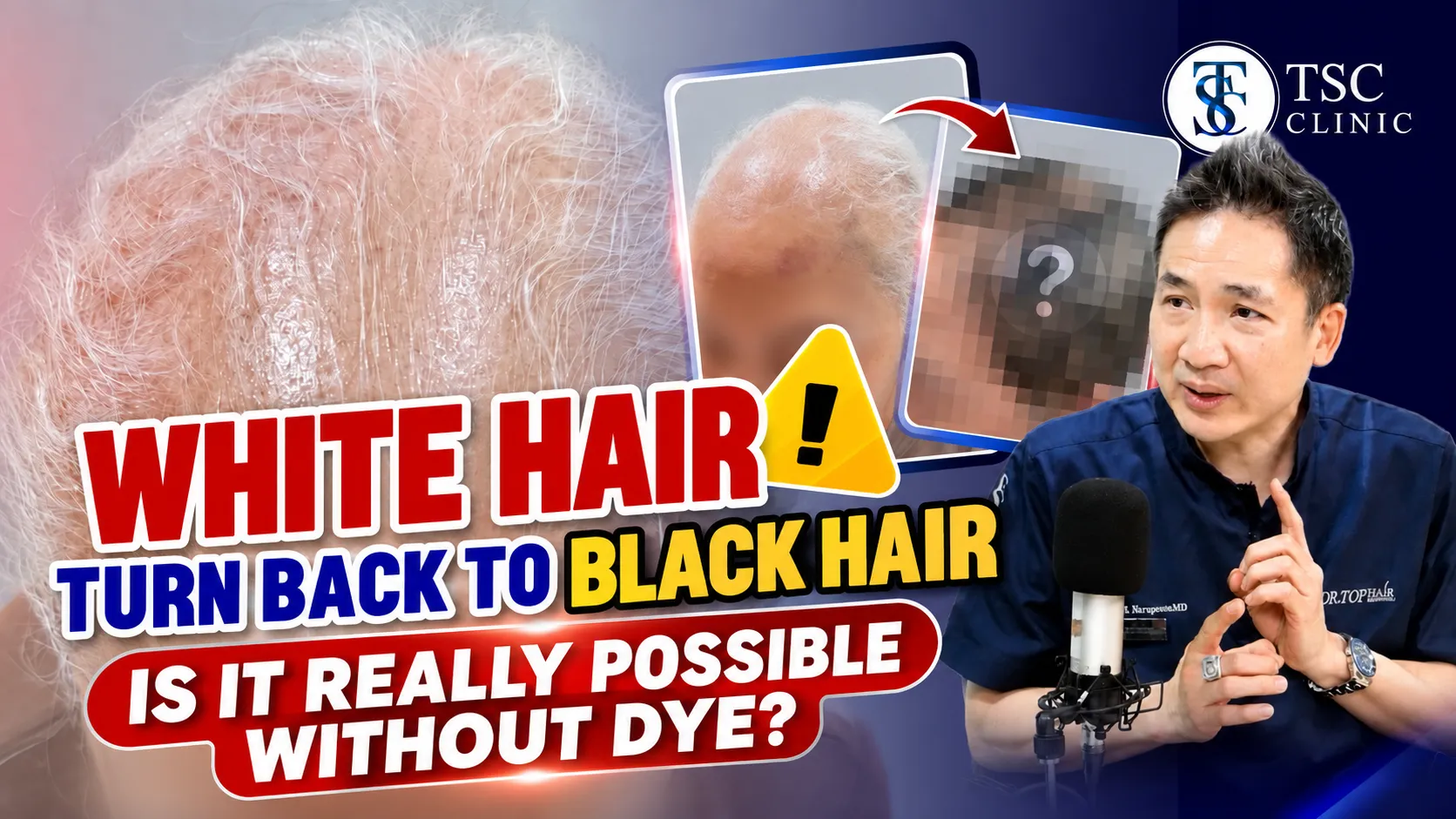
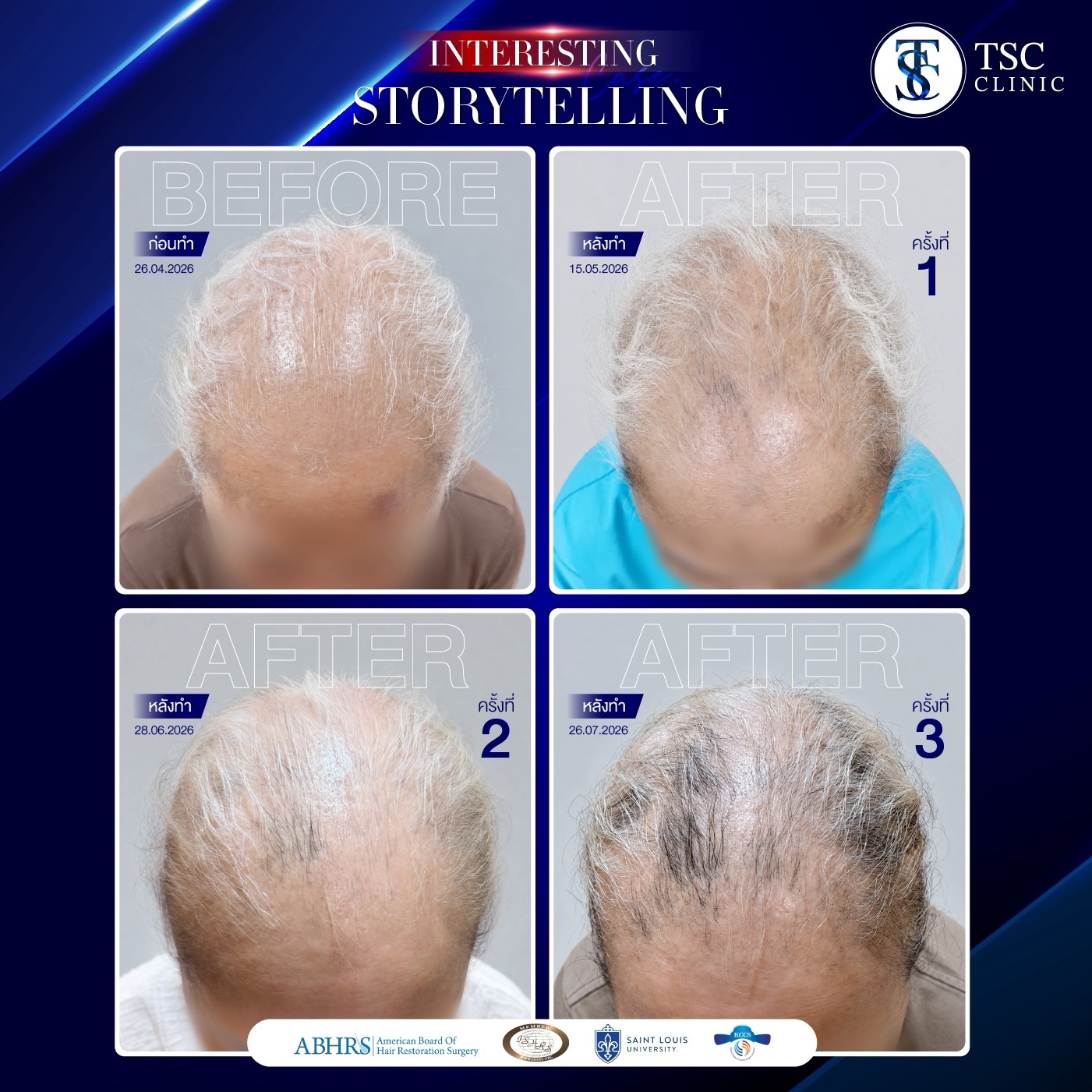
A 50-year-old woman presented with extensive scalp hair loss caused by alopecia areata. The hair that had grown back also showed changes in color, with white strands distributed across almost the entire scalp. Her concerns therefore involved both hair loss and changes in the appearance of her regrowth.
Before starting treatment, Dr. Top assessed the following:
- The condition of her hair and scalp
- Vitamin levels in her body
- Other factors that could contribute to thinning hair
Treatment options when a hair transplant is unsuitable
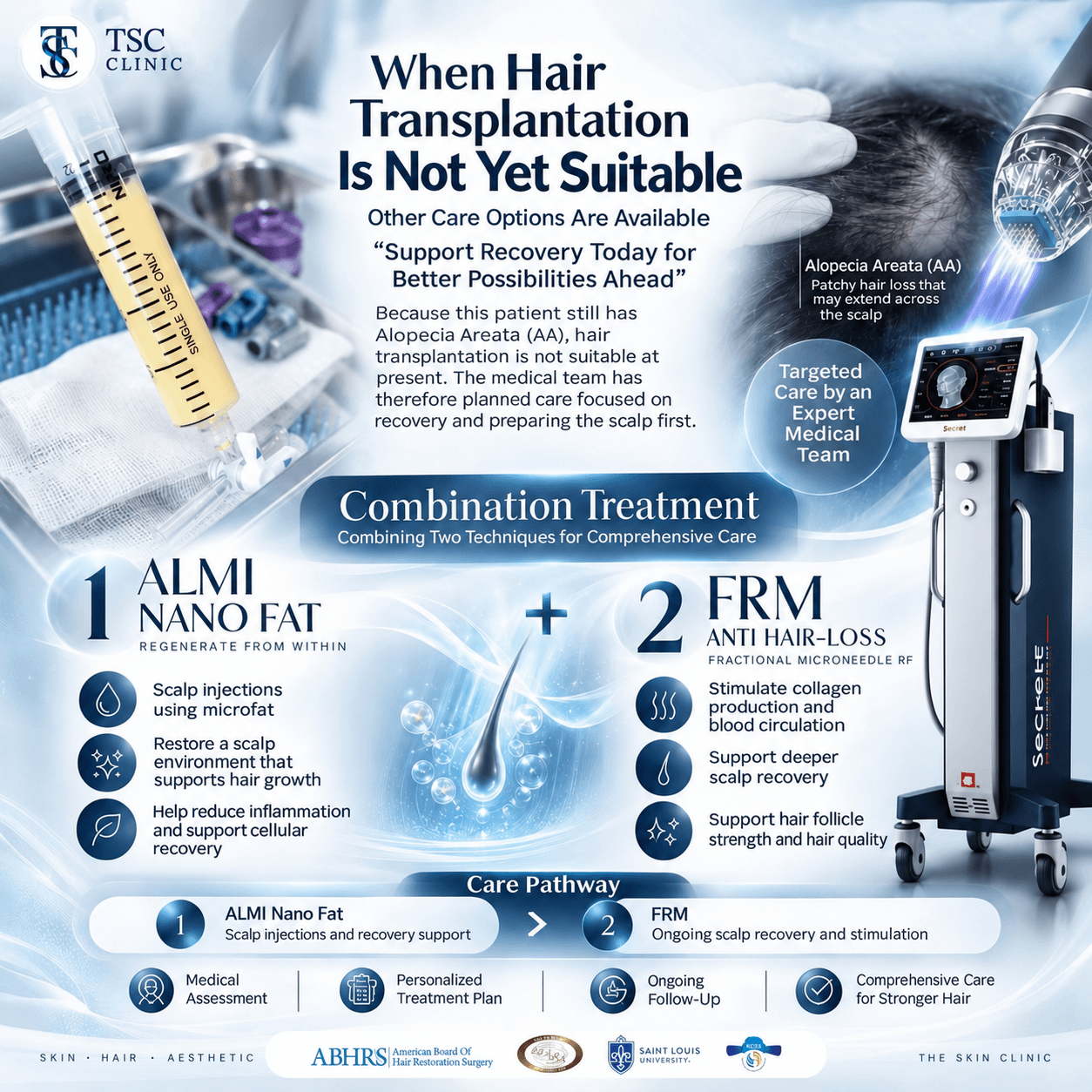
Dr. Top determined that this patient was not suitable for a hair transplant at that time because she still had active alopecia areata. The care plan instead focused on improving the condition of her scalp, combining two techniques as part of ongoing care.
ALMI Nano Fat
ALMI Nano Fat uses injections of processed fat obtained from the patient’s own body. In this care plan, it was used with the aim of improving the scalp environment to support new hair growth, reducing inflammation, and supporting hair follicle recovery.
FRM Anti Hair Loss
FRM Anti Hair Loss was used with the aim of stimulating collagen production and blood circulation, supporting deeper scalp recovery, and improving follicle strength and hair quality.
Changes observed after four sessions over four months
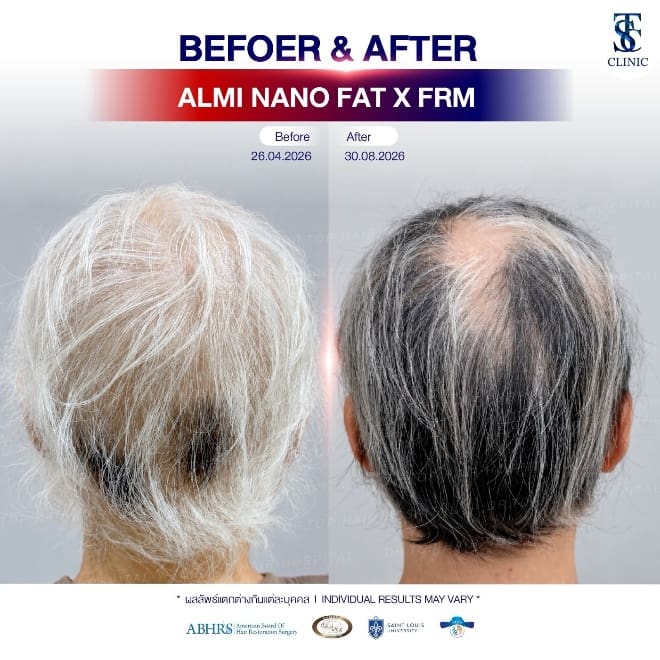
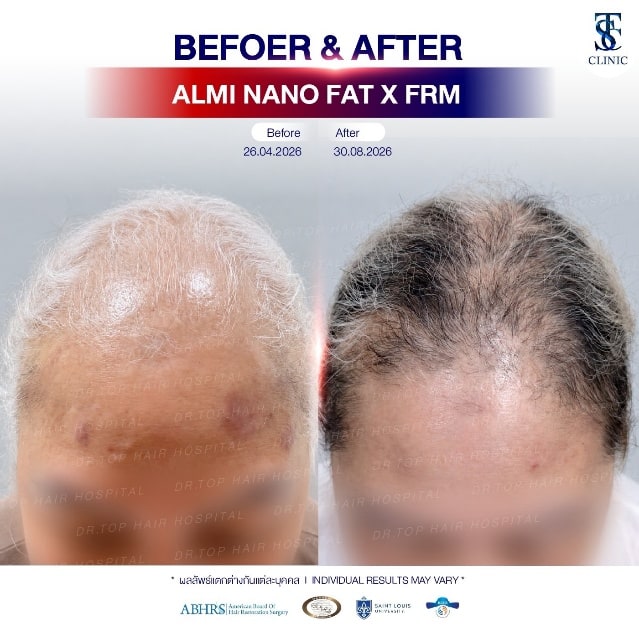
After four sessions of combined ALMI Nano Fat and FRM Anti Hair Loss treatment over four months, visible changes were observed in areas previously affected by alopecia areata. New hair growth increased progressively.
Another change that was particularly meaningful to the patient was the appearance of more black hair, compared with the widespread white regrowth seen before treatment.
This combination represents one approach used in this individual case. It does not mean that every patient will achieve the same outcome. Results vary depending on individual factors and the patient’s overall condition.
Can hair grow back on its own and regain its black color
White regrowth after AA does not necessarily mean the hair will remain white permanently. The case above shows that darker regrowth can occur. However, a single case cannot predict whether another patient’s hair will grow back on its own or regain its original color. Individual medical assessment and follow-up are needed.
Accurate diagnosis and ongoing care are essential
Managing alopecia areata requires an understanding of its autoimmune nature and an appropriate approach to care. A sound treatment plan begins with an accurate diagnosis and a medical assessment of the hair and scalp. Individualized care and regular follow-up help guide treatment and support the possibility of renewed hair growth.
Don't wait any longer! Schedule your free consultation with our experts today!