Table of contents
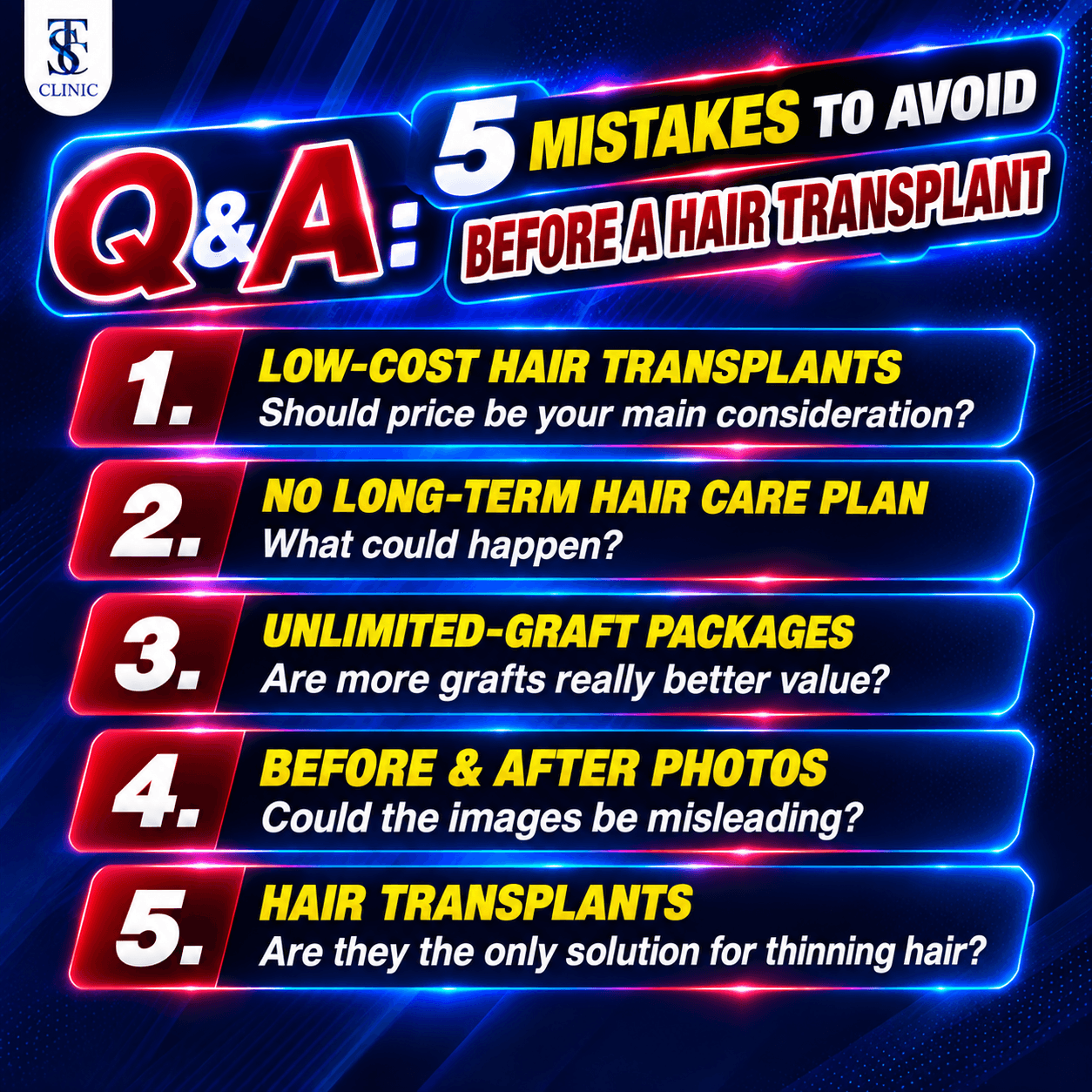
Thinning hair can affect your confidence and make it tempting to rush into a solution. A hair transplant takes time and money, and its results can stay with you for years. With so much information available, it can be hard to know what to look for. Before you decide, here are five common hair transplant mistakes to avoid.
Choosing a Hair Transplant Clinic on Price Alone
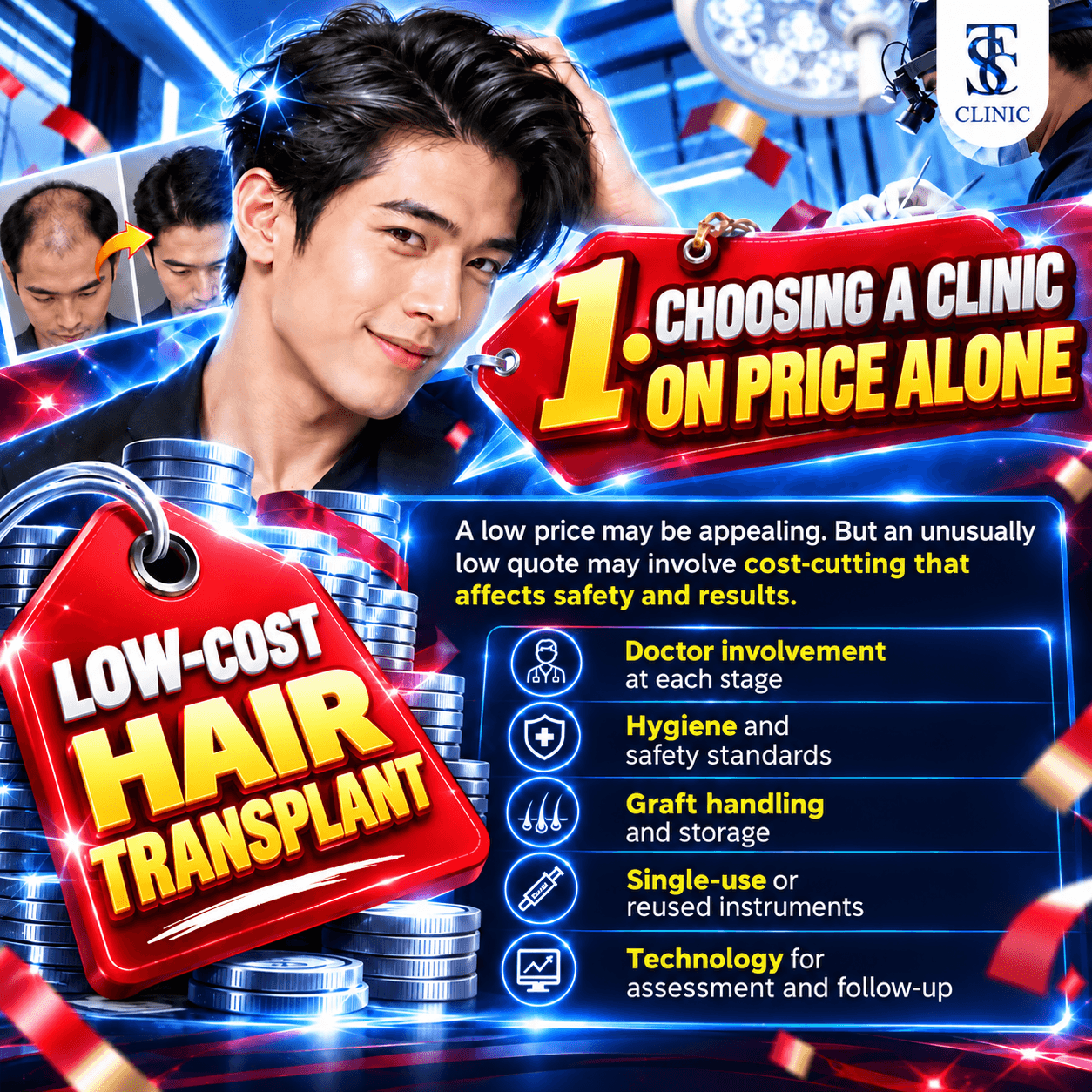
A low hair transplant price can be appealing. An unusually low quote may reflect cost cuts in areas that directly affect safety and the quality of your results. Ask about the following.
- How involved the doctor is at each stage
- Hygiene and safety standards
- How grafts are handled and stored
- Which instruments are single-use and which are reused
- The technology used for assessment and follow-up
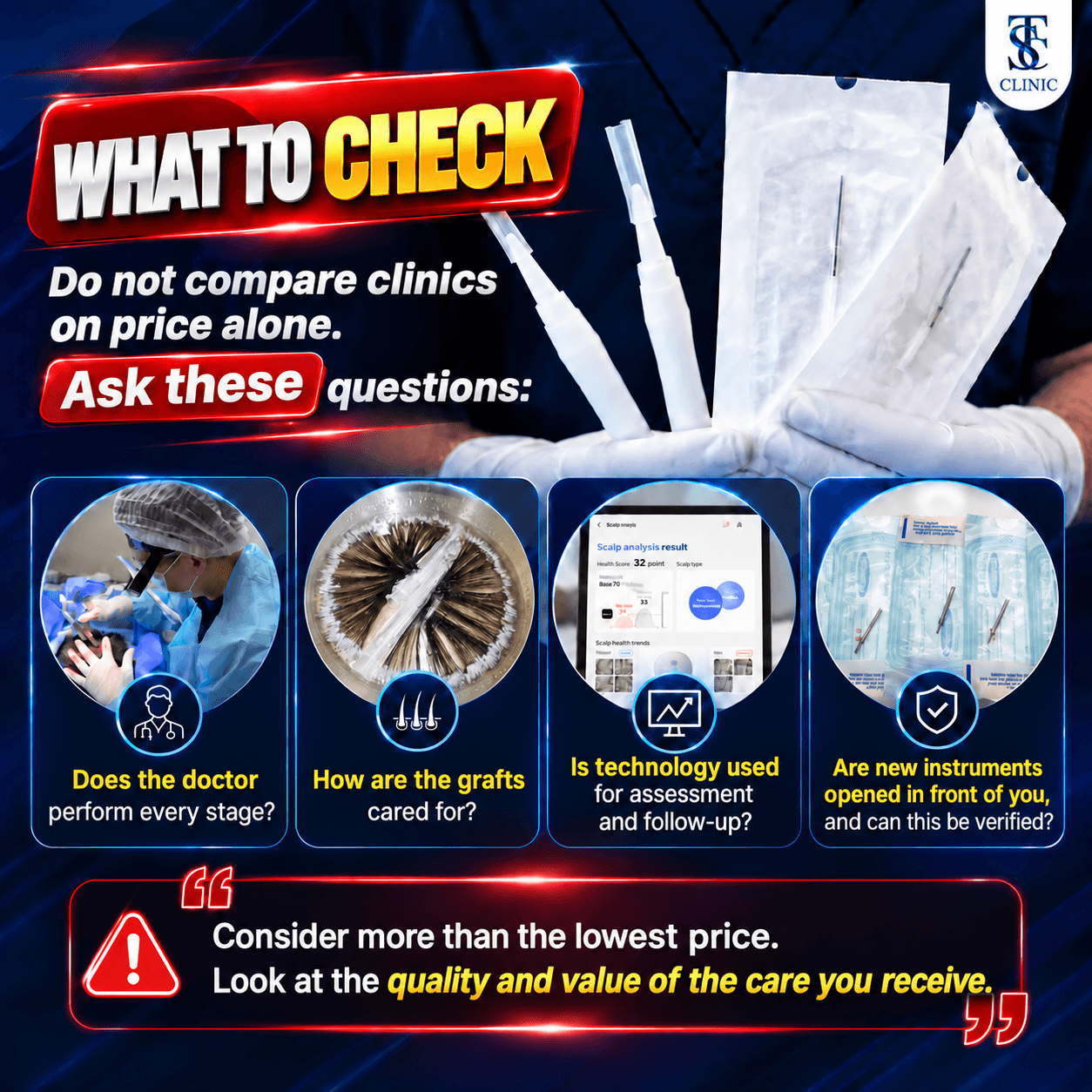
What should you check? Look at what each clinic provides and ask these questions.
- Does the doctor perform every step?
- How does the team handle and store grafts?
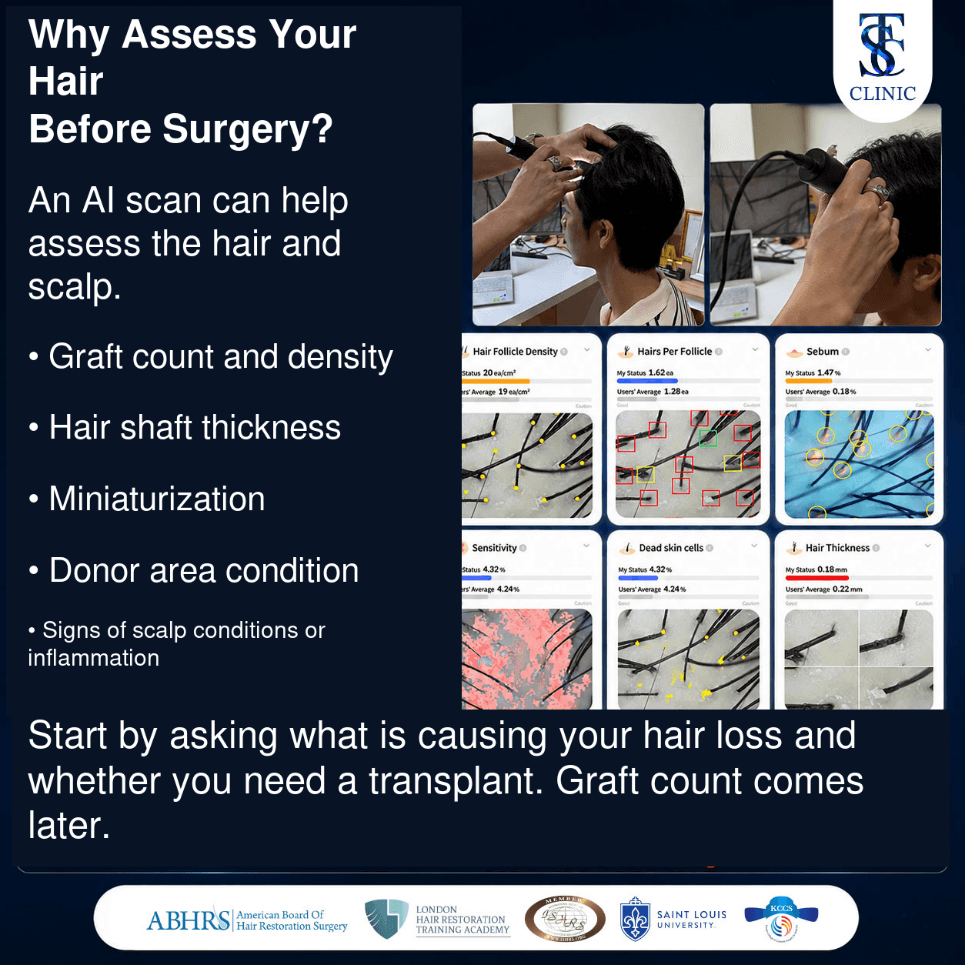
- Does the clinic use technology to assess your hair and monitor your progress?
- Can you verify that the relevant instruments are new and opened in front of you?
The cost of punches, four to five implanter pens, sterile setup, graft care and local anesthetic may range from THB 20,000 to 90,000, depending on equipment grade and standards.
Look closely at an unusually low quote. A higher price alone cannot tell you how good the care will be. Compare the quality and value you get for the price.
Overlooking Long-Term Hair Loss Management
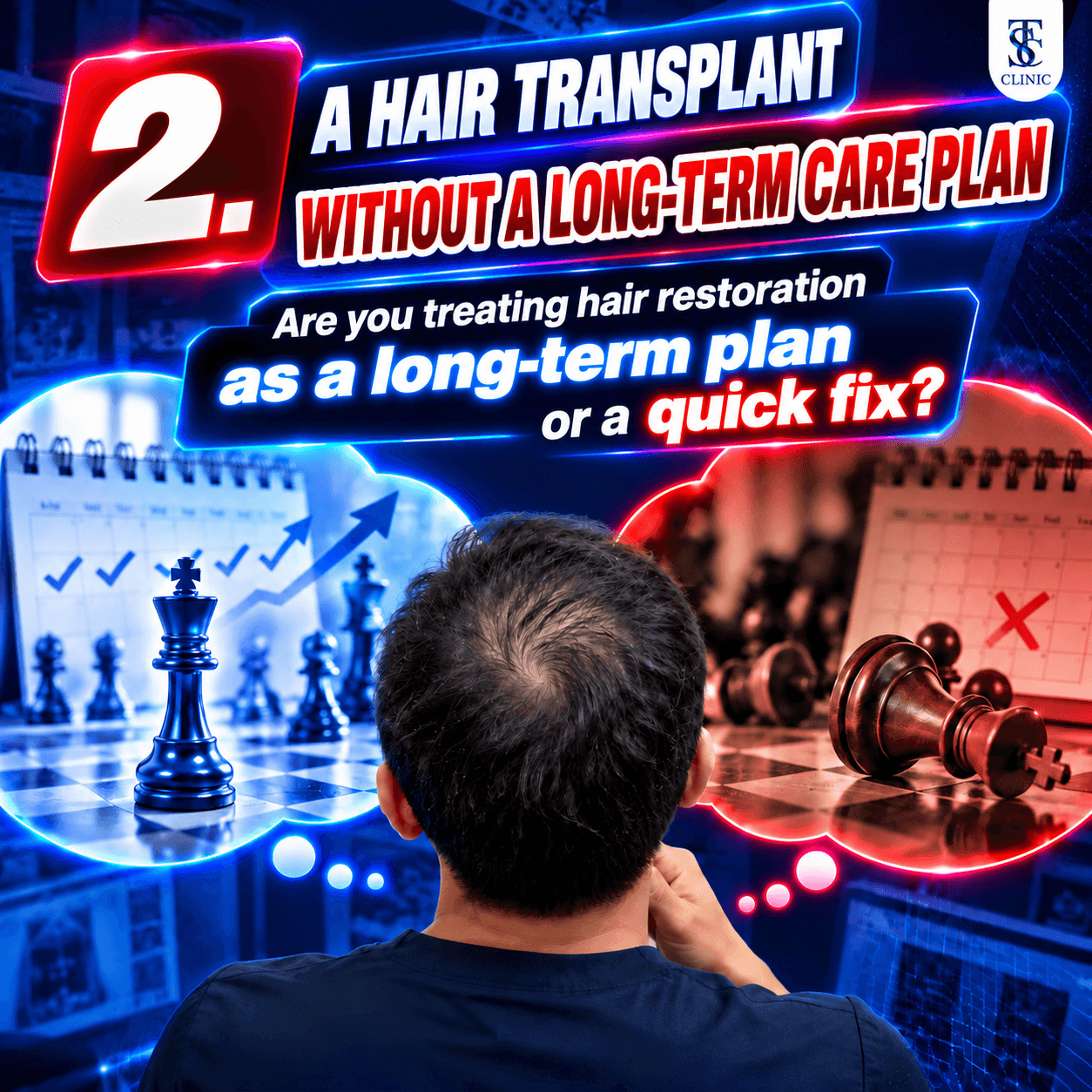
A hair transplant can restore hair to thinning areas, but genetic hair loss can continue. Transplanted hair can last for years while the surrounding native hair continues to thin. If your plan focuses only on the initial result, changes over the next five to ten years could leave your hair looking uneven or less natural.
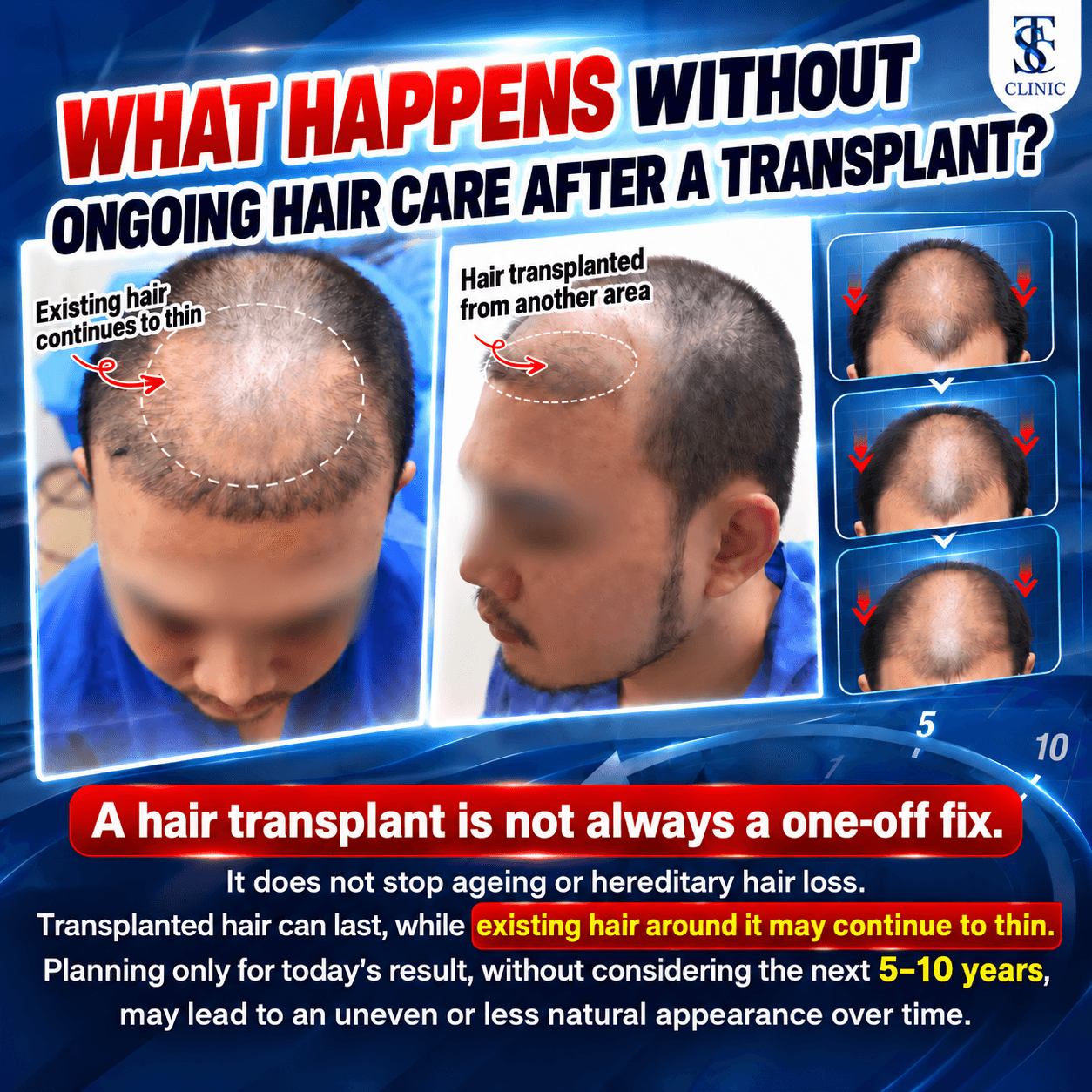
What should you check? The donor area has a limited supply of grafts. Ask how the surgeon plans to achieve good coverage with as few grafts as reasonably needed, preserve donor hair for the future and manage further loss of your native hair.
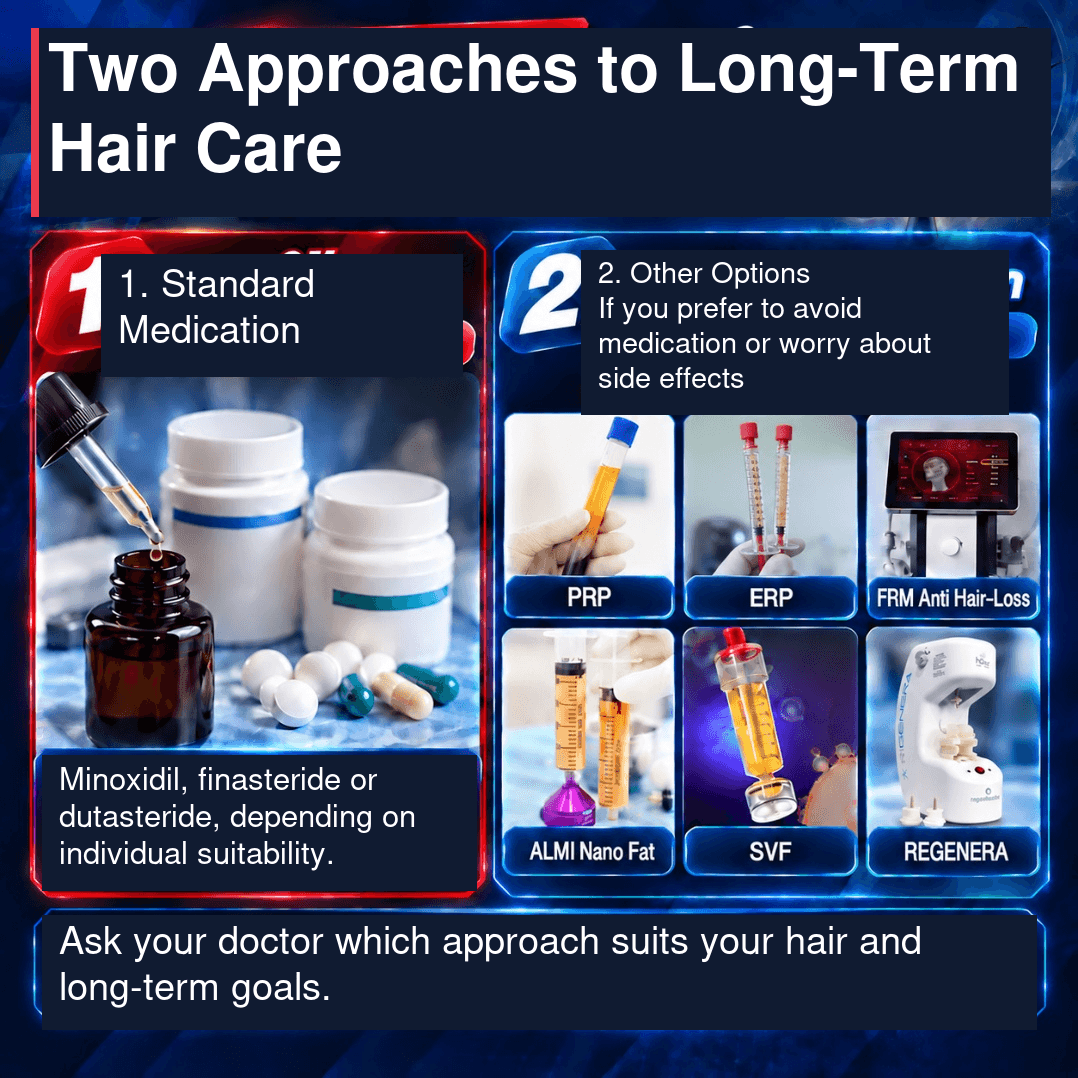
There are two main approaches to long-term hair care.
- Standard medications include minoxidil, finasteride and dutasteride. The choice depends on what is appropriate for you.
- If you prefer to avoid medication or are concerned about side effects, other options to discuss include PRP, ERP, FRM Anti Hair Loss, ALMI Nanofat, SVF and REGENERA.
Discuss your options with a doctor so your plan reflects your hair condition and long-term goals.
Assuming More Grafts Mean Better Coverage
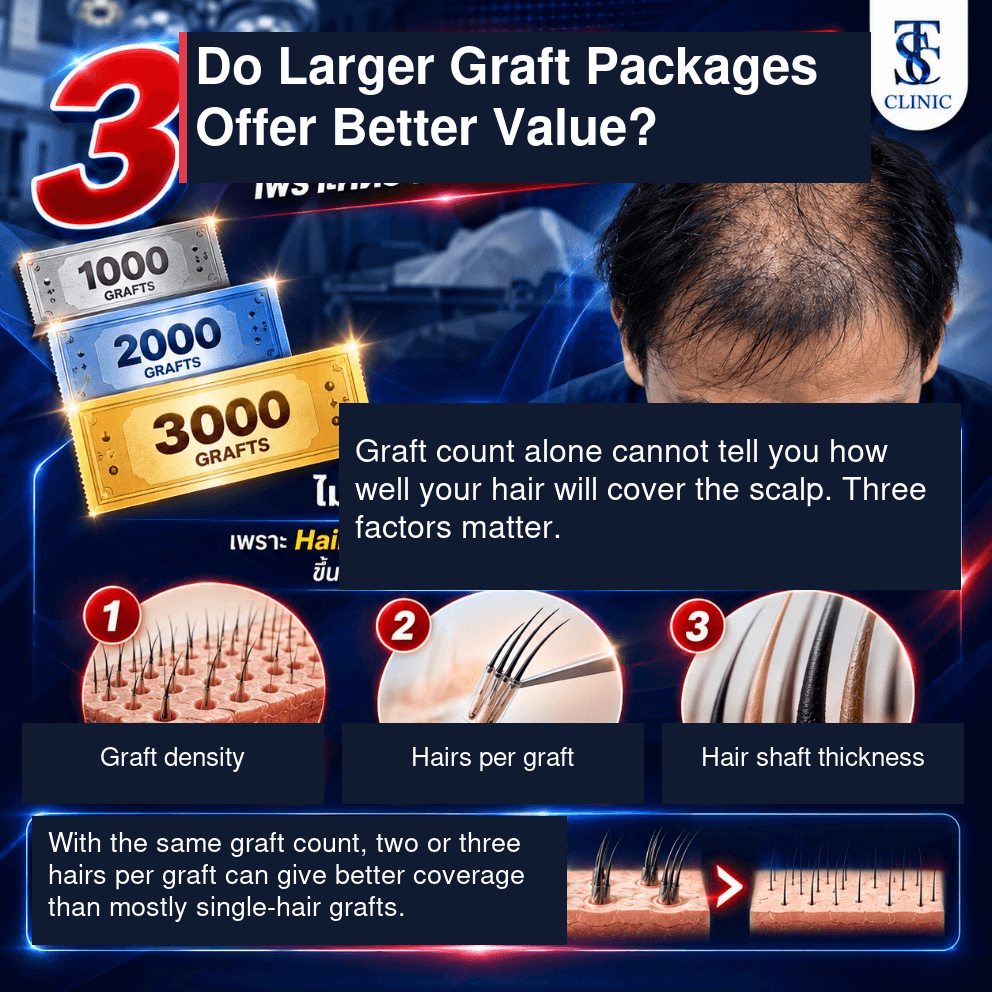
A graft package may look like better value when it includes more grafts, but graft count alone tells you little about how full your hair will look. Hair coverage, or how well your hair conceals your scalp, depends on at least three factors.
- Graft density
- The number of hairs in each graft
- The thickness of individual hairs
With the same number of grafts, someone with two or three hairs per graft may get better coverage than someone with many single-hair grafts.
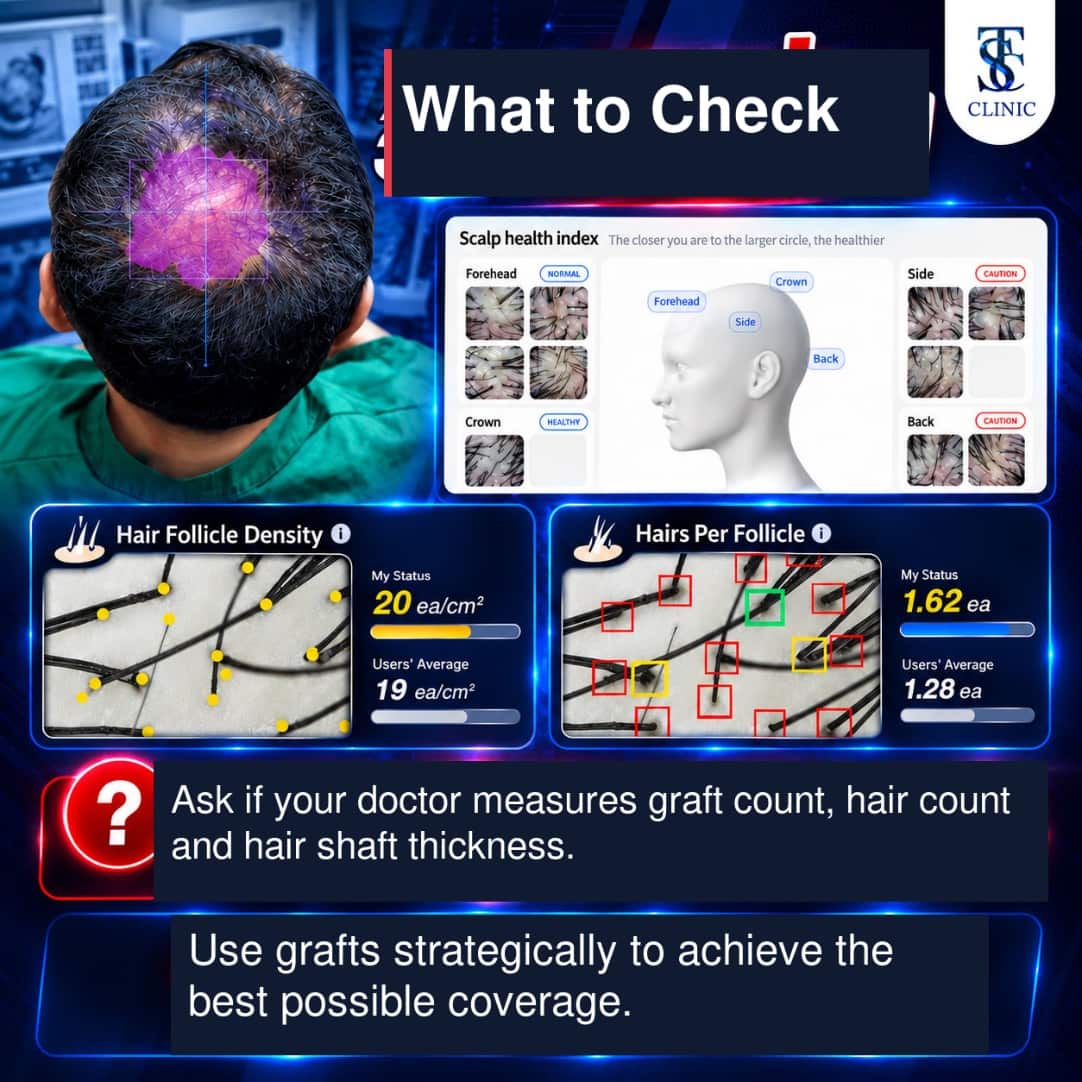
What should you check? Ask whether the doctor measures graft count, hair count and hair shaft thickness before planning surgery. These measurements help determine how to use your grafts to achieve the best possible coverage.
Relying on Before-and-After Photos Alone
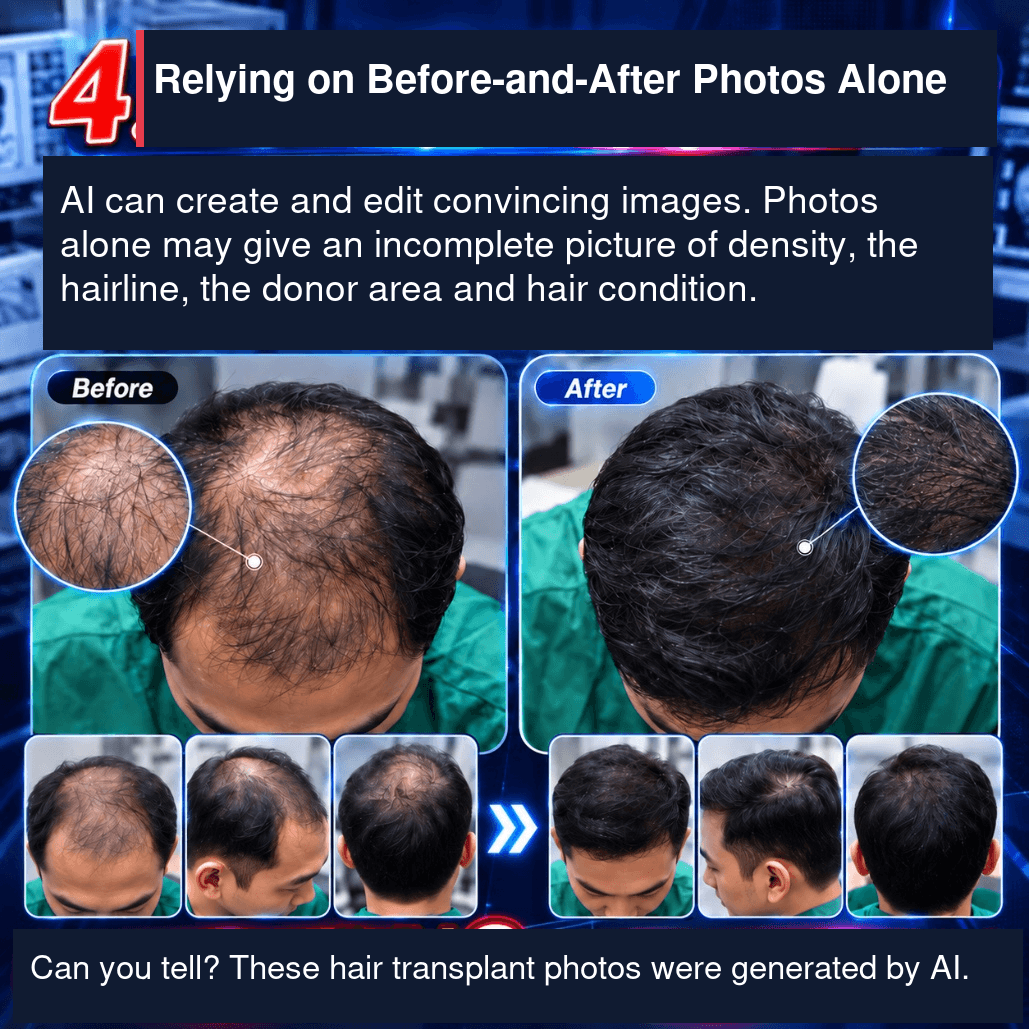
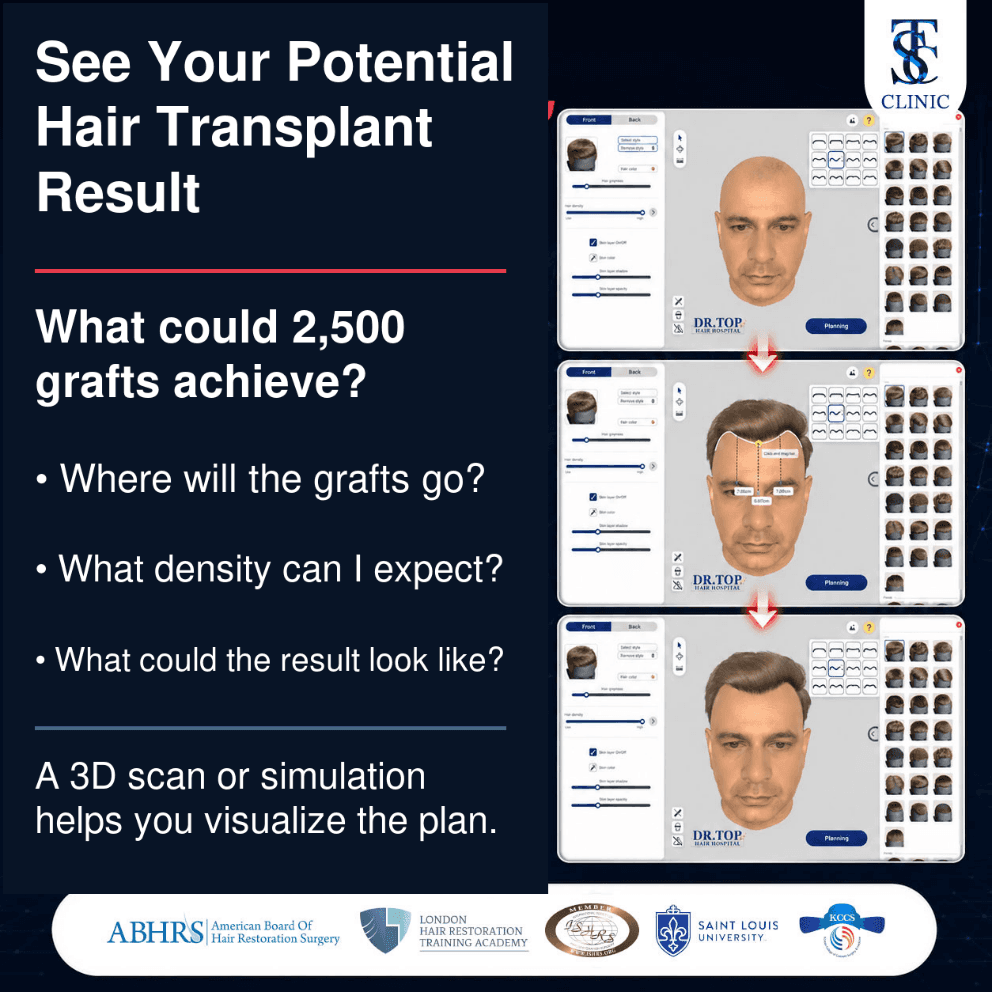
AI can generate and edit photos convincingly, making it harder to tell which images are real. A single before-and-after comparison may give you an incomplete picture of hair density, the hairline, the donor area and the actual condition of the hair.
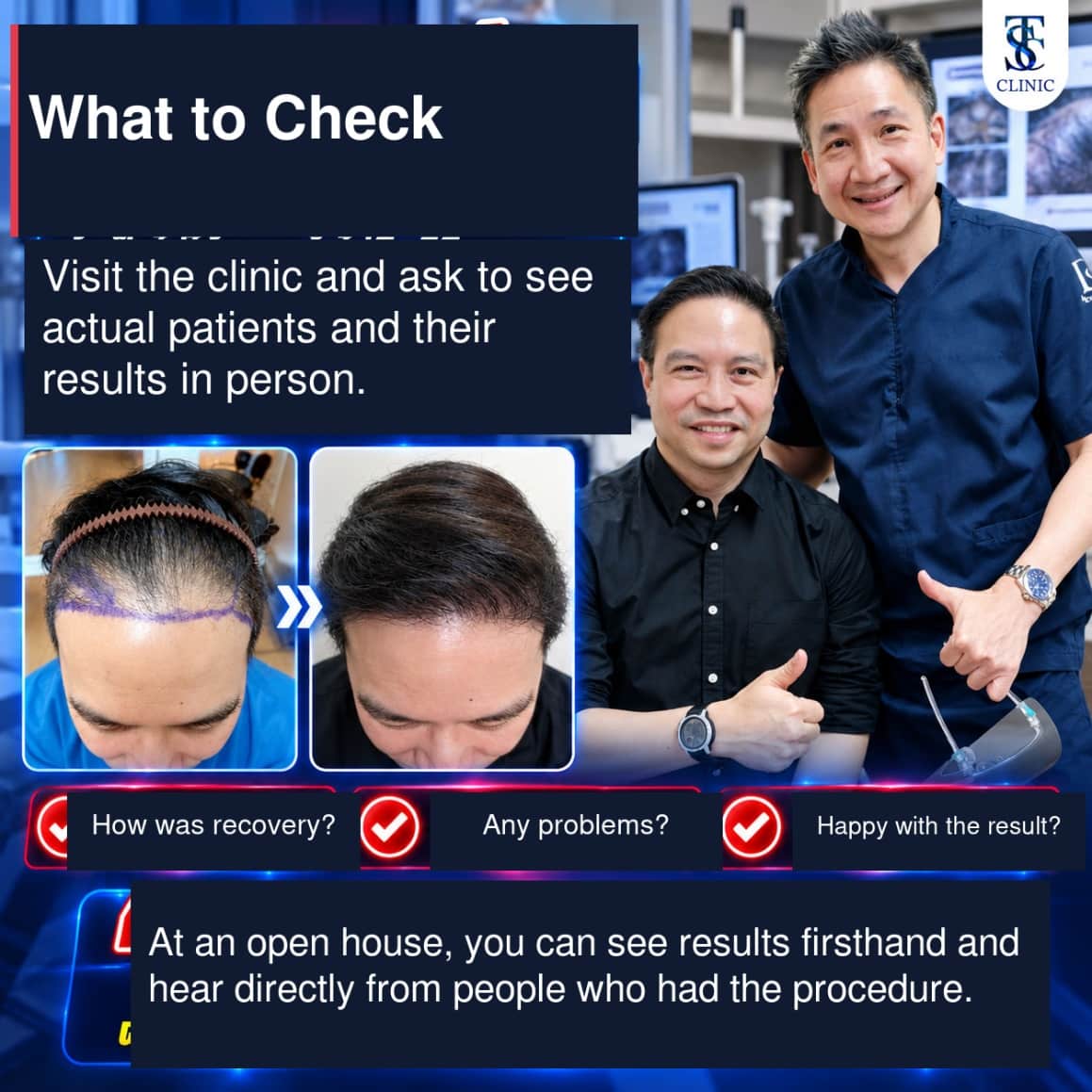
What should you check? Ask whether the clinic holds an open house where you can meet people who have had the procedure. Seeing their results in person gives you a chance to ask about recovery, any problems they encountered and how satisfied they are with the outcome.
Assuming a Hair Transplant Is Your Only Option
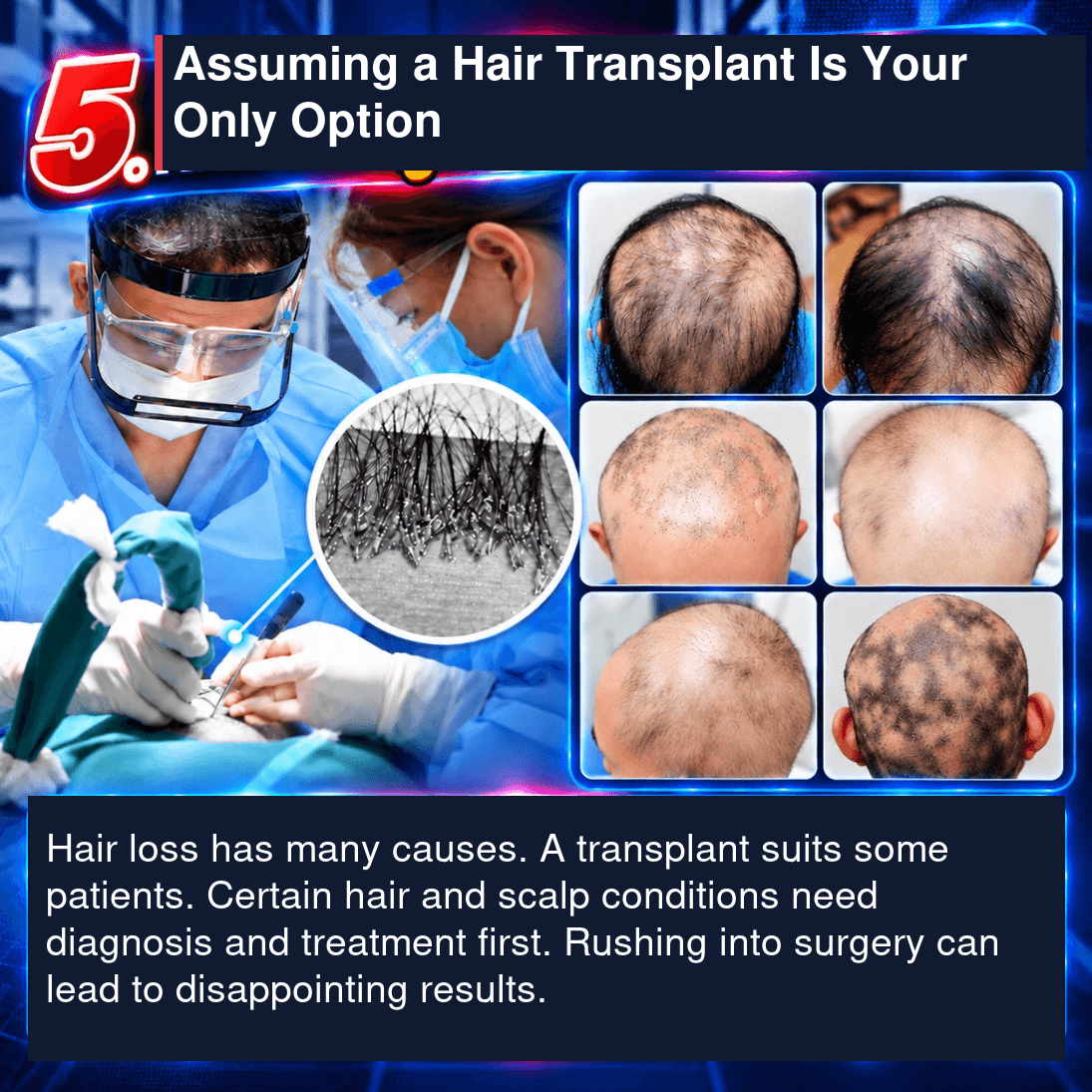
Hair loss has many possible causes, and a transplant is suitable only in certain cases. Some hair or scalp conditions need a diagnosis and treatment first. Rushing into surgery can lead to disappointing results and may worsen existing hair loss.
What should you check? Choose a clinic that examines your hair and scalp thoroughly to find the cause before recommending treatment. You may need to treat a scalp condition or stabilize ongoing hair loss first. Some people may never need surgery. Getting the diagnosis right from the start can reduce the risk of a poor transplant outcome.
A hair transplant is a significant investment. Look for an experienced doctor, a clinic with clear safety standards and a thorough assessment of your hair. Taking time to compare your options can reduce risk and help you achieve a natural-looking result that lasts.
Don't wait any longer! Schedule your free consultation with our experts today!