Table of Contents
- "Will There Be Scars After a Hair Transplant? What You Need to Know"
- Choosing the Right Hair Transplant Technique: Minimizing Scars and Maximizing Natural Results
- Hair Transplant Scars: What Influences Them?
- Don't wait any longer! Schedule your free consultation with our experts today!
"Will There Be Scars After a Hair Transplant? What You Need to Know"
Concerns about scarring after a hair transplant are completely understandable. The aesthetic results and the boost in confidence that come from a successful procedure are paramount. While hair transplantation is generally a safe and effective process, it's important to understand that the various techniques used can significantly influence the likelihood of scarring and the overall recovery experience.
In this blog post, we'll delve into the essential facts you should know about scarring after a hair transplant. We'll also compare different techniques, such as FUT, FUE, and Long Hair FUI, examining how each method affects the potential for visible scarring. Armed with this knowledge, you'll be better equipped to make an informed decision about your hair restoration journey!
Choosing the Right Hair Transplant Technique: Minimizing Scars and Maximizing Natural Results
These days, there's a variety of permanent hair transplant techniques to choose from, each with its own unique advantages and implications for scarring. Let's explore the options that can minimize scarring and deliver the most natural-looking results
1. FUT (Follicular Unit Transplantation)
FUT is an older hair transplant technique that involves removing a strip of scalp from the back of the head and dissecting it into individual grafts for transplantation.
• Pros : Suitable for those who need a large number of grafts in a single session.
• Cons : Leaves a linear scar at the back of the head, which may be visible with short hairstyles. It also has a longer recovery time compared to other techniques and is not as commonly performed today.
2. FUE (Follicular Unit Extraction)
The FUE technique uses a small punch tool to extract individual hair follicles for transplantation.
• Pros : Results in tiny, dot-like scars.
• Cons : Requires shaving the donor area at the back of the head. Scars may be visible initially until the hair grows back to cover them.
3. Long Hair FUI (Non-Shaven FUI)
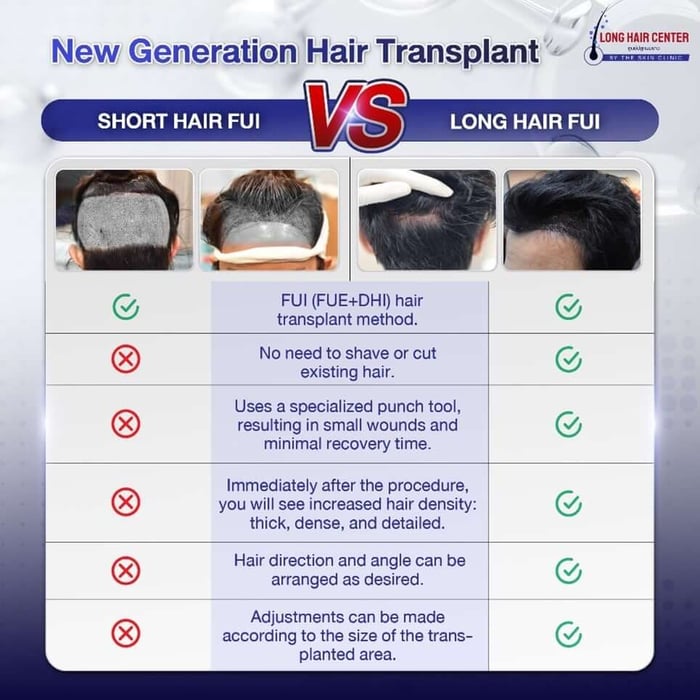
Long Hair FUI is a specialized technique developed at The Skin Clinic. It combines the benefits of Long Hair transplantation with the precision of implanter tools, eliminating the need for shaving before the procedure. This allows for hair transplantation while preserving your existing hair length, offering immediate visibility of hair direction and density, and enabling real-time adjustments during the procedure.
• Pros :
o No shaving required
o Ideal for those who want to maintain their confidence and avoid visible scarring during recovery
o Allows for a quick return to normal activities
o Popular among both men and women who want to preserve their appearance and seamlessly conceal any scarring
• Cons :
o This is a complex technique that requires a highly skilled and experienced surgeon.
Choosing the Best Technique for You!
The ideal hair transplant technique depends on your individual needs and preferences, considering factors like desired results, scarring concerns, and recovery time.
Hair Transplant Scars: What Influences Them?
Concerns about scarring after a hair transplant are natural. After all, the aesthetic outcome and the confidence boost that come with a successful procedure are paramount. But what factors influence the likelihood of scarring? It's not just one thing, but a combination of the surgeon's expertise, the chosen technique, and even your own skin's characteristics.
1. The Surgeon's Experience
A highly skilled and experienced surgeon plays a critical role in minimizing scarring. They possess the expertise to meticulously control the hair transplant process, from selecting the right tools to precisely placing the grafts. This precision promotes faster healing and smaller scars. Choosing a surgeon with extensive experience can significantly impact the final results of your hair transplant.
2. Cutting-Edge Techniques
Modern hair transplant techniques like FUE and DHI can significantly reduce scarring compared to older methods. However, these techniques often involve shaving the donor area, which may require some time for the hair to grow back and conceal any initial scarring.
On the other hand, the Long Hair FUE technique, a specialized approach offered at The Skin Clinic, eliminates the need for shaving. This means no visible scarring and no waiting for hair to grow back, providing a natural look immediately after the procedure.
3. Your Scalp's Unique Characteristics
Individual skin characteristics also influence scarring. Skin with good collagen production tends to heal faster and with less noticeable scars. However, even if you're prone to scarring, choosing the right surgeon and technique can minimize their visibility.
The Skin Clinic's Commitment
At The Skin Clinic, you're in the hands of an American Board-certified team with over 20 years of experience. Our surgeons have trained at leading hair transplant institutions worldwide and are recognized internationally as speakers and experts in their field.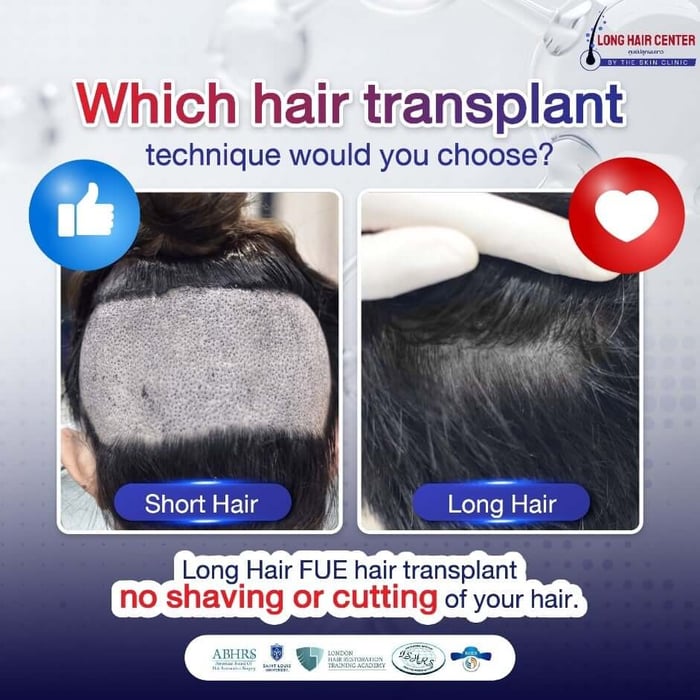 Hair Transplant Recovery: Post-Procedure Care to Minimize Scarring
After undergoing a hair transplant, the recovery and aftercare phase plays a crucial role in achieving optimal results and reducing scarring. Proper post-transplant care not only promotes faster healing but also ensures the newly transplanted hair follicles thrive and look natural. Following your doctor's instructions and taking good care of yourself are key steps you shouldn't overlook.
1. Applying Medications or Recommended Products
After the procedure, your doctor may recommend medications or products to soothe any irritation or promote healing. It's essential to use these medications strictly as directed to avoid any allergic reactions or side effects.
2. Cleaning Your Scalp
During the first 1-2 weeks post-transplant, your scalp will be sensitive and require special care. Clean it gently as instructed by your doctor, and avoid scrubbing or scratching the transplanted area, as this could dislodge the grafts or cause inflammation. It's also advisable to avoid harsh hair care products during the initial healing period to prevent irritation.
3. Following Your Doctor's Recovery Advice
• Avoid touching or scratching your scalp in the early stages of recovery.
• Refrain from strenuous exercise. Intense physical activity can lead to excessive sweating, which may hinder healing.
• Protect yourself from direct sunlight. Avoid direct sun exposure in the initial period after the transplant, as it can cause irritation.
4. Follow-up Appointments
Your doctor will likely schedule follow-up appointments to assess your healing progress and provide further guidance. It's important to attend these appointments as directed to ensure your recovery is on track. If you experience any issues or unusual symptoms, such as persistent scarring, inform your doctor immediately.
In Conclusion :
Say Goodbye to Worries About Hair Transplant Scars with The Skin Clinic [The Best Hair Transplant Clinic in Thailand]
A hair transplant is an excellent solution for those experiencing hair loss or thinning. While scarring is a common concern, remember that its occurrence depends on various factors, including the chosen technique, the surgeon's expertise, and your post-procedure care. At The Skin Clinic, Bangkok we offer the Long Hair FUI technique, which effectively minimizes visible scarring and allows you to maintain your confidence during recovery.
To achieve the best possible results, choose a technique that suits your needs and lifestyle, and diligently follow your doctor's aftercare instructions. This will ensure smooth healing and minimal scarring. If you're considering a hair transplant, don't let concerns about scarring deter you. Consult with our experienced medical professionals to understand the best options for you. At The Skin Clinic Bangkok, we're committed to providing you with the highest quality care and the most advanced techniques to ensure the best possible hair transplant experience.