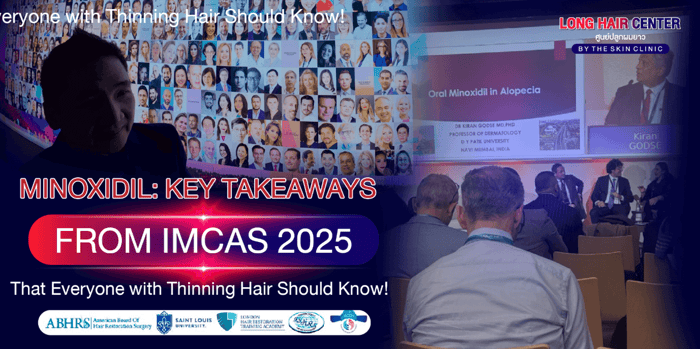
Genetic and hormone-related hair thinning is a frustrating issue for many. One popular treatment option for thinning hair is the use of Minoxidil. This article dives into all aspects of Minoxidil as presented at the IMCAS 2025 conference — from how it works and the optimal dosage, to important precautions and the latest insights that could reshape how you view thinning hair treatment.
Table of Contents
- Minoxidil vs. Finasteride: Which One Is Better?
- Why Does Topical Minoxidil Work Differently for Each Individual?
- Common Limitations and Side Effects of Topical Minoxidil
- Is the Dosage of Minoxidil for Hypertension Different from That for Hair Loss?
- Oral vs. Topical Minoxidil: Which Is More Effective?
- Does a Higher Dose of Minoxidil = More Side Effects?
- Precautions to Take When Using Minoxidil
- What to Know Before Starting Minoxidil
- Contraindications for Using Minoxidil
- Can Pregnant or Breastfeeding Women Use Minoxidil?
- When Can You Expect Hair Regrowth from Minoxidil?
Minoxidil vs. Finasteride: Which One Is Better?
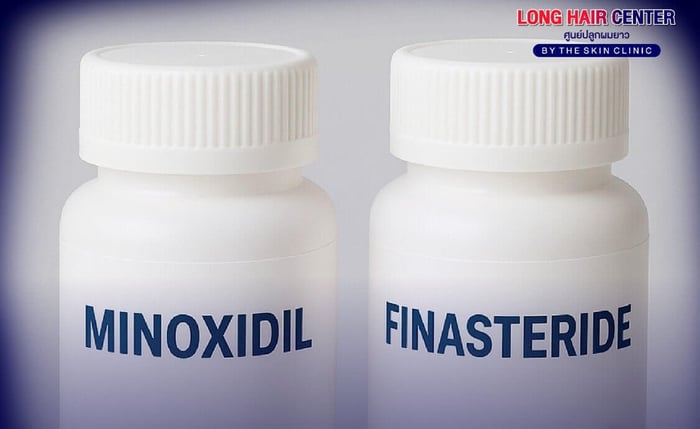 Two of the most commonly used medications for treating hair loss are Minoxidil and Finasteride, each working through different mechanisms:
- Finasteride works by inhibiting the production of DHT (Dihydrotestosterone), a hormone that plays a major role in causing hair follicles to shrink, shortening the hair growth cycle and eventually leading to thinning hair and baldness.
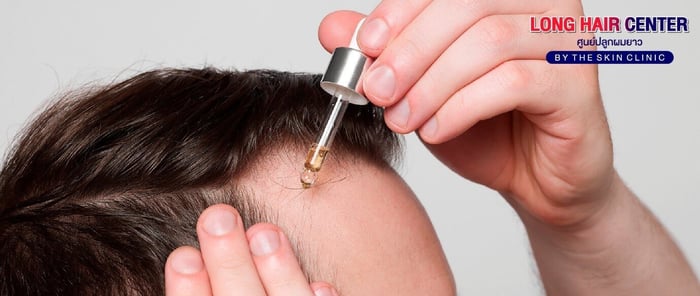
- Minoxidil, helps dilate blood vessels, improving oxygen and nutrient delivery to the hair follicles while also helping remove cellular waste. This strengthens the hair roots and helps reduce hair shedding.
In general, Minoxidil is suitable for those in the early stages of hair thinning, while Finasteride is more appropriate for those seeking long-term prevention of hormone-related hair loss. In some cases, doctors may recommend using both medications together to enhance results. Regardless of the option chosen, treatment should always be done under medical supervision to ensure safety and achieve the best possible outcomes.
Why Does Topical Minoxidil Work Differently for Each Individual?
Minoxidil is a Prodrug, which means it must be converted into its active form, Minoxidil Sulfate, in order to stimulate hair growth. This conversion relies on an enzyme called sulfotransferase, which is found in the hair follicles. The level of sulfotransferase enzyme varies from person to person, which explains why individual responses to Minoxidil can differ significantly. Some users see noticeable results, while others may experience little to no improvement. Therefore, the activity of the sulfotransferase enzyme is a key factor that influences the effectiveness of Minoxidil in treating hair loss.

Common Limitations and Side Effects of Topical Minoxidil
- Must be applied twice daily consistently
- Unpredictable results due to variations in sulfotransferase enzyme levels
- May cause local side effects, such as itching or irritation
Is the Dosage of Minoxidil for Hypertension Different from That for Hair Loss?
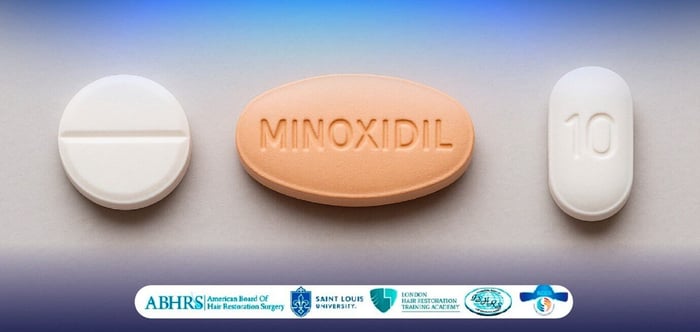
For the treatment of high blood pressure, the maximum recommended dosage of oral Minoxidil is 50 mg per day. However, for treating hair loss, clinical evidence supports the use of much lower doses, typically ranging from 1.25 to 5 mg per day. At these lower doses, oral Minoxidil does not usually affect the cardiovascular system. However, at higher dosages, there is a greater risk of cardiovascular side effects.
Oral vs. Topical Minoxidil: Which Is More Effective?
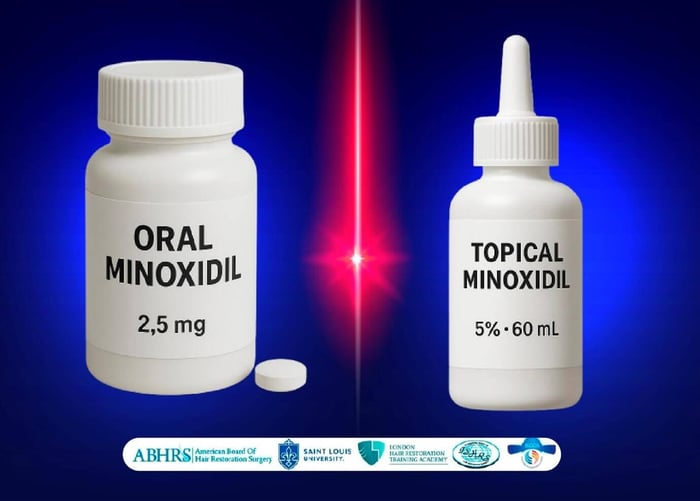
In general, doctors typically recommend starting with topical Minoxidil for hair loss treatment. If the results are minimal or ineffective, they may switch to oral Minoxidil, beginning with a low dose. Although oral Minoxidil tends to deliver better results, it also carries a higher risk of side effects.
Does a Higher Dose of Minoxidil = More Side Effects?
According to recent research that compiled data from multiple studies on oral Minoxidil, treatment response appears to correlate with the dosage used, the higher the dose, the more noticeable the response tends to be. However, this also comes with an increased risk of side effects. The recommended approach is to start with the lowest possible dose, and only increase gradually if needed, under medical supervision.
Precautions to Take When Using Minoxidil
- Oral Minoxidil may cause dizziness or lightheadedness, especially during the initial phase of treatment or when increasing the dosage.
- If you miss a dose, there’s no need to worry, skip it and take the next dose at your regular time. Do not double the dose to make up for the missed one.
- Do not stop or adjust the dosage without medical advice. For patients undergoing dialysis, a lower dose may be necessary, even though dialysis can help eliminate the drug from the body.
- Do not take the medication within 2 hours before dialysis; it should be taken after the dialysis session is complete.
- If you feel unwell or experience any unusual symptoms while taking the medication, contact your doctor immediately.
What to Know Before Starting Minoxidil
- Reduce alcohol and caffeine consumption. Alcohol can lower blood pressure, which may lead to hypotension when combined with Minoxidil. Caffeine, on the other hand, may increase heart rate or cause palpitations.
- Inform your doctor immediately if your weight increases by more than 1–1.5 kilograms, as it may indicate fluid retention, even if you’re unsure whether it’s related to the medication.
- Monitor your heart rate regularly, especially while at rest.
- If your resting heart rate increases by 20 times per minute or more, notify your doctor promptly.
- Let your doctor know if you are taking any other medications, including over-the-counter drugs or supplements.
- This medication contains lactose. If you have a history of intolerance to certain sugars, consult your doctor before starting treatment.
Contraindications for Using Minoxidil
Minoxidil should not be used in patients with the following conditions:
- History of allergy to Minoxidil
- Pheochromocytoma (adrenal gland tumor)
- Pulmonary hypertension with mitral stenosis
- Severe liver disease
- Recent angina or myocardial infarction (heart attack)
- Left ventricular hypertrophy
- Heart failure
Can Pregnant or Breastfeeding Women Use Minoxidil?
If you are pregnant, suspect you may be pregnant, or are planning to become pregnant, you should consult your doctor before using this medication, as it may affect the unborn baby. Additionally, since Minoxidil can pass into breast milk, it is generally not recommended during breastfeeding, unless your doctor determines that its use is absolutely necessary.

When Can You Expect Hair Regrowth from Minoxidil?
Generally, after starting oral Minoxidil, hair regrowth can be observed within approximately 3 to 6 weeks. In the early stages, you may notice fine hairs appearing on the forehead, temples, between the eyebrows, or the upper cheeks. Following this, hair growth typically begins on the scalp, as well as on other parts of the body such as the arms, legs, or back, though this can vary between individuals.
Minoxidil should be used under medical supervision, as it has specific indications, precautions, and potential side effects that require proper evaluation. Effective treatment for hair loss and thinning hair often involves a combination of multiple approaches, tailored to each individual’s hair and scalp condition. Therefore, consulting a specialist is a crucial step for maintaining long-term hair health and maximizing treatment effectiveness for those struggling with thinning hair.