Table of contents
- Side effect of Finasteride for hair loss and why not every case needs it?
- How it works?
- From there, we can divide hair into 2 types as follow.
- What is Finasteride?
- Finasteride and Hair Loss
- The possible side effects may include:
- Why some cases need to take a medication and some don’t?
- For those who don’t want to take medication
- How it works
Side effect of Finasteride for hair loss and why not every case needs it?
This article clear things up.
*Disclaimer: the article will mainly focus on hair loss treatment, the cause of hereditary hair loss or hair loss from genetic.
First of all, we need to understand that the key cause of hereditary hair loss is Dihydrotestosterone hormone (DHT). It is a male hormone which causes hair follicles to shirk as the time pass and yes, this is the reason why men are more prone to hair loss than women.
How it works?
The DHT hormone will attach itself to Androgen hormone receptor on the hair root which leads to acceleration of hair cycle, means your hair will age faster and fall out, eventually.
From there, we can divide hair into 2 types as follow.
1. Hormone Sensitive Hair
2. None-Hormone Sensitive Hair
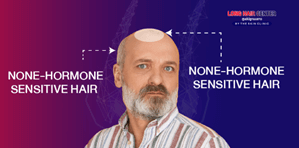
The prime example is a patient who is experiencing hair loss only on the top of their scalp and need a precise hair loss treatment. This is very common pattern of male hereditary hair loss where hormone sensitive hair can be found on top of the scalp area (Frontal, Mid Scalp and Crown region). This depends on genetic factor; some may have a lot of hormone sensitive hair and some may have a few. This will be important later in the article. Let’s talk about medication first.
What is Finasteride?
Originally, Finasteride is a medication for enlarged prostate. For hair loss, it helps treat the condition by stop the production of DHT hormone Which significantly slow down the hair loss process. Physicians still prescribe Finasteride for both conditions from the past until today.
Finasteride and Hair Loss
For hair loss treatment, the patient needs to take Finasteride at least 3 months for a noticeable result and 12 months or a year for a full result. Keep in mind, this medication cannot entirely “stop” but only slow down the process. If patient requires more doses, we recommend always consult with your physician to assess your condition before any further action.
Side Effect of Finasteride as we know, Finasteride will stop the production of DHT or hormone male and yes, there are side effects. Therefore, it may affect your reproduction activity.
The possible side effects may include:
- Erectile Dysfunction – due to low male hormone
- A lack of sexual desire – from the lack of male hormone as well
- Lower ejaculation volume – the volume will drop around 20%~
- Enlarged breast – due to hormone imbalance
- Pain in penile area – such as shaft etc.
These are some of the side effects that could occur along with hair loss treatment. However, the chance of sexual dysfunction is very low. If you experience any conditions after taken the medicine. We recommend consult an expert for possible alternative methods.
Why some cases need to take a medication and some don’t?
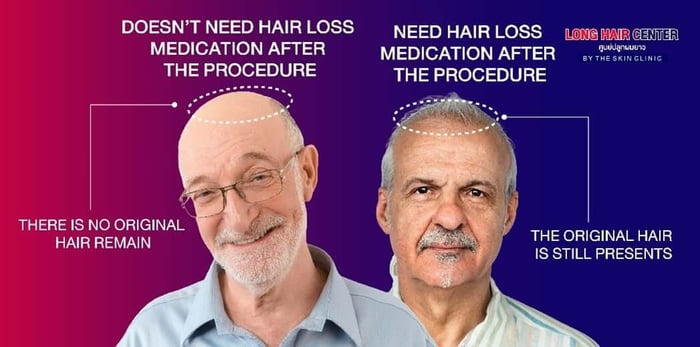
After hair transplantation as a hair loss treatment, physician may prescribe a medication to slow down hair loss for a case where transplanted area still has original hair because the original hair is likely to be hormone sensitive. On the other hands, a case where the original hair is gone, there are no reason for physician to prescribe a medication because the transplanted hair is none-hormone sensitive. However, there are alternative options for patient who do not want to take medication
For those who don’t want to take medication
We recommend a non-surgical method such as Almi Nano Fat for hair restoration which is one of the most effective treatments so far. This method is backed by many clinical trials and researches. Currently, there are not many among of clinics that could perform the technique.
How it works
The procedure involves extracting and purifying of patient’s nano fat for an injection into the desired area, no chemicals are use in the process. The Nano fat will then stimulate hair growth and strengthen hair follicles which results in increased life span of hair follicles without the need of taking any medication. Additionally, we use 100% nano fat from the patient therefore, it will not trigger any allergic reaction. This method can be used to ensure a high success rate of hair transplantation and reduce shock loss after the procedure as well.
If you are experiencing hair loss and thinning, consulting with an expert could be crucial. Alopecia is long term condition. In order to treat, it requires thoroughly designed treatment plan. Especially from the fact that our hair is limited resource, meaning we can not duplicate or make more of it. Therefore, treating the condition early on with a long-term plan is the best approach for it.