Table of contents
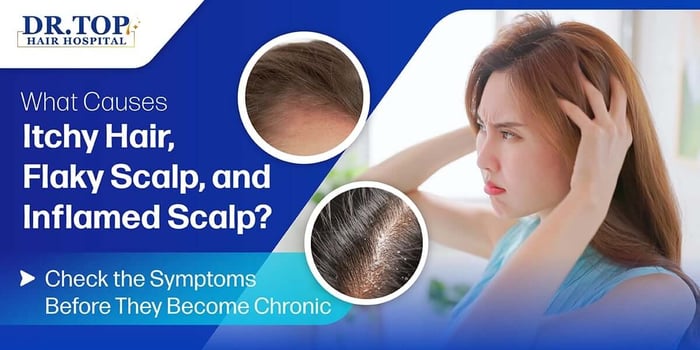
Experiencing itchy hair on the scalp is something almost everyone goes through. But if it happens frequently and becomes too severe, it often leads to flaky scalp, making your appearance look unclean and affecting confidence in daily life. In some cases, if left untreated, it can progress into inflamed flaky scalp, with symptoms like burning, redness, or accompanying rashes.
Whether it’s itchy hair that distracts your focus, flaky scalp that causes embarrassment, or inflamed flaky scalp that brings pain, these conditions often result in tingling itchiness, hair loss, loss of confidence, and constant irritation. Without proper care from the beginning, they may develop into chronic problems that are much harder to treat.
In this article, we’ll dive into the causes of itchy hair, flaky scalp, and inflamed flaky scalp, along with ways to check your symptoms and the right care methods so you can address the issue before it worsens.
Common Scalp Symptoms
Itchy Scalp
An itchy scalp is a condition that can affect people of all ages. It often starts with a tingling sensation on the scalp, which may seem minor at first. However, if it happens frequently or persists, it can develop into a chronic issue. The causes of scalp itchiness vary, ranging from scalp dryness, sweat and dirt buildup, to the use of harsh chemical-based products. Constant scratching can create small wounds, making it easier for bacteria or fungi to accumulate. This may lead to inflammation and trigger increasing hair loss over time. Therefore, an itchy scalp is not just an uncomfortable feeling — it can also damage self-confidence and disrupt daily life.
Flaky Scalp
A flaky scalp is another common condition, often appearing as white flakes or small scales that fall out when brushing or touching the hair. This problem not only causes irritation but also directly affects appearance. When flakes stick to clothing, it can make you look untidy, leading many to feel insecure and avoid social interactions. Flakiness can be caused by several factors such as scalp dryness, unsuitable hair products, or even certain skin conditions like sensitivity or inflammation. While mild flaking may seem harmless, if it occurs repeatedly and worsens over time, it should be taken seriously and addressed with proper care.
Inflamed Flaky Scalp
If scalp flaking is not managed properly, it can develop into inflamed flaky scalp, a condition that causes greater discomfort and pain. Those experiencing it often notice redness, rashes, burning sensations, or even oozing in some spots. This condition may result from fungal infections on the scalp, allergic reactions, or irritation from harsh chemicals. Inflamed flaky scalp not only affects skin health but also weakens the hair, making it fall out more easily, while directly impacting one’s appearance and self-confidence.
Overall
Symptoms such as itchy scalp, flaky scalp, and inflamed flaky scalp should never be overlooked. Each is a warning sign that the scalp is facing underlying problems. Paying attention to these symptoms early helps prevent the condition from worsening and allows for targeted care to maintain a healthy scalp and strong hair in the long run.
Causes of Itchy Hair and Flaky Scalp
Problems like itchy hair and flaky scalp don’t just happen by chance. They often stem from various factors that directly affect scalp health. Understanding the true causes can help you take the right steps for effective care and treatment.
The first cause is scalp peeling with flakes, often resulting from lack of moisture. Excessively dry scalp may come from using shampoos with harsh cleansers, washing hair with very hot water, or using styling products high in alcohol. These factors disrupt the scalp’s natural oil balance, leaving the skin dry and peeling into flakes.
Another common cause is fungal infection on the scalp. Fungi thrive in damp environments for example, after exercising without washing your hair, or washing but not drying it thoroughly. This fungal growth irritates the scalp, causing itching and flaking that can build up into chronic dandruff.
Additionally, allergic rashes can occur due to sensitivity to chemicals in hair care products such as shampoos, conditioners, hair dye, or styling sprays. Repeated contact with these substances can trigger inflammation, irritation, and increase the likelihood of flaking.
Therefore, identifying the cause whether dryness, fungal growth, or allergic reactions — is an essential step to effectively address itchy hair and flaky scalp, while preventing them from developing into chronic problems in the future.
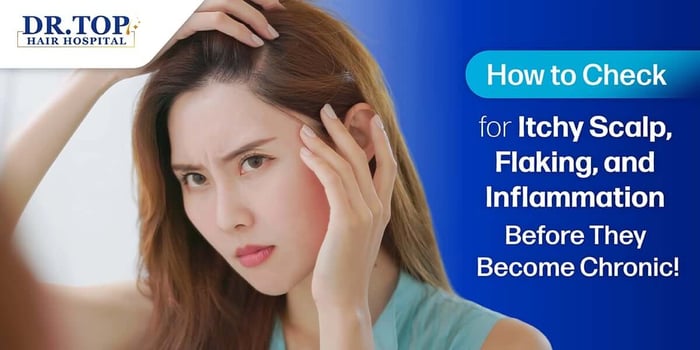
How to Check for Itchy Scalp, Flaking, and Inflammation Before They Become Chronic!
- Tingling Itchiness with Hair Loss
One important sign not to ignore is tingling itchiness with hair loss. What may start as mild itching can, if left untreated, worsen and lead to more significant hair shedding. This condition often results from scalp irritation or fungal buildup. Constant scratching can create wounds that directly affect the hair roots, eventually causing thinning hair. - Distinguishing Between Allergic Reactions and Infections
Another crucial point is to distinguish whether itchy scalp and flakiness are caused by an allergic rash or a fungal infection. Both conditions may look similar, but the care required is different. If it’s an allergy, the symptoms usually relate to the use of new products and improve once you stop using them. In contrast, fungal infections tend to persist and worsen over time, even after switching products.
You can make a basic distinction by observing related symptoms. Allergic rashes often involve redness, burning, or immediate itching after product use, while fungal infections are usually accompanied by chronic dandruff, thick flakes, and sometimes hair loss. If you are unsure, it is best to consult an experienced specialist or a dermatologist to get the right diagnosis and treatment plan from the beginning.
- Warning Signs That Require Medical Attention
If flaking, itching, or inflammation becomes severe such as red rashes, pain, burning sensations, oozing, or patchy hair loss these are warning signs that should not be overlooked. They may indicate chronic conditions that cannot be treated with basic methods. Seeing a scalp and hair expert early can help identify the true cause and provide targeted treatment before the problem worsens.
Basic Care Tips for Itchy and Flaky Scalp
Avoid Scratching Too Hard
Many people tend to scratch vigorously when they feel itchy, often without realizing it. While scratching may bring temporary relief, it actually harms the scalp by causing abrasions or small wounds. These open up opportunities for bacteria or fungi to accumulate, which can worsen itching and flaking. Instead, gently massage the itchy area with your fingertips to reduce irritation, and focus on identifying and addressing the root cause of the problem.
Avoid Excessive Heat
Frequent use of hair dryers, straighteners, or high-heat styling tools can quickly strip the scalp of moisture, leading to dryness and flakiness. High heat also weakens hair, causing split ends and damage. If avoiding heat is not possible, use the lowest heat setting and apply a heat-protectant spray before styling. Allowing your hair to air-dry naturally from time to time also helps the scalp rest and restore its balance.
Reduce Chemical Usage
Chemical products such as hair dyes, perm solutions, and styling sprays often contain ingredients that can irritate or trigger allergic reactions, especially in people with sensitive skin or weak scalps. Overuse can cause inflammation, flaking, and itching. If use is necessary, allow time between treatments for the scalp to recover, and choose gentle products that are dermatologically tested to minimize allergic risks.
Maintain Proper Hygiene
Keeping hair and scalp clean is crucial. Wash your hair every 2–3 days, or after activities that cause heavy sweating, to prevent buildup of dirt, excess oil, and fungi that can cause itching and flaking. Proper washing not only keeps the scalp clean but also provides a fresh feeling and reduces daily irritation.
Use Scalp Serums or Treatments
Today, there are scalp-specific products such as serums and treatments designed to increase moisture, reduce irritation, and strengthen hair roots. Regular use helps rebalance the scalp, reduce itching and flakiness, and prevent hair loss. It also supports healthier regrowth, making this a preventative approach to maintaining long-term scalp and hair health.
Impact on Confidence and Daily Life
Effects on appearance and social interactions
An itchy scalp or flaky scalp may seem minor, but it significantly affects one’s appearance. Flakes or scales that fall onto clothing can look unclean and cause anxiety when meeting others. Many people even avoid social activities for fear that others will notice. All of this impacts confidence and overall image in daily life.
Feeling insecure and constantly irritated
Beyond appearance, tingling itchiness and a flaky scalp create ongoing self-doubt, as you constantly worry whether people around you can see it. The itch and irritation also disrupt concentration, causing persistent annoyance at work, during rest, and even while sleeping. If the condition becomes chronic, this lack of confidence and constant irritation can turn into an emotional burden that prevents you from living life to the fullest.
How to tell when you should seek treatment?
Self-care for an itchy or flaky scalp is possible, but some signs indicate you should see a professional promptly. The first warning sign is symptoms that don’t improve within 1–2 weeks, even after changing shampoo or trying basic care. If itching worsens, flakes become thicker, or scales keep falling continuously, the problem may no longer be minor.
Another sign to watch for is severe symptoms such as redness, burning, pain, or progression to inflamed flaky scalp with oozing. These often relate to infection or chronic inflammation which, if left untreated, can affect the hair roots and lead to long-term hair loss.
Finally, if you’re unsure whether the cause is an allergic rash, product irritation, or a scalp fungal infection, consulting an experienced specialist or a dermatologist will help you understand the problem correctly and choose targeted treatment to prevent further progression.
Summary
An itchy scalp that starts as tingling itchiness with hair shedding is often overlooked as something small, but it can lead to bigger problems. When accompanied by visible flaky scalp, it becomes even more distressing, and if it worsens, it may develop into inflamed flaky scalp with redness or burning. In some cases, it stems from a scalp fungal infection or an allergic rash due to unsuitable products. These issues don’t just cause irritation and constant annoyance; they also make many people feel insecure, affecting personality and everyday life. Although basic care such as choosing a gentle shampoo, scalp massage, or getting adequate rest can help to some extent, it’s not a complete answer because causes differ from person to person At The Skin Clinic, our medical team is certified by the American Board of Hair Restoration Surgery (ABHRS) and recognized as World-Renowned Speakers, frequently invited to share their expertise at international medical conferences in countries such as Turkey, Monaco, France, Spain, the United States, and Singapore.
Our specialists provide detailed assessments for all scalp and hair concerns including Itchy Hair, Flaky Scalp, or Inflamed Flaky Scalp to identify the root cause and develop a targeted, personalized treatment plan. Whether caused by Scalp Peeling with Flakes, Fungal Infection on the Scalp, or an Allergic Rash, our doctors carefully analyze each condition to ensure the most suitable and effective approach.
The goal is to treat issues like Tingling Itchy Scalp with Hair Loss, restore the scalp’s natural balance, and bring back healthy, strong hair helping every patient overcome Lack of Confidence and feel free from this Annoying Condition once again.