Table of contents
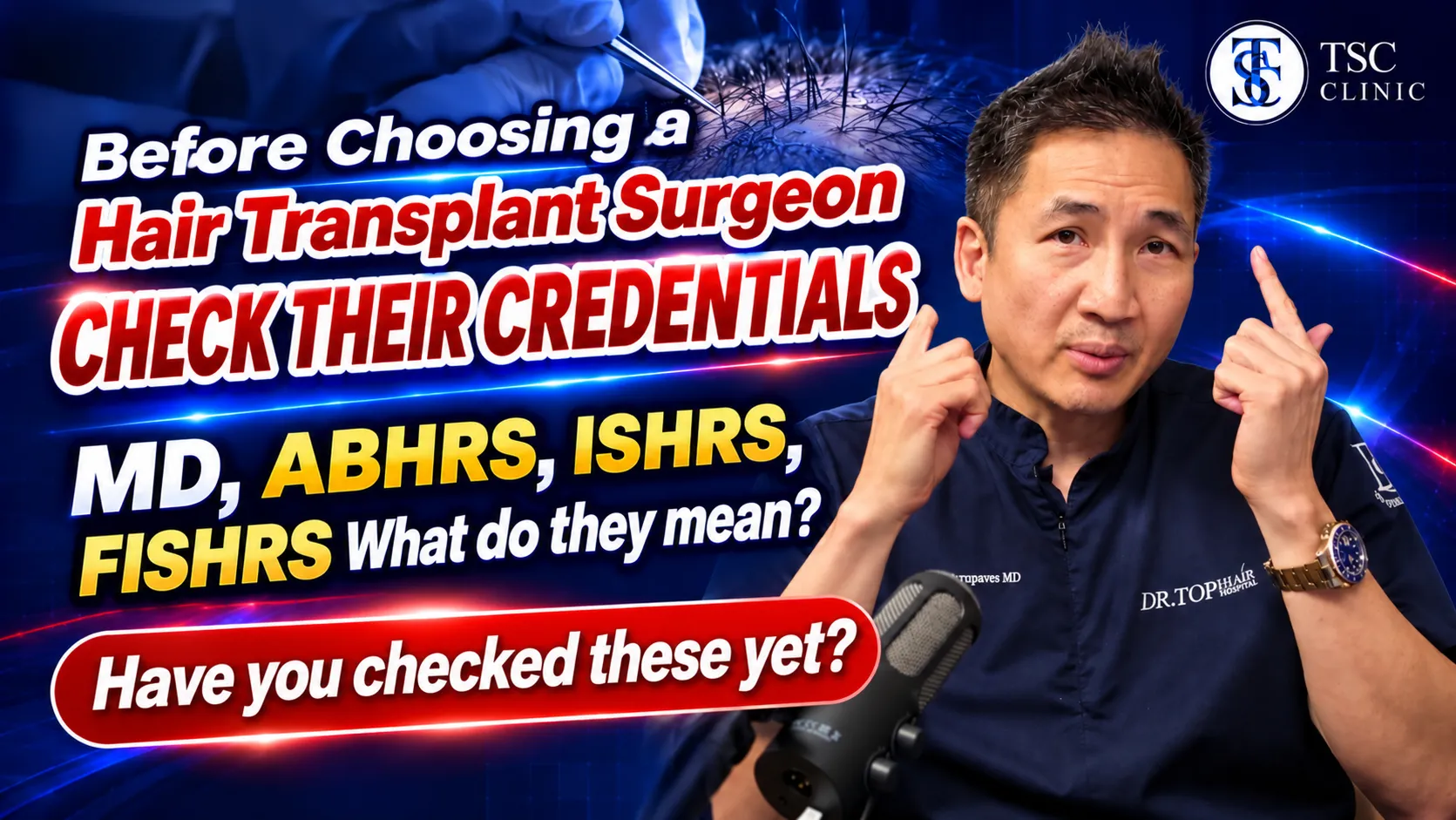
If you are searching for a hair transplant clinic or wondering how to choose a surgeon, the letters in a doctor’s profile can be a useful place to start. In this article, Dr. Top explains MD, ABHRS, ISHRS, and FISHRS, how they differ, and what they can tell you when assessing a doctor’s qualifications before treatment.
What ISHRS is
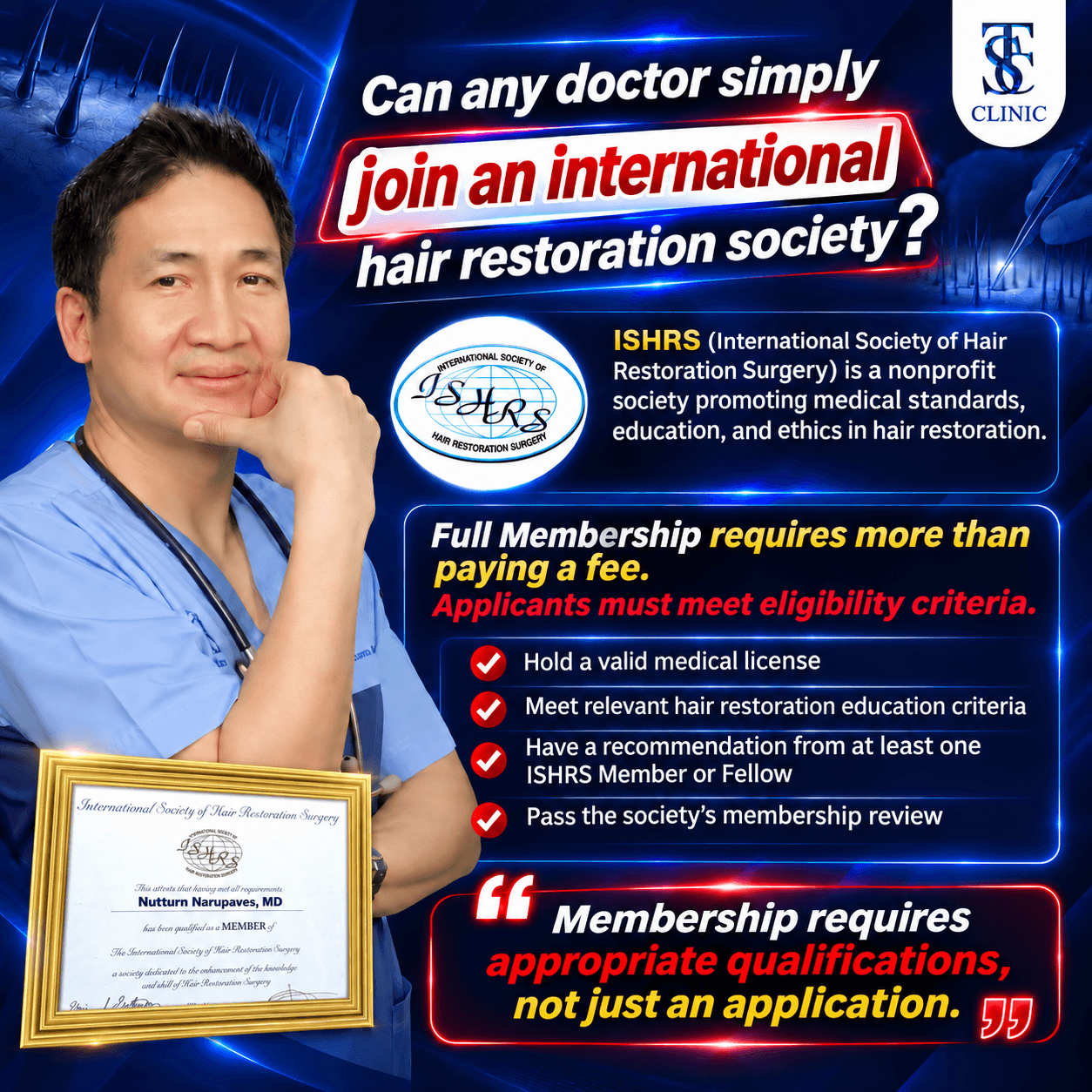
The International Society of Hair Restoration Surgery (ISHRS) is a nonprofit medical society that promotes standards of practice, education, and ethics in hair restoration. Full membership requires more than paying a fee. Applicants must meet the society’s eligibility criteria, including:
- A valid license to practice medicine
- An interest in hair restoration and the required educational commitment
- A letter of recommendation from at least one ISHRS Member or Fellow
- Approval through the society’s membership review process
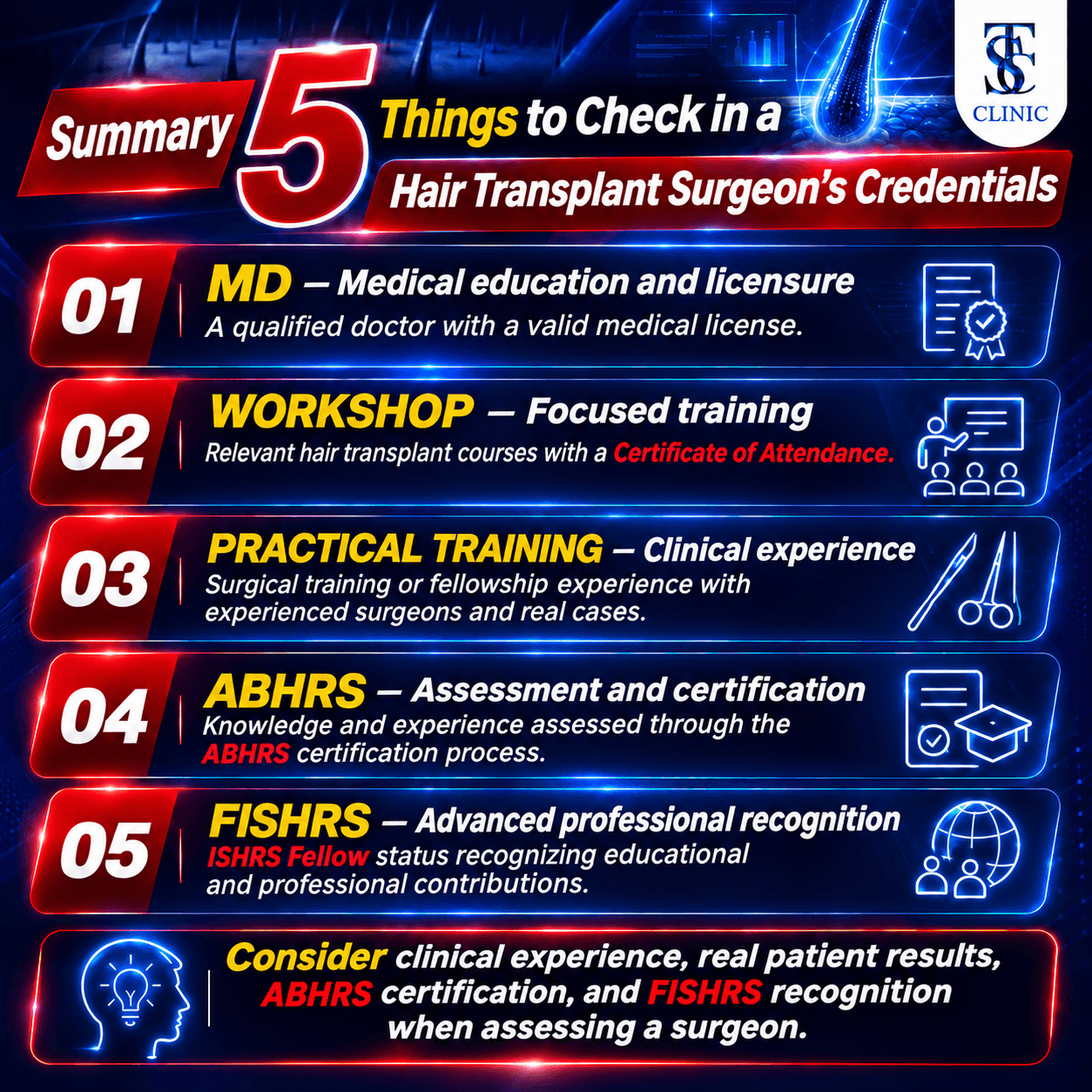
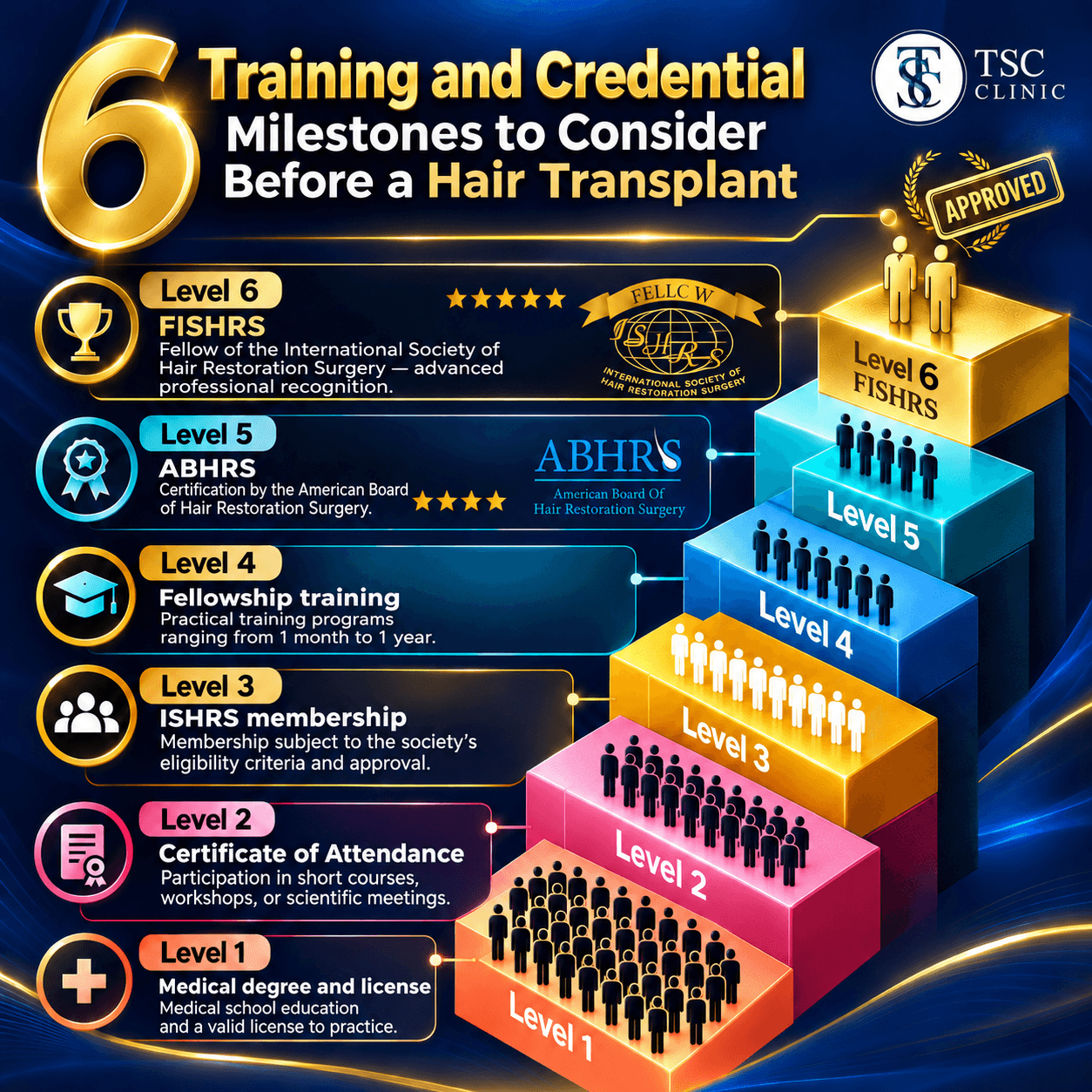
Five areas behind a hair transplant surgeon’s credentials
1 Medical qualification and licensure
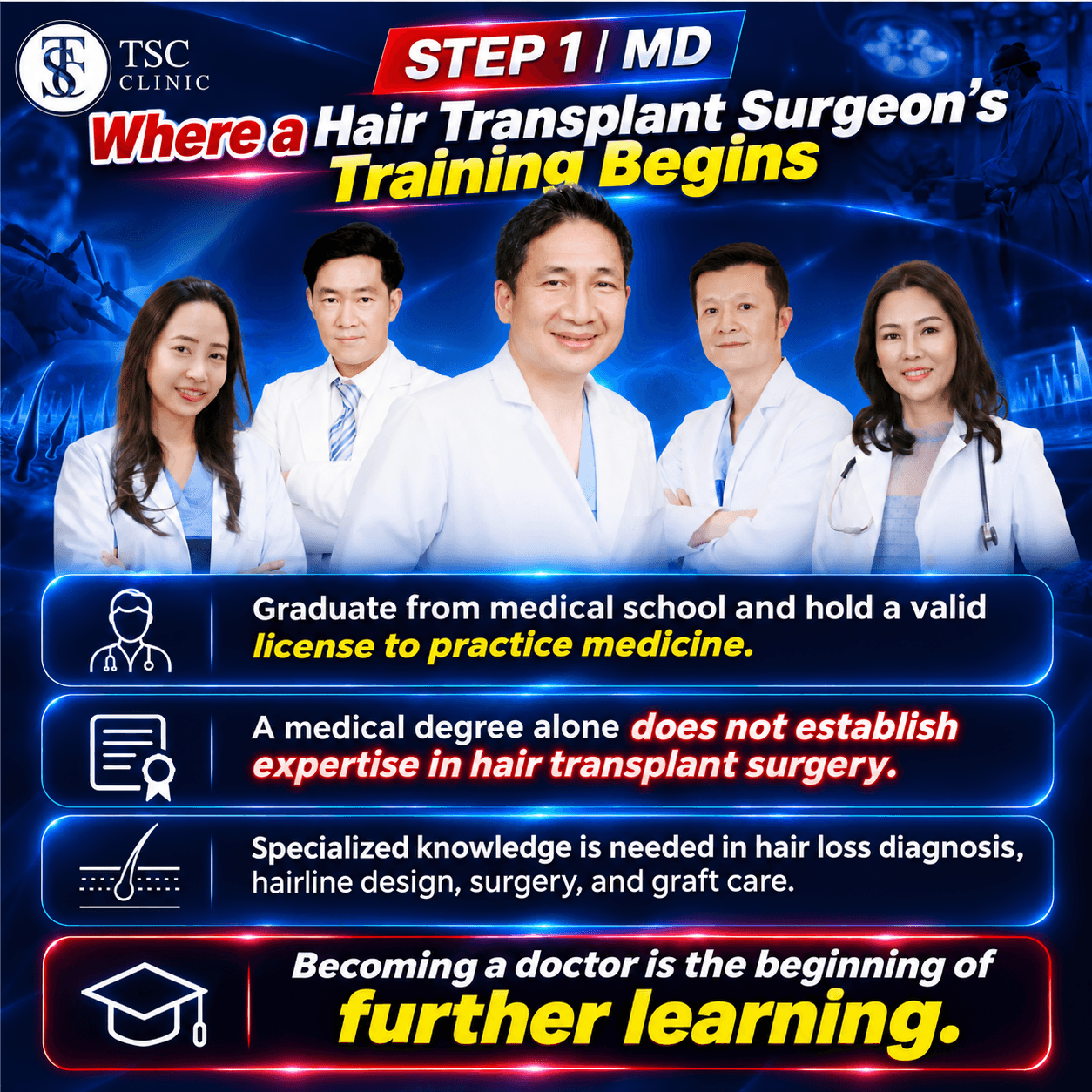
The starting point is a medical degree and a valid license to practice medicine. But graduating from medical school does not automatically make a doctor an expert in hair transplant surgery. Hair restoration requires specific knowledge of hair loss diagnosis, hairline design, surgery, and graft care. Becoming a doctor is the beginning of that learning process.
2 Courses and workshops
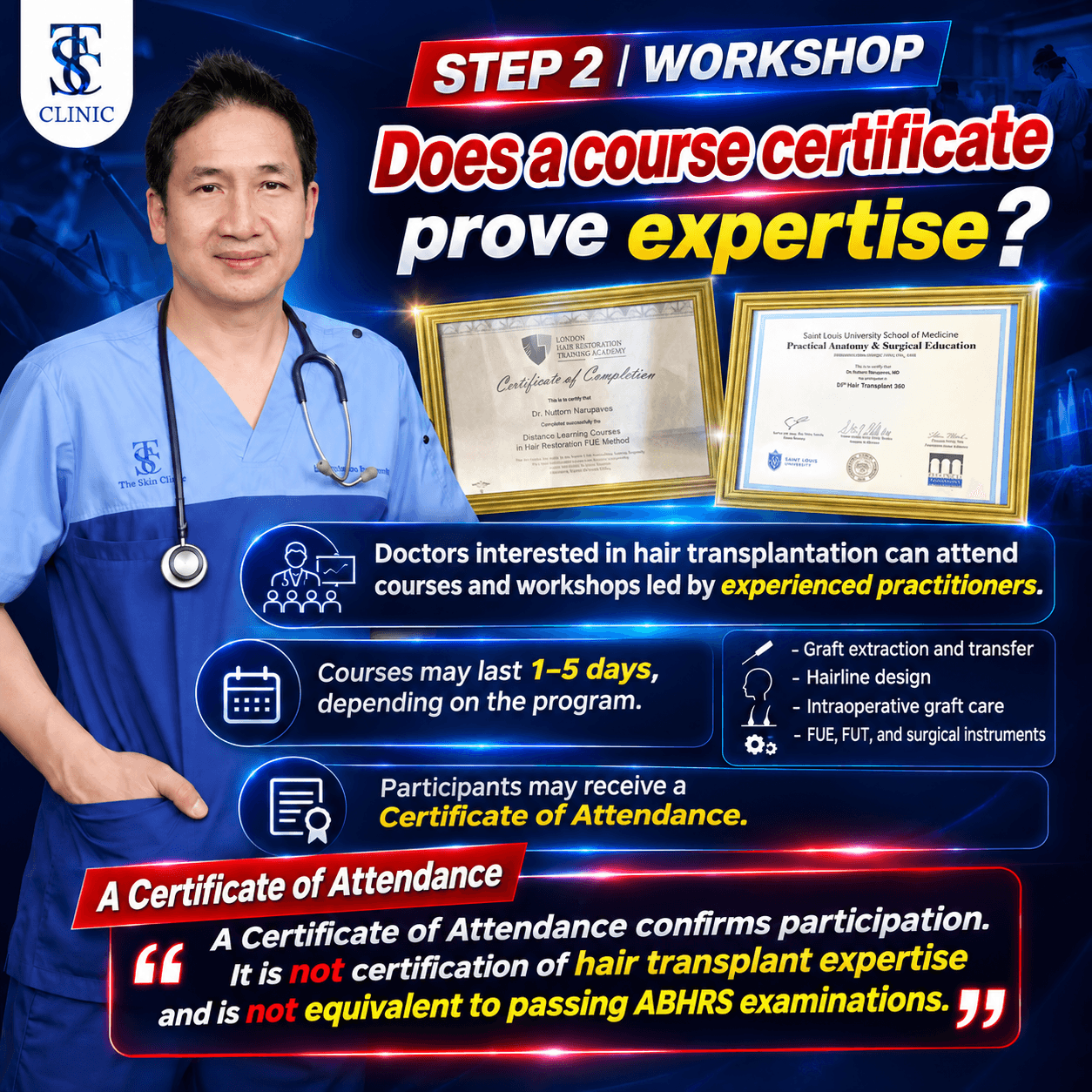
Doctors interested in hair transplantation can attend courses and workshops led by experienced practitioners. Depending on the program, introductory courses may last one to five days and cover topics such as:
- Graft extraction and transfer
- Hairline design
- Care of hair follicles during surgery
- FUE and FUT techniques and the use of surgical instruments
Participants may receive a Certificate of Attendance. This confirms that they attended the course; it is not certification of expertise in hair transplant surgery and is not equivalent to passing the ABHRS examinations.
3 Fellowship training and practical experience
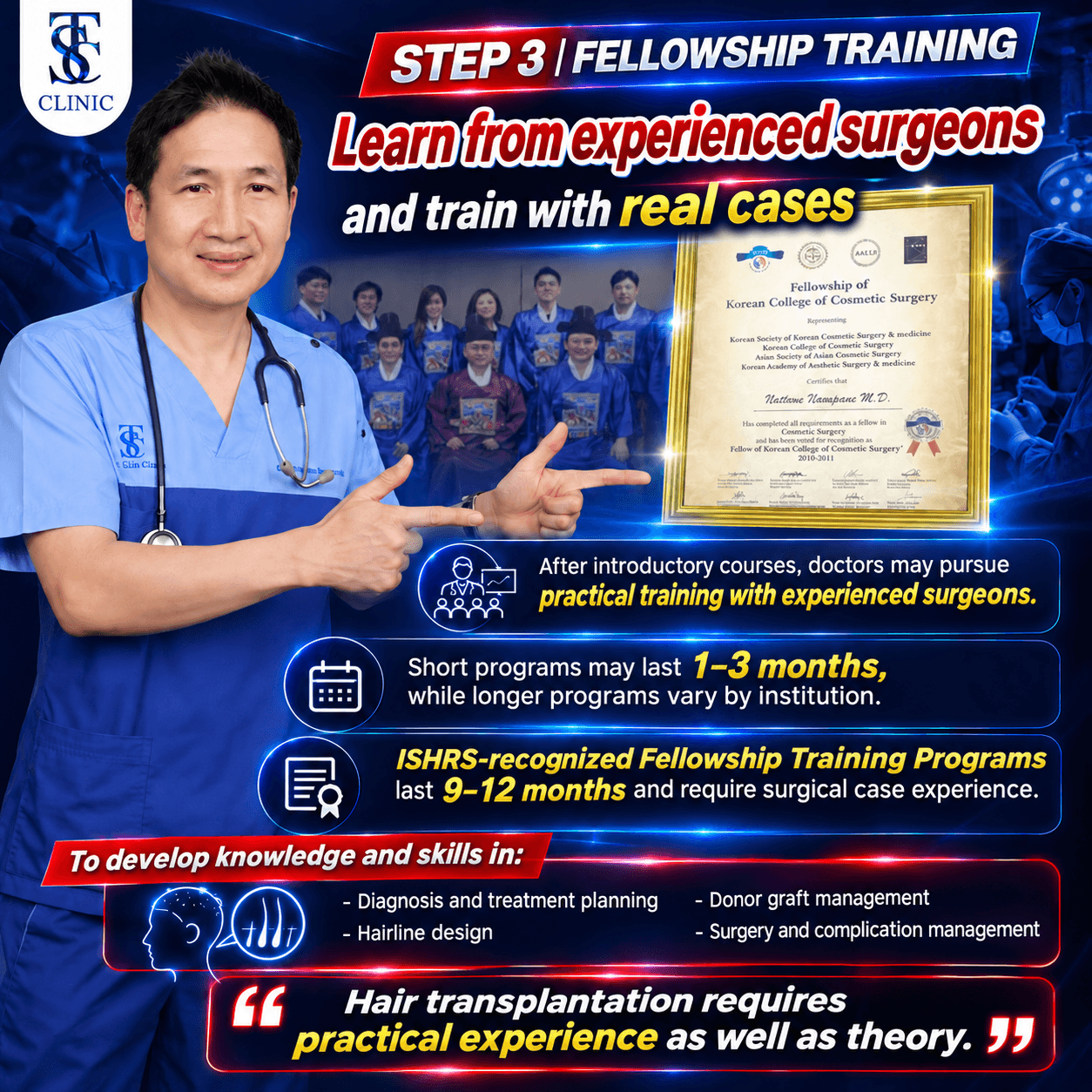
Hair transplantation cannot be learned through theory alone. After introductory training, doctors who want to develop their skills can pursue practical training with experienced surgeons. Programs range from short courses lasting one to three months to longer periods of training, depending on the institution and curriculum.
ISHRS-recognized Fellowship Training Programs last approximately nine to twelve months and include surgical case requirements. Training develops skills in:
- Diagnosis and treatment planning
- Managing donor hair and graft numbers
- Designing an appropriate hairline
- Performing surgery and managing complications
4 ABHRS assessment and certification
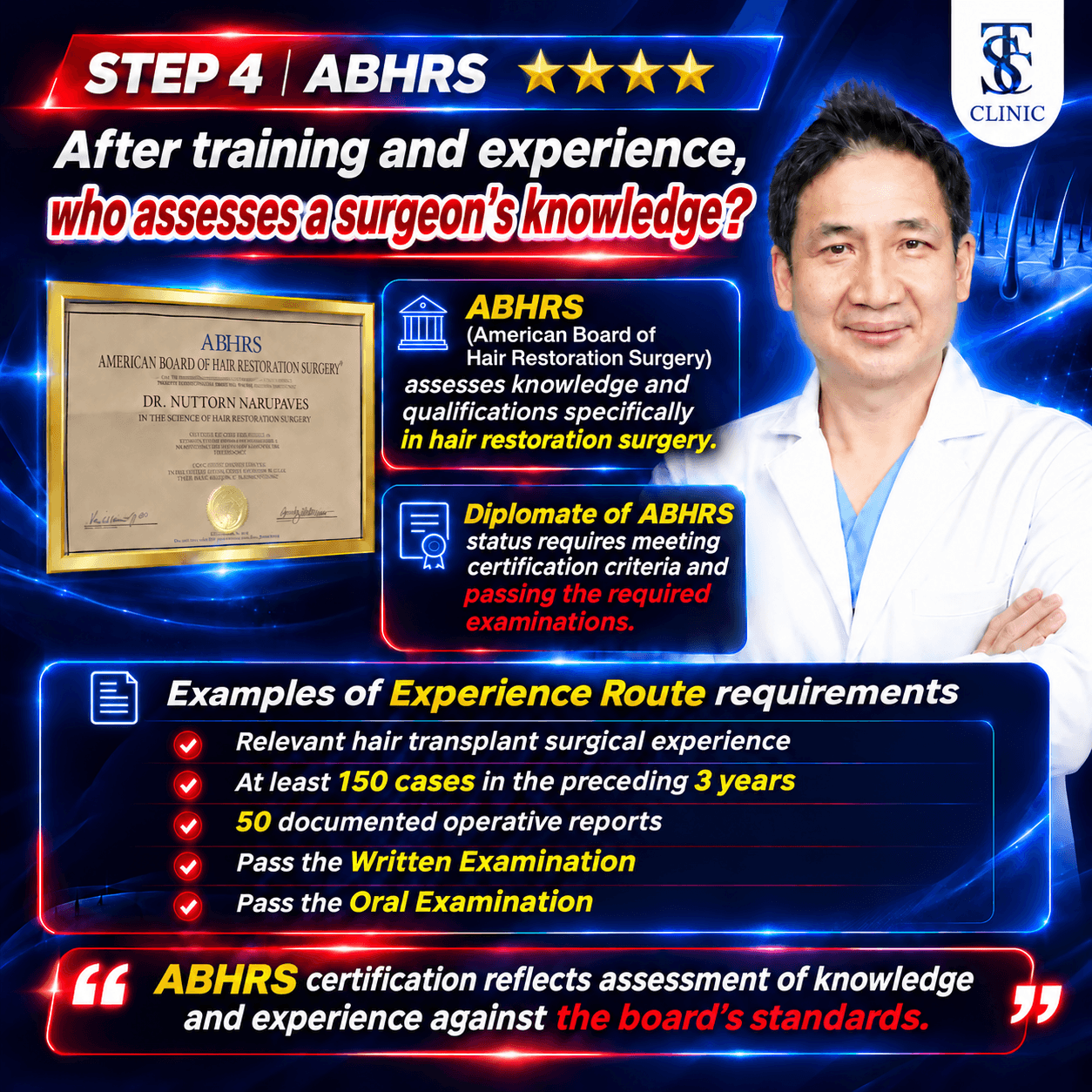
After education and clinical experience, how is a surgeon’s knowledge assessed? The American Board of Hair Restoration Surgery (ABHRS) provides a certification process specifically for hair restoration surgery. Becoming an ABHRS Diplomate requires meeting the board’s criteria and passing its examinations. Examples of requirements for the Experience Route include:
- The required experience in hair restoration surgery
- Case logs documenting at least 150 procedures in the preceding three years
- Fifty documented operative reports
- Passing the written examination
- Passing the oral examination
ABHRS certification therefore indicates that a doctor’s knowledge and experience have been assessed against the board’s standards.
5 FISHRS recognition within ISHRS
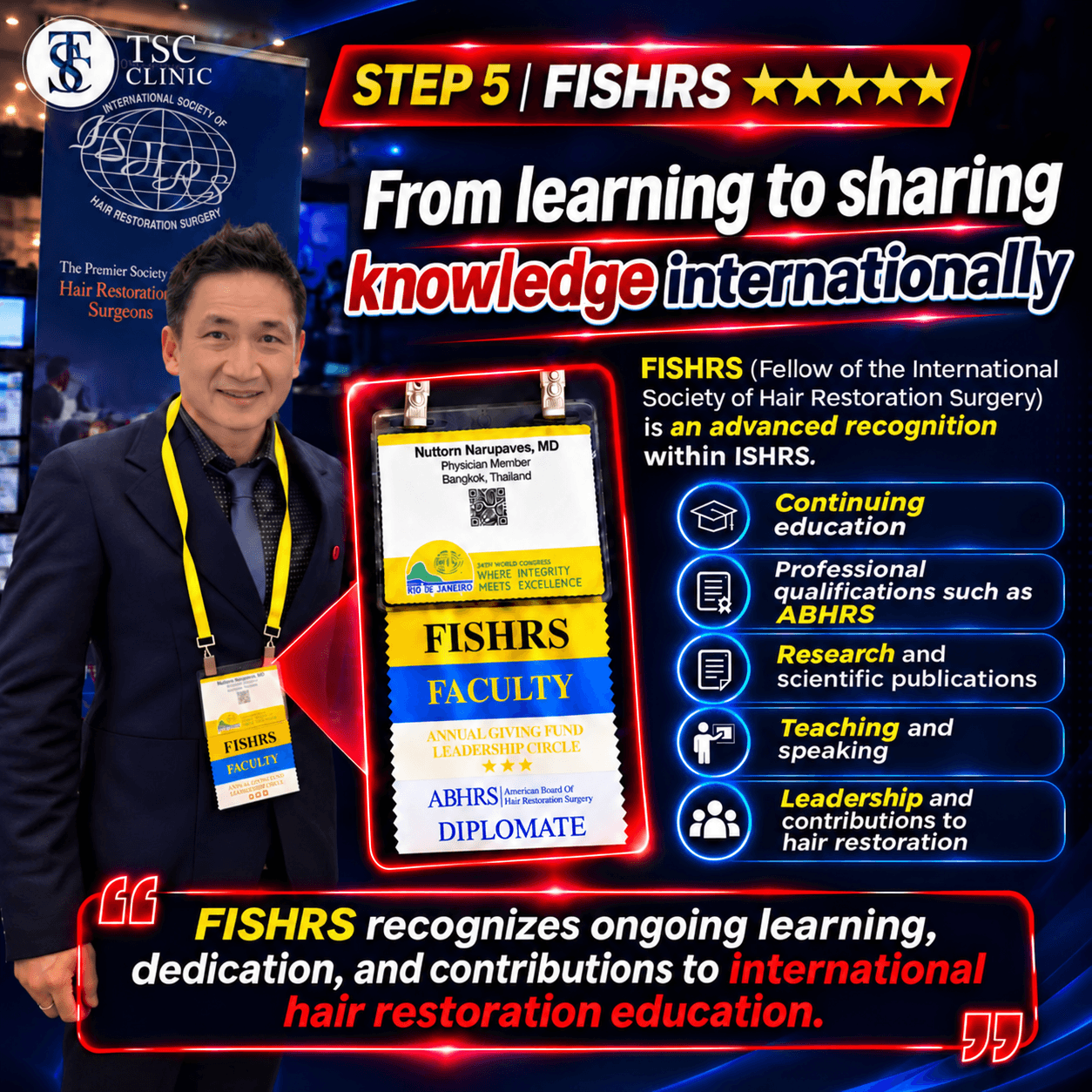
FISHRS stands for Fellow of the International Society of Hair Restoration Surgery. Established in 2012, this advanced category recognizes ISHRS members who meet the society’s additional educational and professional contribution criteria. Areas considered include:
- Continuing education and professional development
- Professional qualifications, such as ABHRS certification
- Research and scientific publications
- Teaching and speaking at scientific meetings
- Leadership and contributions to the field of hair restoration
FISHRS reflects ongoing learning as well as a commitment to sharing knowledge and contributing to hair restoration surgery internationally.
How to verify a surgeon’s credentials
Use the official ISHRS website to find doctors and check their membership category. You can search for “ISHRS” on Google, then follow these steps:
- Open the “Find a Doctor” or “Find a Hair Surgeon” directory.
- Select Thailand to view doctors listed in Thailand.
- Open the doctor’s profile and look for “Membership Status.”
Fellow Member (FISHRS) indicates that the doctor has received the society’s advanced Fellow recognition. Full Member indicates that the doctor has met the society’s membership requirements.
Thailand has 13 doctors with FISHRS status, including Dr. Nuttorn Narupaves, known as Dr. Top. His Fellow membership and ABHRS Diplomate status can be checked in his official ISHRS profile: https://ishrs.org/doctor/nuttorn-narupaves/
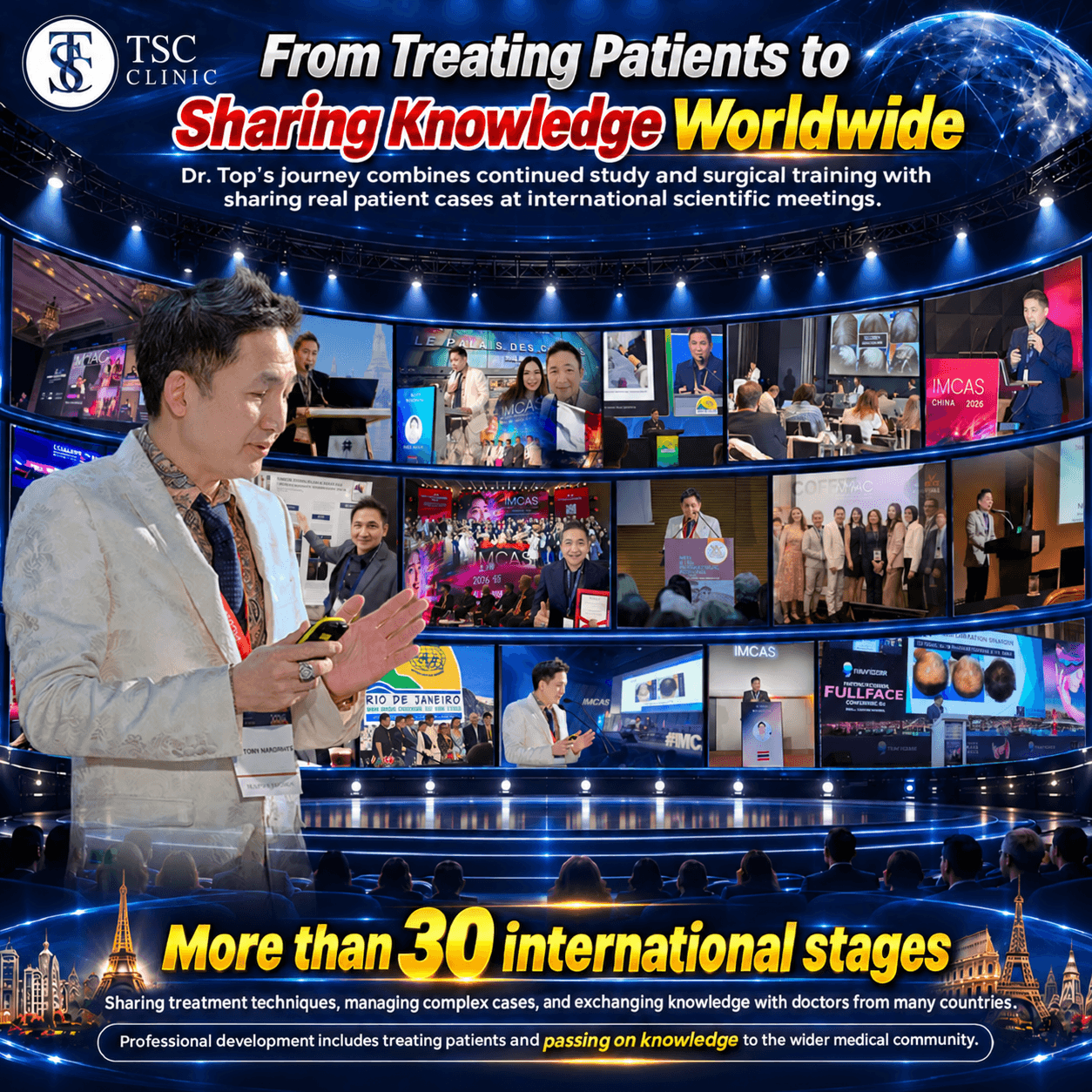
For Dr. Top, the path to FISHRS has involved continued study, training in hair transplantation and hair care, and experience treating patients. It has also included sharing knowledge at more than 30 international meetings, discussing treatment techniques, complex cases, and lessons learned with doctors from many countries. Professional development extends beyond patient care to passing on knowledge that helps advance the field.
Credentials are one part of choosing a hair transplant surgeon. Experience, the ability to assess the cause of hair loss accurately, and a thoughtful long-term treatment plan also matter. Qualifications can inform your decision, but they do not guarantee a particular result. A consultation to discuss the approach that suits you is an essential step toward a safe, natural-looking outcome.