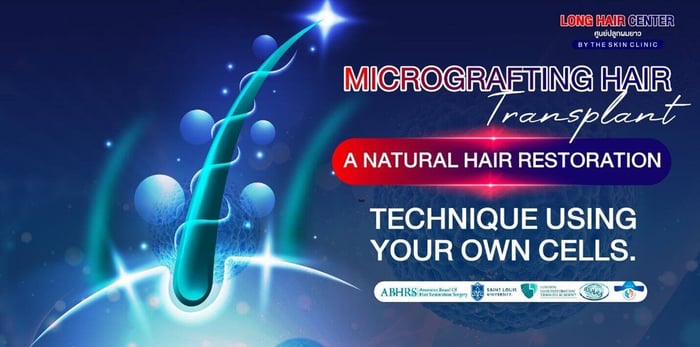
Have you ever noticed that people with thinning hair at the crown or baldness like the character Khun Chang often still have thick, healthy hair at the back of their heads? That’s because the hair follicles in the back of the scalp are typically stronger and of better quality, making them less prone to falling out compared to other areas. This very observation inspired the development of a hair restoration technique known as Micrografting Hair, a simple, safe, and effective process that uses the regenerative power of your own cells (Autologous Exosomes). So, what exactly is this technique? And how does it help combat hair thinning? Find out all the answers in this article
Table of contents
What is the Micrografting Hair technique?
Why use hair follicle cells from the back of the scalp?
Hair follicle cells at the back of the scalp are considered the strongest and healthiest compared to other areas. This is because they are not sensitive to DHT (Dihydrotestosterone), the main hormone responsible for male pattern baldness. Therefore, they are ideal for use in hair restoration. The Micrografting Hair technique primarily uses cells from this area to achieve the most natural and effective results.
How does Micrografting Hair help with thinning hair?
The Micrografting Hair process begins by extracting hair grafts from the back of the scalp, where strong hair follicle cells reside. These grafts are then refined to isolate high-quality cells, followed by an extraction process to obtain key biomolecules such as Exosomes. These Exosomes, derived 100% from your own body, are rich in DNA, RNA, and lipids, with no chemical additives involved.
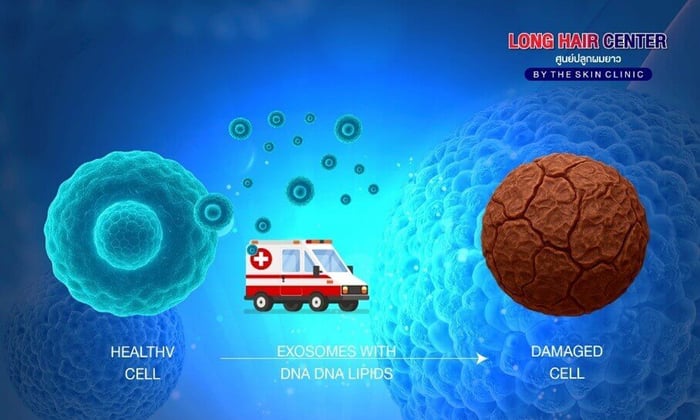
The extracted follicle cells are then injected into thinning areas to stimulate weakened hair follicles back to strength. Exosomes act as “cellular messengers” that signal surrounding hair follicles, saying, “It’s time to grow stronger!” This encourages new hair growth and creates an ideal environment for restoring previously thinning hair to a fuller, more natural state.
Imagine Exosomes as tiny letters that one cell sends to another, saying, “You should start growing! Look at me, I’m still strong.” Once this message is received, the hair follicle cells respond by repairing themselves and beginning the process of new hair production efficiently.
What are the benefits of this technique?
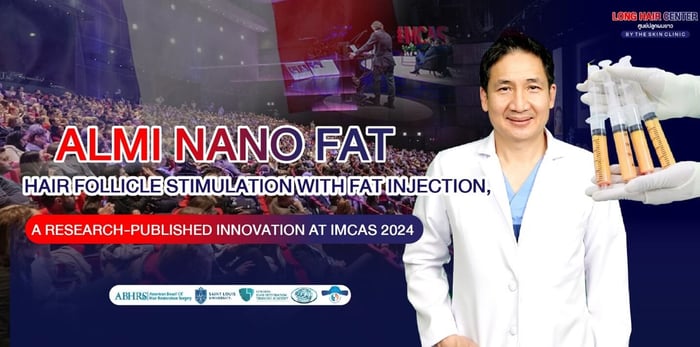
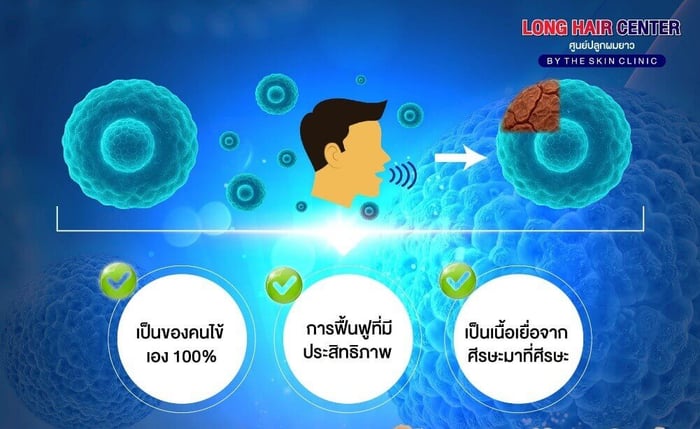
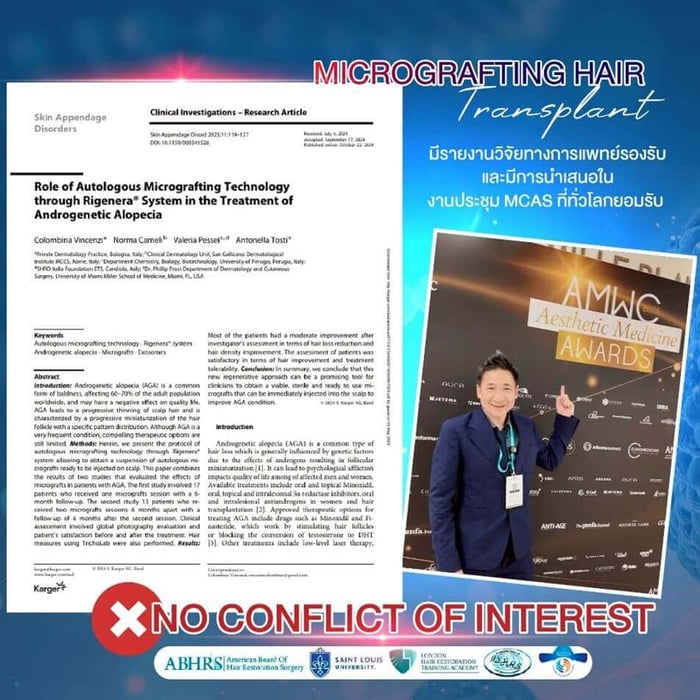
This technique is backed by medical research and has been presented at the world-class IMCAS conference, an academic meeting in dermatology, plastic surgery, aesthetic, and anti-aging medicine. It is approved by the FDA in the U.S., Europe, and Thailand. It’s a safe treatment with no chemical substances involved. Key benefits include:
- Uses your own cells, no risk of allergic reactions, safe, and free from foreign substances
- No surgery, no stitches, no downtime
- Naturally restores hair, making it thicker and stronger
- Stimulates living hair follicles to regrow
- Helps slow down hair loss
- Protects hair follicles from male hormones
- A single treatment yields visible results
Who is a suitable candidate for this technique?
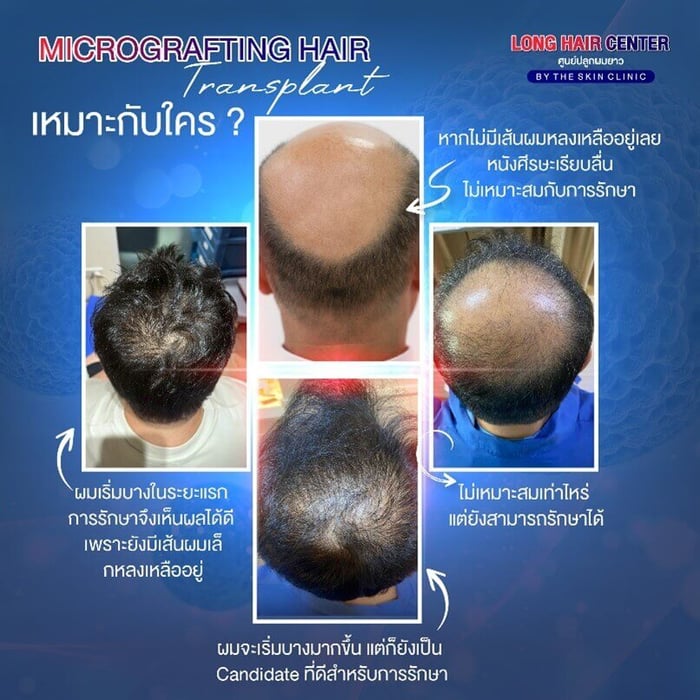
The Micrografting Hair technique is suitable for individuals experiencing genetic hair thinning, hair loss from stress or hormones, those with insufficient grafts for hair transplants, or who have tried other treatments without results. It can be performed on both men and women. For those in the early stages of hair thinning, the treatment shows good results since existing hair can still be stimulated to grow. However, if there is no remaining hair and the scalp is completely smooth, this technique is not suitable.
After undergoing Micrografting Hair, noticeable improvements can be seen within 4–6 months, such as thicker hair, reduced hair loss, and new baby hairs appearing in previously thinning areas. The initial treatment results can show up to 40–50% improvement. However, results vary depending on individual hair and scalp conditions, and not every case is guaranteed to succeed.
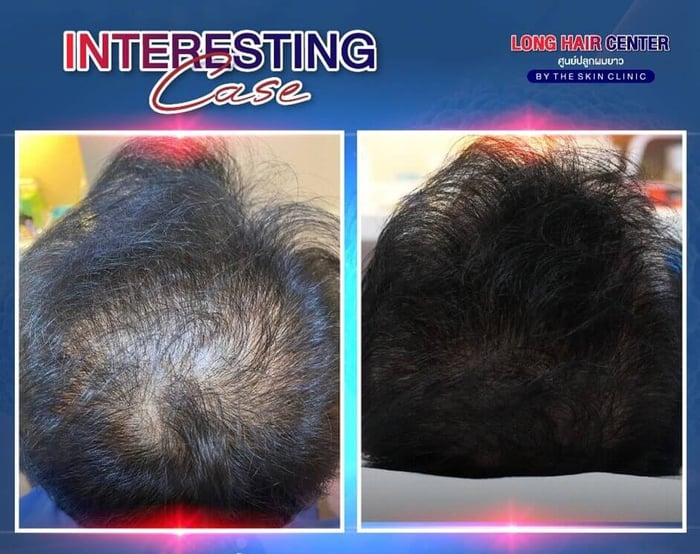
Micrografting Hair is one of the effective solutions for addressing hair loss and thinning, using your own cells. It is ideal for those seeking a safe and natural way to restore their hair. However, there is no “best” method for hair care, only the “most suitable” method for each individual. That’s because hair conditions and the factors contributing to hair loss vary from person to person. Choosing the right treatment should start with identifying the root cause. If you're looking for a safe and effective way to care for your hair, Micrografting Hair might be the right choice for you.